An Antique Photo, A Lingering Question

While flipping through Flickr, I came across this antique photo of what appears to be an interracial American couple. They seem to be well to do, judging by the smart cut of his suit, and her fashionably billowy sleeves. And she made sure to tell her ladies’ maid, or whoever assisted her, to do her best work on the hair. OK?

Little did they know that one day couples like theirs would flourish in America!

Little did they know that one day couples like theirs would flourish in America!


The question is: Are they a mixed couple, and is she Black? Certainly her facial features suggest a strong influence of a Black parent or two grandparents. And we know plenty of dark-skinned people with fine, even thin, facial features. The Flickr caption notes that the previous owner of the card described the woman as an “African American beauty,” but it is not clear how the photographer, F.B. Clench, described them. The curator didn’t think it was clear that she was Black, but no other suggestion was offered. Her hair looks silken, but beyond that I don’t see anything that puts her African descent into question. Her eyes remind me of Ethiopian and Eritrean women I’ve met and regularly see around town or at church. Was she descended from Ethiopians? It is hard to say, since commerce and missionary relationships between the U.S. and what was called Abyssinia at the time was very light. Who knows if Abyssinians had established their networks here in the U.S. and intermarried by 1889 and 1898, when the photo was taken.

In any case, they look wonderful, and I took special note of their posture and smiles. They actually look relaxed, like they wanted to be there and get their money’s worth. They are leaning toward each other, touching, and they even seem aware of the camera, and what a remarkable occasion it was to have their portrait professionally done. Unlike a lot of the other facial expressions you find in Victorian-era photographs, middle-and high-class people frozen in hard-bitten stoicism, stiff and awkward, as if taking a picture was an alien experience and an imposition. I wouldn’t want to be remembered like that for all time. These fine folks are dressed to the nines and happy to be there! Thumbs up.


It’s Official: Naptural85 Is The Best Natural Hair Vlogger

It’s refreshing to see awards and honors go to people who really deserve them. So when I scanned this article on Essence.com, about their Best in Black Beauty Awards, I was happy to see that Whitney White, also known as “Naptural85,” topped the heap.

She really is a cut above the rest, with her tips for cultivating, maintaining and styling natural hair. I stumbled across her channel while researching how to care for Baby’s hair, and I learned a lot about caring for my own hair in the process, too.

So congratulations, Whitney “Naptural85” White! Richly deserved. Here is her latest video, “Natural Hiar is TOO EXPENSIVE!?!”

UPDATE: Naptural85 is also a conversation starter. Here’s a response from hilarious 4C natural hair vlogger Glamfun:

https://youtu.be/ERcuzs0-z_w

Hey, America: Black Women Are NOT After-THOTs!!!

Over the centuries, Americans have conditioned themselves to see Black women as beneath their contempt, as unworthy of old-fashioned chivalry or the basic common decency extended to strangers in the street. They see Black women as after-THOTs. That’s not a misspelling, by the way. It’s my expression of the dismissive scorn heaped on Black women in particular, and the spelling borrows from the latest urban colloquial acronym for That Hoe Over There, women of loose sexual virtues. (I don’t know if it’s been used elsewhere, but I thought it worked pretty well with the point I want to make today.)

THOTs are nameless. Why should anyone find meaningful ways to distinguish between women — like talents and achievements — when it’s so easy to assume that they are all over-sexualized and want to be either ravaged by consent or that they harbor secret rape fantasies.

So what am I really upset about? It’s the shocking swell of resentful attacks directed at Mo’ne Davis, the Little League pitching phenom who captivated sports fans all over the country in last year’s Little League World Series. News that Disney was planning a movie about the young athlete had barely circulated through the media, when Davis’ shining moment was overshadowed by a string of resentful Tweets from whites, who were salty that a Black woman should be acknowledged for achieving something remarkable and inspiring!

The most vile of the Tweets came from Joey Casselberry, a Bloomsburg University student athlete who tapped this out in response to the news. Mind you, he was talking about a 14-year old child:

“WHAT A JOKE. That slut got rocked by Nevada”

That’s right. Mo’ne Davis didn’t take the Kim Kardashian or Paris Hilton route to fame. She has athletic talent, and she pitched a shutout game on the biggest Little League stage. It is an amazing accomplishment. She also happens to be very photogenic, which makes her a potential media darling, and Disney wants to capitalize on her popularity with a movie production, which makes sense. A feel-good flick that “girls everywhere” can embrace and be inspired by. But somehow this is terrible news to a few idiots who happen to be armed with computers and Internet access.

University officials became aware of his vile missives, and booted Casselberry from the school’s softball team. Sounds fair to me, but in an astounding and very worrying turn of events, Miss Davis spoke up about her forgiveness and pleaded that he be reinstated. That’s what has me so upset. Who in the world talked this child out of her worth? Who told her that when a man, far older and bigger than her, insults and degrades her like that, that he deserves to walk away from it with no consequences?

No level of spirituality, no amount of forgiveness or Christian teaching should oblige the victim of an attack to wish that the perpetrator not face punishment for his (or her) actions. Why can’t Black people, for once and for all, understand that our daughters are priceless? Just as priceless as anyone else’s, and that their lives are precious? Why does our community not only defend attackers like Casselberry, but also ones within our ranks? We see it in the way women — Black women — are quick to castigate Black women celebrities who are struggling with difficult or abusive husbands and boyfriends. It happens so often, and is so visible, unfortunately, that we can actually start ranking the “All-Time Most Abusive Celebrity Relationships.” Let’s see who will win this shameful distinction. Will it be Tina and Ike Turner? Halle Berry and Mr. X? Whitney Houston and Bobby Brown?

I don’t understand what makes so many of these handmaidens, worshippers of the abusers, so heartless and callous. Where was your heart for the Miss Black America contestant who also endured the public trial that eventually convicted Mike Tyson of rape? Where was your heart when those photos surfaced of Rihanna, beaten to an inch of her life?

Is this a case of entrenched “misogynoir,” anti-Black women sentiments in visual and popular culture? Moya Bailey, a gay feminist author coined the term to “describe how racism and anti-Blackness alter the experience of misogyny for Black women, specifically.” Examples of Misogynoir include the rejection of Black women’s natural hair and ‘twerking’. Not just twerking by cultural appropriators like Miley Cyrus or Kim Kartrashian but the very existence of the dance.

I don’t know if this incident with Mo’ne Davis qualifies as misogynoir as Ms. Bailey defines it, and I don’t want to misuse the term before it gets proper traction in the American lexicon, we recognize it and effectively tamp down the most threatening cases of it. But I do say that there is rampant mistreatment of women in Black culture. Black women are the objects of lust, degradation and contempt, first at the hands of white men and consistently by our own. The fact is we have to recognize and refute all of it, before we end up with a sizeable representation of women in the next generation who keep offering up their bodies for use and abuse. When you ask for leniency for the demented jock who called a little girl a slut, when you blame Halle for her relationship struggles, when you say Bo Derek introduced braids to American women, when you twerk, you practice some level of disdain for Black women.

Not my child. She will be wide awake and aware, because although she is light-skinned, there is no “passing” for her. It’s not enough to protect her from these people out here trying to make things hard on her because she’s not in the white male club.


How Ya’ll Like Us Now?

“Weave, weave, we don’t care. Give them horses back their hair!”

NaturalHairFrohawkIf you came of age in the 90s and the early millennium, you remember that chant. It was Black men’s favorite rebuttal to Black women who insisted on styling their hair with weaves, and a knee-jerk response against any female hostility they might incur for marrying out, particularly to white women. Black men thought they were pulling our cards by calling out the weaving. They said the artifice was one reason why they would not consider Black women for committed long-term relationships. Their other grievances included our supposedly disproportionate:

  • rates of obesity
  • crass and loud manners
  • hostile attitudes
  • slack moral standards, e.g., the tendency to be baby mamas from various men

Sooo, I couldn’t help wondering how they like us now, after so many of us have ditched weaves and joined the natural hair movement. Not only have we waved the white flag on that issue, but we’re hoisting the natural hair banner with pride. ‘Begone with fake hair, and embrace what God gave you!’ is our mantra. Are Black men changing their minds about us? Sorry to say, that’s not the case. In my very unscientific estimation, it seems like Black men have not had a change of heart at all, and they continue to date out without consideration for how we physically present our hair. I realize that I’ve listed four other strikes against us, but I also couldn’t help notice that the rates of Black children without a father in the home have skyrocketed among Blacks. So they are happy to knock us up, but still no ring, house, or coveted wife status. I guess Black men have trouble extrapolating how their individual dating choices might have broader implications and perpetuate attitudes of colorism, racism or self hatred among us.


NaturalHair2It’s hard to tell if Black men are cutting us more slack for making this major concession about our crowning glory. I just know that wearing our hair natural and ditching the European standard of outward presentation is not impeding us from attracting men outside our race. Truth be told, today I see more Black women with dreads, TWAs, twist-outs, Bantu knots and temporary press and curls — and these are dark-skinned sisters, OK — who are side by side with Asian and white men than I did in the 1990s. (Less so among Hispanic men, but I can only suppose that Hispanic men generally prefer to date among themselves.) A lot of them are wearing wedding bands and some are not. They’re in church. At Target. On the trains. For goodness sake, New York is starting to look like London as far as this goes.

Black women are making other changes that might also shift the dynamic of their dating practices and eventual partner choices. After they became more aware of the potentially damaging and harmful ingredients in their hair styling products, they carried that over to what they were putting in their bodies. I observe Black women in my everyday life being more committed to eating right — drifting into vegetarianism and veganism, exercising and bettering themselves in various ways. I think that is throwing us into the company of broader groups of people, honestly. Maybe women in my age group are leading the way on this out of some midlife course change, but I also see it among Gen Y and the Millennials. What I do not see are vast numbers of Blacks pairing off. I’m seeing a lot of gloating and backlash from the OK Cupid data that inferred that Black women are the thirstiest and the least desirable among other races of women in its pool of users based on historic response data. The best situation analysis I’ve seen comes from Cornelius Eady, writing for The Atlantic. First, he offered a rundown of OK Cupid’s findings.

Black women write back the most. Whether it’s due to talkativeness, loneliness, or a sense of plain decency, black women are by far the most likely to respond to a first contact attempt. In many cases, their response rate is one and a half times the average, and, overall, black women reply about a quarter more often that other women.
Men don’t write black women back. Or rather, they write them back far less often than they should. Black women reply the most, yet get by far the fewest replies. Essentially every race–including other blacks–singles them out for the cold shoulder.

Then he offered this breakdown:

People passing this data around need to be really careful about using this study to draw inferences about the dating world of black women. One significant problem is that, as any black person will tell you, when black folks date online they don’t go to OKcupid. They go to blacksingles. They go to soulsingles. Or if they’re truly high post, they go to EliteNoire. (Dig the sensuous piano riffs and candelabra.)
Black people who are going to a site like OKcupid are generally black people who, with some exceptions, are open to interracial dating. But the same isn’t true of white people on OKcupid.
So the game is rigged–on OKcupid you have many white men who have no interest in dating black women, but very few black men with no interest in dating white women.
That’s because all the black men who don’t want to date white women are on the African American Dating Network or Blacksinglesconnection. There simply is no real white corollary. Stormfront excluded, there aren’t many “WhiteSingles” websites or “EliteIvory” dating sites. There is no Caucasian Dating Network, because the broader world is the Caucasian Dating Network. OKCupid is the Caucasian Dating Network.

I set the OK Cupid study aside right away when it first came out, because it seemed unsupportable in some level. There is no level playing field in the dating world, and so for various reasons Black women always seemed to be at a disadvantage. But we are beginning to make strides, based on attitude changes. And mind you, the are not adjustments in our disposition. We’re still the same women that we were in the 1990s, but with different cosmetic needs and dietary preferences. And yet, aside from one or two videos in which a lot of Black men say they prefer to see a woman’s natural hair, I don’t see Black men meeting us where we are on on our journey.


We Don’t Mean to Pry, But …

Are Lupita Nyong’o and Common dating?? Reports have them hanging out in Brooklyn, where she has an apartment. He apparently lives in Fort Greene. If they are “taking things slow” in the beginning, that would be awesome!! No pressure, though. Just take your sweet time enjoying each other’s company. We can wait for the … whatever comes down the line!

CommonNLupita


IR Couples Have to Laugh at Themselves Sometimes

I watch Sleepy Hollow on FOX. I do. The show hooked me in its first season last year, because it was bat-shit crazy and lots of fun. Rather, it used to be loads of fun in the first season. But then the writers took things too seriously, all kinds of overwrought drama ensued in the second season, and the show lost its verve.

But there were glimmers of the fun from the good old days, like an incident from “Awakening,” (S2:Ep 17) where an enchanted bell rang and that was supposed to awaken all the dormant witches and warlocks in the town of Sleepy Hollow. One couple, a BW-WM, was sitting in a cafe, when he delivered horrific news to his wife: He had gambled away ALL the family’s financial assets. Wiped them out. At that point, the bell rang and, coincidentally, her eyes went all milky white and when she came to her senses she had somehow choked him. Wiped him out!

PUNCHLINE: This hi-larious tweet from Orlando Jones, who is a regular on the cast:

https://twitter.com/theorlandojones/status/567505100235481088

I don’t know who is writing Orlando Jones’ Twitter feed, but I feel so supported. So understood! Sometimes, when you’re talking about these interracial marriages, even when a big fight is about to go down, you need to acknowledge that the wife is justifiably upset. And if you survive the apocalyptic blowup, you’ve got to look back and find the humor in things.

St. Valentine’s Day Styling

It’s the most wonderful time of the year … St. Valentine’s Day of course. I have to hand it to Hubby, he’s come through with a few pretty good presentations for this particular day in years past. Once, he surprised me at the train station with a while bag of goodies from Crabtree & Evelyn and a bouquet of French tulips. Another year he bought me a bee-autiful wine-red leather jacket. Yet another, a Motorola Razr in fuschia. (Or was that the one I bought for myself after I lost the first one in a restaurant on Central Park South?) Anyway! Married life isn’t quite as spoiling as the ones “when we were courtin’,” but Hubby still does a good job every now and then.

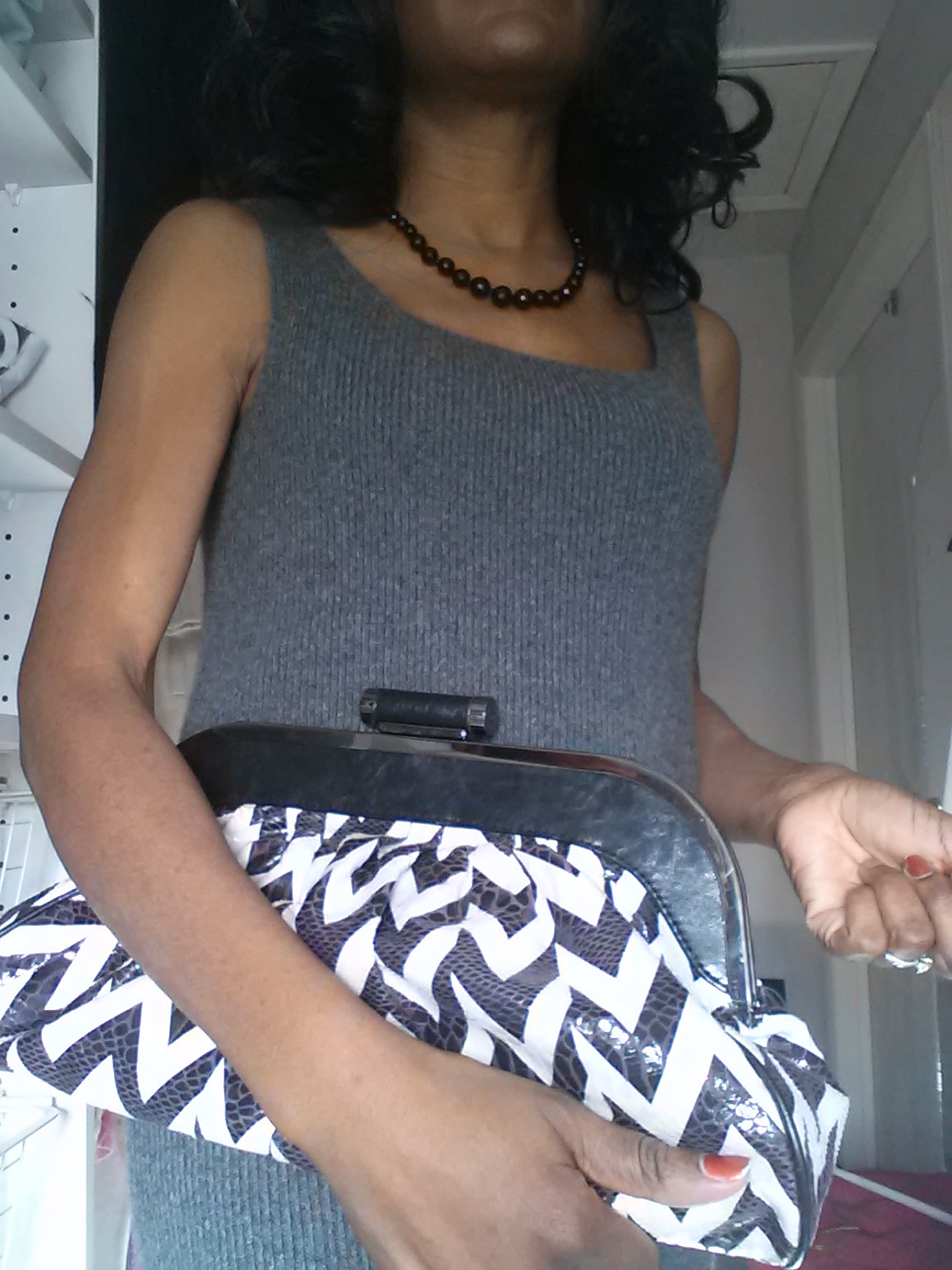
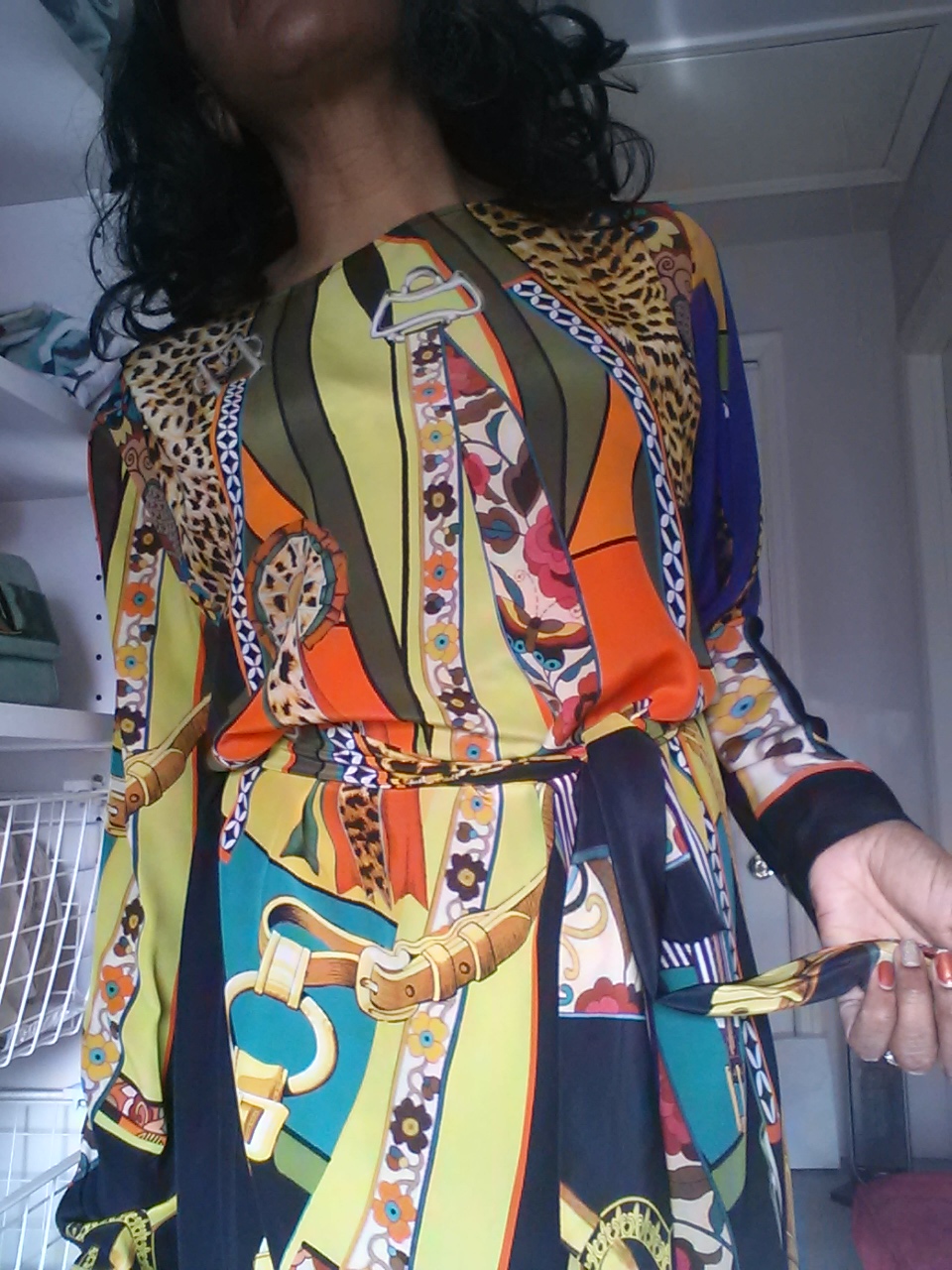
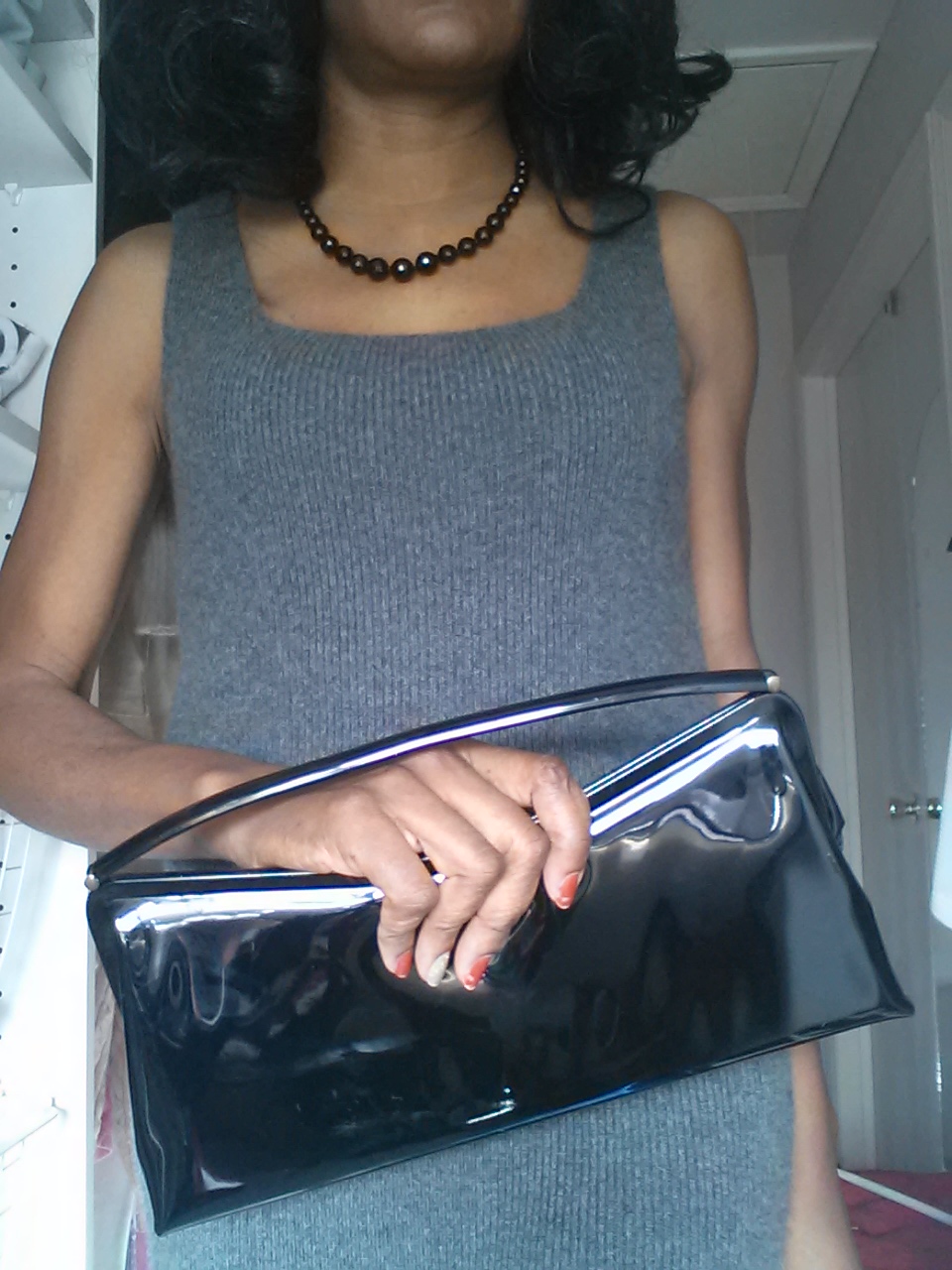
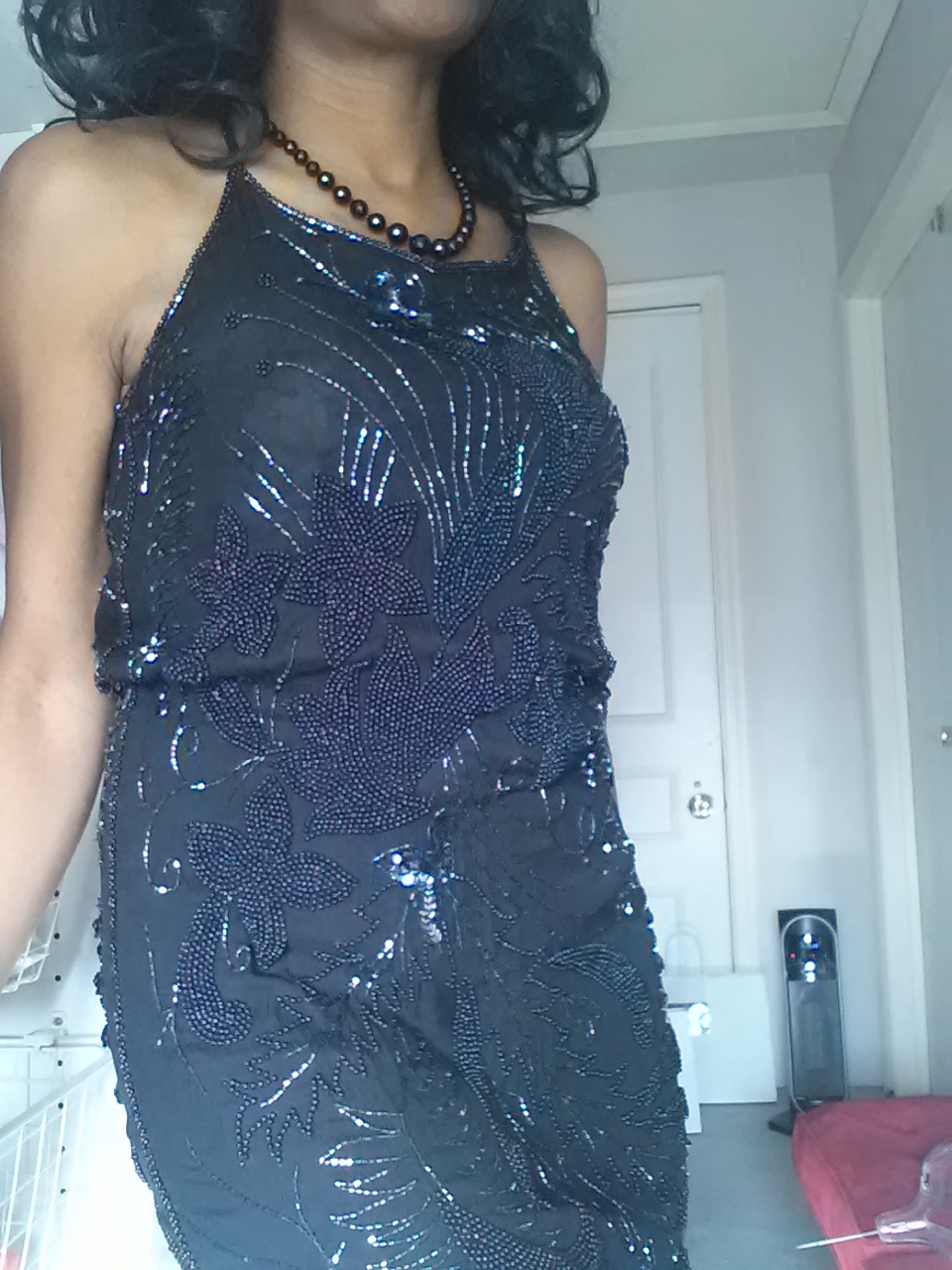
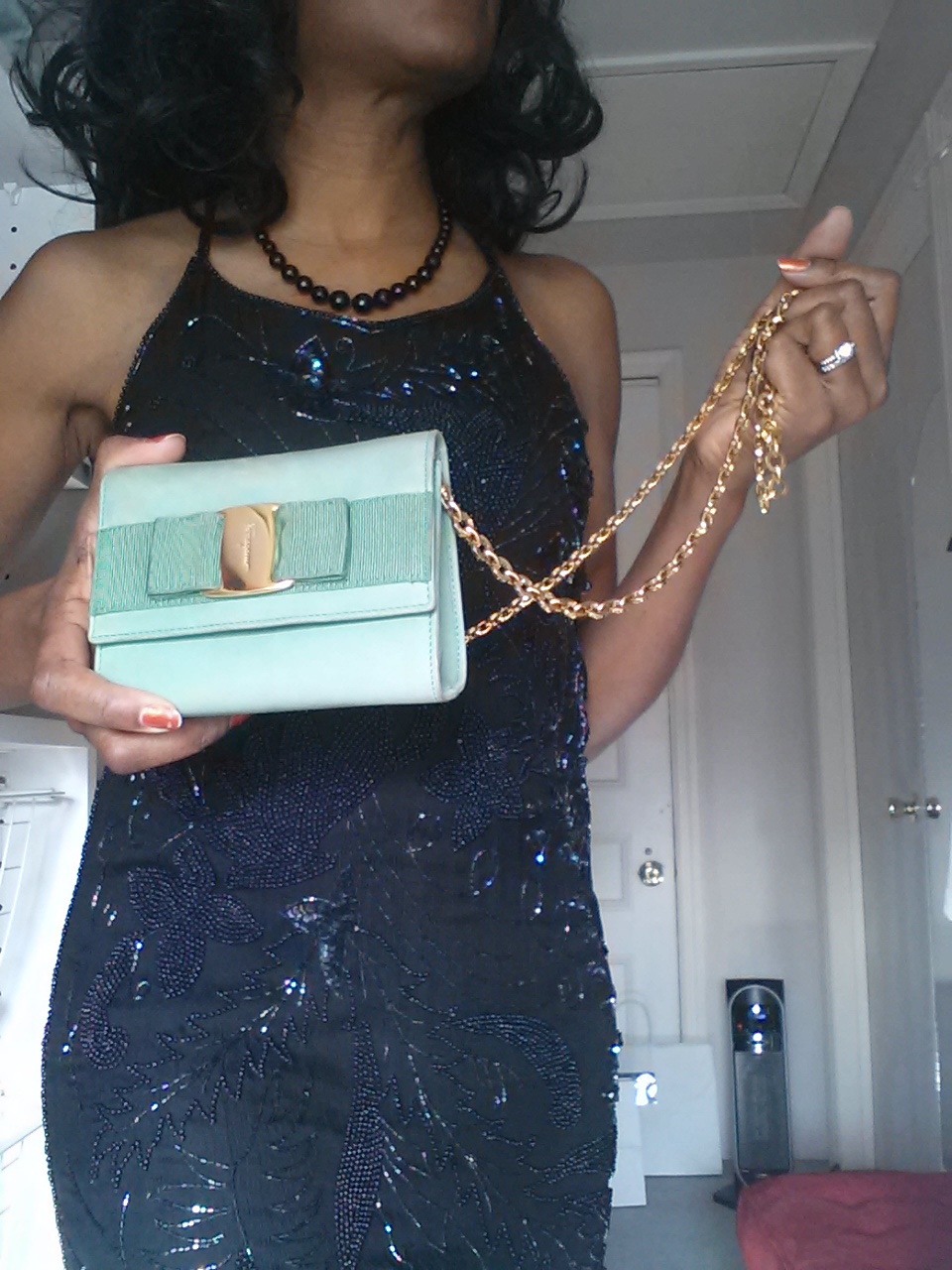
Just in case I get told to “dress up,” I’m pulling together a few styling options. After assembling these outfits, I realized that they’re all based on dresses! Oh well. We are grown-ups, after all. In any case, hopefully you’ll get some inspiration from these styling options.

Oh, and by the way … every one of these dresses was bought from consignment stores in my local area. Don’t sleep on frugal fashions, ladies!

Cashmere Dress ZigZag Cllutch Ribbon LilBlack Beaded Purse Everything Dress Cashmere Dress Patent Clutch Beaded Gown Beaded Gown Ferragamo Purse

A Changed House, A Changing America

We just dodged a massive blizzard in the Northeast, but we still got snowstorms and my daughter’s school is closed today. That means I’m taking advantage of the free day to cornrow my daughter’s hair into an up-do, and watching reruns of “Fixer Upper,” a new show on HGTV. “Fixer Upper” is hosted by Chip and Joanna Gaines, who look like an interracial couple themselves, and this episode featured a renovation for Chuck Codd and Charmaine Hooper, a former soccer striker who played for Canada’s women’s national team.

The Cobb-Hoppers on the porch of their new home.

The Chuck, Charmaine and their daughter on the porch of their new home.

The Codd and Hooper bought a residence considered the neighborhood’s “haunted house,” and the Gaines transformed it into a true show stopper. They are geniuses, and their work was featured in this Web slideshow article about it.

In any case, Codd and Hooper are an interracial couple, which is something that the show never touched on. They are just an American family with an eight-year-old daughter, and they represent how diverse our country is becoming. This is the natural course of life, folks. The misogynists and the haters can thrash, cuss and stink up social media all they want.

I’m all for avoiding an overwrought mood and feel when it comes to talking about relationships like mine. And the show simply focused renovation, design and decoration, and on the couple’s decision making process — which house to buy, what renovations it will need, and whether all of the costs fall within their budget. Finally, the Gaines sit the couples down to discuss what they did to the homes, and how much equity the generated by investing in the rehab. These are big choices, because as we know an American family’s most valuable asset is often their home. (Financial advisors will often prefer to exclude the primary residence when figuring out a household’s investable assets.)

Now the Cobb-Hoppers live in a truly gracious home. You should check out the ‘before’ photos when the Gaines first saw it. Shudder!)
HGTV Cobb Hooper Kitchen

HGTV Cobb Hopper Ship Lamp Room

Love in Black and White

The other day I went to see “Selma” with a friend of mine (it’s well worth the ticket and the running time), and one of the trailers promoted a new Kevin Costner movie, “Black or White.” Kevin portrays Elliot Anderson, a recently widowed attorney drawn into a custody battle over his biracial granddaughter, whom he has helped raise her entire life since the earlier death of his daughter. Octavia Spencer plays Rowena, the child’s Black grandmother who is challenging Costner for custody on behalf of her son. A crack addict.

First impressions from the trailer are:

  • These are some young grandparents! Costner just turned 60, and Spencer is all of 44. The child looks to be around 9 or 10, so if their characters ages are tracking close to their own, then the kids must have been a couple of wild teenagers when they brought that baby into the world.
  • Why does the father have to be an absentee parent, off somewhere in the streets smoking crack? Look, I know that absentee fathers are a harsh reality of Black life. But it makes the plot so complicated. They could have just kill him off in the same car crash that killed the daughter and landed the baby with Costner’s character. That would put both families on even footing, with real tension about who has the more legitimate claim over the child. But anyway.
  • This bet-not be some ‘White Savior’ shit! This complaint comes from more of my friends. ‘Is Elliot ‘rescuing’ the granddaughter from the absentee, crack-head Black father? Lord.’ I mean I didn’t miiiind “The Bodyguard” in 1992, when Kevin rescued Whitney from that melee in the club, then took a bullet for her. I mean he was the bodyguard, so it was his job. Plus, Rachel was a formidable character, not some irritating little damsel.

“Black and White” would rather not delve into the messy work of race-driven inequality and the attempts to keep Blacks relegated to second-class citizenship. It would rather take a toothless, sentimental look at it, through the events confronting a racially integrated family and the fate of an adorable little girl. The big question about the movie is, what is the grandmother’s angle in seeking joint custody? I researched the movie a bit, and found a clip that establishes Costner’s character as a heavy drinker. His alcoholism worsens after the death of his wife. Piled on top of losing what appears to be his only child and now here comes Grandma trying to take the last piece of his family away. Does she feel like the child would be safer with her, who doesn’t have any destructive vices,? That sounds reasonable, but why stand proxy for the loser son?

Elliott pushes back

I doubt any custody battles will erupt in my family in the tragic event that both Hubby and I die before our daughter is an adult. We have settled on one of his brothers to be her guardian, and as circumstance (and luck) would have it, that brother lives near a dear, dear friend of my family’s, who is Black. We grew up together, and our mothers are longtime friends. We’ve cared for each other’s kids, so there is a lot of trust there. I’m not worried about my daughter being misguided into losing touch with her Black heritage, and all the joys and life lessons that come from it.  (Now, if she were sent to the brother out in Seattle, I’d worry.)

If you want to know if “Black or White” is worth watching, look at this review from “The Wrap.” It basically says the movie is worth seeing because a show-stopping speech at the end raises a fundamental — but dumb from my point of view — question about race in America: “Is it allowed – for a white person to dislike a black person for reasons other than race?” What?!! Is that the kind of foolishness that’s on white people’s minds these days? So after all the deranged, hateful things that racist whites have done to enrich themselves at the expense of others, they want to know if it’s OK for them not to like one of us for reasons other than race? Well, let’s think about that. If they are referring to competitive wrangling in the workplace, public criticism lobbed at Blacks for having too many kids out of wedlock and on welfare, or for being the source of so much crime in inner cities, then yes, I would say whites are perfectly OK with gunning for Blacks for reasons that do not involve race. Whether they think someone else is playing the race card or not is irrelevant. They feel like it’s OK to come for us, because they keep doing it, don’t they? I feel like that’s a naive question — which is not atypical of journalists. Sometimes they have their heads so far up their you know what’s they can’t see common sense at all. If this represents breakthrough thinking in American filmmaking, then it suggests that the cerebral bar is very low, indeed.

I’ve been targeted for petty rivalries all my life, Hollywood! Where you been? Oh, I know. Wasting precious time and money cranking out tripe about long-suffering Mammies, about Jezebels and about Sapphires, or the typical “find love” movie for Black women, instead of digging down to explore how deep people really are. All kinds of catty women from various races and cultures have been perfectly OK with openly disliking me and saying, and doing evil things to let me know. Race alone did not motivate the:

  • Vindictive Jewish woman who detested me because I got the job she didn’t want me to have. This was obvious to everyone in our department. (She was conniving enough to anticipate the “race card,” then she enlisted the services of an Uncle Tom type to help thwart me, “just in case.” I still won. Bloop!)
  • Spinster white chick who stopped talking to me after she saw pictures of my new house. I mean, she repeatedly asked to see them, and then she couldn’t handle it. No wonder men retreat to their “caves” instead of trying to reason with some women.
  • Uppity Brahmin who didn’t think I was good enough for her friend (eventually my husband), and who became overtaken by Indrani‘s uglier traits of jealousy and wrath when she realized that he wasn’t just buying me nice things, but he wanted to marry me, too.

Maybe I’m the kind of woman who rubs other women the wrong way. There is something wry and flippant about me. But I really believe that most screwed-up people are motivated by something bigger than race; the good-old fashioned Seven Deadly Sins, and in the case of our country, Greed especially. Racism has been cleverly deployed as Greed’s handmaiden, and anyone who puts down their PlayStation long enough to think about our history understands that. It’s always been about controlling resources and power.

But in the case of “Black or White,” none of what I’ve said, and not even the show-stopping courtroom speech at the end resolves the central question in the plot: Is it OK for a wealthy white drunk to keep custody of his granddaughter? I say no. If a deadbeat Black crack-head can’t have the baby, then leave her with her grandmother, who seems to be the only adult in her life who isn’t dead or accelerating in that direction.

Along Came A Spider: Our Daughter’s Growing Affinity with African-Caribbean Culture

I decided from the jump not to introduce a lot of angst into my interracial relationship, or make growing up biracial a special burden for my child. While a successful and well-adjusted life depends as much on how the outside world treats us as how we react to it, I took steps to ensure that everyday life is as full of as much positivity as possible.

From a library book on African folk tales.

Anansi, from a library book on African folk tales.

It’s working. And I have a clever little spider named Anansi to thank for part of it. I started reading stories, very small ones to my daughter almost as soon as I felt her kicking!It started off as a way for me to have something to say to her all the live long day. (I was really excited to become a mother, as you can probably tell.) After she was born, the reading choices ballooned from modern classics like “Goodnight Moon,” to global folk tales to classic children’s stories to contemporary American fare. When she was a baby, reading became an essential ritual to help fertilize her mind for learning. We wanted to cultivate a thinking and feeling child, who would be capable of logic and spirituality. We didn’t want her to be in the army of vacuous automatons who go through life not really doing much, and who are practically numbed to her own existence. Worse still, numbed and inert to an existence higher than themselves. And yet we didn’t want her to be overwrought, either.

Folk tales are helping big time with that. We learn about Africa, Jamaica, and the diaspora of blacks in general. And it’s all pretty much fun for us, because we’re doing it through the hi-jinx and pranks of a clever little creature. I kind of wondered how baby would react to stories about a spider. Would she recoil, frightened and put off, or approach them with fascination? None of the former happened, thanks to the fact that my daughter loves animals — all of God’s creatures, even the creepy crawly ones. And we also read “Charlotte’s Web,” which helped promote good spider-child relations.

My daughter's rendering of Anansi, inspired by her library book.

My daughter’s rendering of Anansi, inspired by her library book.

Those stories opened the door to other tales, like “Mama Panya’s Pancakes,” and “Summer Jackson, Grown Up.” When I attended the Circle of Sisters with a friend last October, I picked up a paperback in a series of books about the adventures of two Jamaican boys, Mark and Markus. And recently Hubby’s family in Seattle sent my daughter three books from the “Anna Hibiscus” series, about a little Nigerian girl growing up in Africa. So it’s all snowballing from there. When I was growing up, we had to make special efforts to find nicely bound books filled with African tales. Modern tales about Black kids doing everyday things were a little more scarce. I’m relieved that it’s easier to find the stories these days, so that my daughter will know her mother’s background and culture is just as accessible and inviting as her father’s. Even if Mommy “stands out” in all the family pictures. (Oh, yes. There’s a story about that, too.)