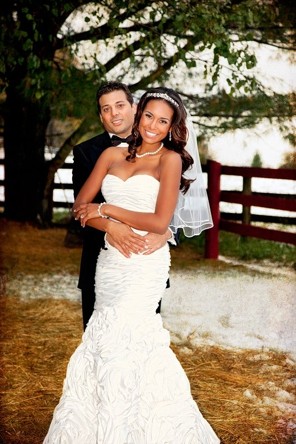
Samson and Whitney

The ‘Sparkle’ remake that opened today was about updating a groundbreaking African-American cult classic for a younger audience with more modern sensibilities. When you exclude that horrible night in February before the Grammy awards, you would still have an event that returned a fresh, luminous Whitney to the big screen. The return of a musical legend and box-office heavyweight to the biggest stage in entertainment. During the red carpet warm up event, the reporter mentioned that ‘Sparkle’ had sold the most tickets of all other movies that week. Quite an achievement. This is almost 20 years after Houston’s breakout portrayal of Rachel Marron opposite Kevin Costner in ‘The Bodyguard,’ and yet another testament to Whitney’s enduring appeal to the public.

Smoky Robinson’s appearance and comments made for the third-best moment of the event. He really loved her and called her “his baby!”

When Jordin Sparks saw him and embraced him, it almost made me mist up. Their embrace was sweet, memorable, and I can only imagine what an amazing photo threesome Jordin, Whitney and Smoky would have made.

Anyway, the stat on the ticket sales settled a lingering question for me: Was Whitney strong enough, in health, spirit and voice, to help carry this movie? She has a supporting role, whereas Jordin is the lead, but let’s be honest. This was a big, big movie, with enough room for two stars, and Whitney is the other one. We were all looking for her to return to form with this film.

Shortly after hearing about Whitney’s death, I thought about parallels in her life and that of the Biblical character Samson. It’s either instructional doctrine or an allegory, depending on where you are on the metaphysical spectrum. It’s a familiar story either way: a man appointed as judge over Israel who is lead a consecrated life and is blessed with superhuman strength and matchless public appeal. But like a lot of other gifted and charismatic men, Samson strayed. Felled by a woman, of all things, sent by his enemies to destroy him. Delilah was a transparent minx, taking all his bait whenever she asked about the source of his strength. But Samson must have been thick, and he failed to recognize what a threat she was. He revealed the secret of his strength. Then came his public humiliation, gradual redemption and last stand.

This is Whitney’s first movie in a long time, and it turned out to be her last stand. ‘Sparkle’ took a while to complete because of three deaths associated, two aside from hers. Aaliyah was the favorite to play the title role until she died in a plane crash about 12 years ago, and a famed author also passed away. But it’s also her last stand. A chance to shine again as the rare, inimitable talent and true beauty that she was. I say “true beauty” on purpose to quote Costner who described her that way just before her album “I Look to You” came out in 2009. (I have a sneaking suspicion—though totally baseless—that Costner had a massive crush on Whitney at a certain point. LOL.) The album displays the singing of a former superhuman vocalist whose gift, like Samson’s had been cut down. She sounded not ordinary, but noticeably different from that supernova we had all been accustomed to hearing. It is unfair to ask any vocalist to sound exactly the same after blasting her three-octave, mezzo soprano voice for 30 years. But Whitney was and is recognizable on that album. Her essence and “true beauty” shone through on that album. It’s undeniable. The high notes and elasticity that astounded the world were diminished, but not totally gone. The technical mastery and passion were all there. When she sings “I Didn’t Know My Own Strength,” I feel just as moved and tingly as I did when she sang “Where Do Broken Hearts Go.” That is true beauty, at least in my view.

‘Sparkle’ has no direct bearing on the theme of this blog. Most black women everywhere, whether in an interracial marriage or not, though, have an interest in Whitney. We all wanted to see her survive and thrive. I have plans to see ‘Sparkle’ next week, with a friend, after the initial wave of moviegoers. I hate the noisy chatty crowds, and the second weekends weed them out. No doubt I’ll hear very soon whether Whitney, like Samson, shook off the pain and regrets of the past, and the taunts of the Philistines who tried to pull her down. We’ll see whether Whitney called on God for another burst of strength and brought the house down.

Zany Edges Talk and Product Review

Summertime is usually growing season for all types of things, including black and bi-racial hair. Recently I switched to a new shampoo, conditioner and light curl-enhancing system from for Baby, and it’s from Carol’s Daughter. I did it mainly because I was shopping for our family trip to New Orleans (more on that later) and I needed to pick up some quick last-minute items at the mall.

Baby’s hair is responding incredibly well to this “Hair Milk Curl Perfecting” system. The shampoo is gentle and free of sulfates; the conditioner imparts incredible slip and shine; and the light curl booster is a great way to give her a wash & go without too much product buildup.

I might even try this stuff on my hair, just to see if it will take care of this squeaky dryness and 4C madness I have going on. I bought the full-size containers and ones for travel, and they were all shaped like those old-fashioned glass bottles. These days I think the company is selling the stuff in a re-designed package. But I would guess that they haven’t changed the formula. It works too well.

Now, on to that zany talk about edges that I mentioned in the headline. Ladies, I don’t watch trash reality TV, because I’m short on time and I don’t want my smart friends to shun me. BUT if you catch the right video blogger doing a recap, like NothingButTreble1220, I can guarantee you will be just as entertained. If not more. Do yourself a huge favor and watch this segment of her “Trash TV Review-LHHATL.” That’s for Love and Hip Hop Atlanta.

The mere title of that show puts me off and I will never give VH1 any of my hard-earned money for that nonsense. but HER recaps get constant play on my laptop, smart phone, iPod Touch; and I listen to them on the train, in the car whenever Hubby is driving, on the patio at work during my 10-minute personal call break, and in Washington Square Park where I eat lunch in the summer. Skip forward to the 9:57 mark for the best effect.

Lord! This girl is a natural. The camera loves her, and she is obviously comfortable with it. What makes her stand out from the field of YouTubers is her fluency in urban church-speak. The phrases, the quips and the jokes just roll off her tongue, making many a YouTube watcher laugh and hit replay, I’m sure.

So do yourself a favor, and check out her review. No cable bill necessary. LOL!

I Love These Drama Queens

June is Black Music Month, when we are supposedly to pause and delve into the major musical contributions of Black men and women in this country. This doesn’t make a lot of sense to me. One would need a decade to get through everything important left to us by Louis Armstrong, Big Mama Thornton, Robert Johnson, Stevie Wonder, Nina Simone, Sarah Vaughan—do you see what I mean? The list goes on. And I’ve only mentioned one person from New Orleans, the cradle of so much important Black and American music.

I want to shine a light on classical singers, who don’t get enough public appreciation, in my opinion. I’m also going to reach way back to Marian Anderson, Shirley Verrett and Leontyne Price, a contralto, mezzo-soprano and soprano, respectively, who all seem to be acknowledged as the foundational black classical singers of our time. Whether you download them on iTunes, read about them in archival Opera News articles, or sample them for free on the Internet, critics and devoted classical music followers laud them all for their technical execution and heart-breaking expression in their respective vocal classifications.

Anderson was that rarest of classical songbirds, a contralto. I didn’t know this until recently, but it is fairly hard to find a classical, much less operatic, contralto. Maybe it is because they love to sing arias like “Mon coeur s’ouvre a ta voix,” originally written in French for mezzo-sopranos. Anderson handles this more beautifully, with more heartfelt expression than any other, if I may say so. She never signed with any American opera houses, although she did sing at the Metropolitan Opera House, and had a flourishing career singing in concerts and recording albums. That more than made up for the disgraceful way that the Daughters of the American Revolution treated her in 1939, refusing to permit her to sing before an integrated audience at Constitution Hall in Washington, D.C. Those silly ladies basically wrote Ms. Anderson’s ticket to even bigger fame, as Eleanor Roosevelt made amends by arranging for her to sing at Lincoln Memorial instead. Apparently, Anderson never signed to any major opera houses, because she felt she did not have enough acting experience, apparently and even though she had several offers from major European companies. Well, we have her recordings and loads of footage of her audiences enthralled in her song.

Verrett, on the other hand, brought he acting chops to every one of her roles during her operatic career. The stunningly beautiful mezzo-soprano pretty much owns Lady Macbeth, as many opera enthusiasts will tell you. Or so I’ve read in the Times and Opera News. She is remarkable because she successfully transitioned from mezzo-soprano to soprano, because she was artistically hungry and wanted a broader repertoire than what was available to the mezzos. It worked, apparently. See what Opera News says of her stage career:

What Verrett had, no matter what role she sang, was an intense dramatic involvement and a burning desire to give her audience its money’s worth. She was a striking beauty, blessed with a voice that had a ravishing darkness, a solid core and a thrilling attack on high notes.

Oh, la la. I’d love someone to call me a ravishing beauty blessed with a thrilling attack on high notes. Here is Verrett as Lady Macbeth, and clearly she was born for a grand stage. I like to call her the Halle Berry of opera, in the sense that she is alluringly beautiful,  ambitious and hard working. Don’t you forget that gift, her soaring, exquisite voice. She outdid Callas as Tosca, do you hear me? I wonder if Verrett’s mother swaddled her in an opera cape in her bassinet.

Anderson and Verrett are no longer with us, but we still have Price!  And what a treasure she is. Her price is far above rubies. Whether she is singing as Bess in “Porgy and Bess,” or as Floria Tosca, she devastates and reduces to tears anyone within her hearing. And that is saying something, because I don’t fall apart for any old kind of singing. But you haven’t lived, you haven’t heard music unless you’ve heard Price stop the angels in their flight with her rendition of “Vissi d’arte.” Sopranos usually thrill us with their strong, high and sparkling voices. But how does Price manage to infuse her crystal high notes with such exoticism and warmth? Aside from Price, I’ve heard Verrett and Callas deliver this aria, and I must say Price easily surpasses all I’ve ever heard in this role. Her voice is so supple and commanding. It is really a wonder to hear.

All of these ladies overcame paltry racist attacks, in one form or another, as they honed their craft. The fact that they endured those indignities for classical music earns them my utmost respect.  The very first time I heard classical music was when my mother, who was co-director of choral music at our church, taught the senior choir to sing Handel’s “The Hallelujah Chorus,” for an Easter service. (Or was it Christmas?) Years later, she brought home a stack of LPs from her college music appreciation class. I sat on our living room floor while she played all of Mozart’s Eine Kleine Nachtmusik, thinking, “Man, this guy was a genius. This music is out of this world.”

My mother was single, so she never taught me to play the piano like she did so proficiently, and I was too quick to give up lessons once the ascent into more difficult pieces began. I never sang. I always hated my flat contralto to what I thought were much prettier and appealing mezzo-sopranos and higher, and my mother had one of those voices.  Although Anderson was my singing hero, I preferred to read a book while my mother did her runs on hymns and traditional gospel music at home or at church. Who knows? Maybe if one of my books had contained more stories about how these ladies climbed the rough side of the mountain, I might have put aside my weakness, my fears, my general negativity and become a virtuoso pianist by now.

Posted from WordPress for Android

When She Sings, We’re Happy

The voice from the heavens raises it “thence.”

At a certain point in Clive Davis’ tribute speech at Whitney Houston’s funeral  more than three months ago, he recalled a conversation with Whitney that struck me like a spooky premonition. Apparently, she told him that she was committed to quitting cigarettes, doing plenty of vocal exercises, swimming one or two hours everyday to stay physically fit, and presumably build her lung stamina, and that she would get her high notes back and be ready by August. Then, in what struck me as a spooky premonition, he said “Whitney, I’m gonna hold you to it.”

I don’t know what Clive meant by that, but a couple of her final recordings have been released in the last week. Both are from the soundtrack of the upcoming film “Sparkle,” which will be released in August. This one is her rendition of “His Eye is On the Sparrow.

I’ll also try to find and embed her pop duet with Jordin Sparks “Celebrate.” In my opinion, Whitney’s voice sounded a lot like it did in 1999. Although Jordin, another fabulous singer, pulls a good amount of the mezzo-soprano weight, Whitney’s high notes come through enough to tingle your scalp, just like the old days. Have a listen to Whitney and Jordin in “Celebrate.”

She Worked Hard for the Money

Shine, Donna, shine

I never watched the television series “Taxi” with much regularity, but I remember one scene between Louie De Palma (Danny DeVito) and Zena (Rhea Perlman). He was trying to break up with her for some reason. When she asked him why and whether there was another woman, he said yes.

“Donna Summer,” he said to raucous studio audience laughter. “She thought it was a black-white thing, but I told her I didn’t want her shaking it for any other guys.”

Really, I thought? White guys like Donna Summer, too? DeVito wasn’t exactly an Adonis, her equal in attractiveness, but who was? I wondered whether other guys outside the Black community admired this woman. It seemed perfectly logical to me that she would be admired. On TV, she seemed so tall, slim, with perfect complexion, long hair and shiny lips. She was glamorous, talented and world famous.

I didn’t go on a hunt for information about Donna Summer, but I eventually found out that it was more than her music that held crossover appeal. She married outside her race twice, and first did so in an era where the Black consciousness ethos was still pretty strong. Black power and Black beauty were still everything to us, so Donna Summer’s choices might have seemed out of step with that. But she gained a lot as a person and a professional from those experiences.

Her first husband was an Austrian actor named Helmuth Sommer, whom she married in 1973, after moving there. LaDonna Adrian Gaines married this guy, created a variation on his surname to come up with Donna Summer, moved to Munich for a while and eventually became fluent in German. They had a daughter named Mimi. That marriage ended and she eventually married a guy named Bruce Sudano, who would collaborate and produce a lot of her music, and they had two daughters, Brooklyn, an actress and Amanda.

I didn’t realize it when I was younger, but this was a daring path. But then again, maybe it was more natural. When you reach that level of professional success, racking up hit after hit after hit, double LP after double LP, single after single so much so that her ground-breaking style would inspire lots of artists and even help give rise to clubby music like techno, you run with a different crowd. You meet different men and are forced to have different experiences.

She was the first pop singer I became conscious of as girls in my generation began saving our coins and breaking away from their mothers during trips downtown to prowl musty independent music stores to buy her tapes. By the time I was 11 years old, when she released “She Works Hard for the Money,” in 1983, I thought this woman was terrific. Secretly, of course. It didn’t matter that merely listening to her ultra-racy “Love to Love You Baby,” would have gotten me into a world of trouble with my stern, austere single mother who was giving me a strict religious upbringing.

She was like the complete package to me. But I would never have the guts to try to sing her songs out loud in our house, or anyplace where other adults who knew my mother would hear me, and promptly rat me out. And I could never try to wear lipstick or put on anything that resembled those figure hugging outfits that she could rock any day of the week. And I initially resented the notion that my main claim to fame in life would be to marry outside my race, and to a white man.

Until the day I plugged a small boom box into an outlet in my room, I had to go into my mother’s pristine, well-appointed living room to listen to music. I didn’t get nearly enough of this beautiful, creative, ground-breaking mezzo-soprano who charmed all the guys and made girls like me want to emulate her. Later I would discover that she was raised on gospel music and came from a Christian home and reconnected with her faith in a powerful way as an adult. Parents really shouldn’t put too many restrictions on the music their kids listen to, because you never know what kinship, what healthy connections, could exist between the artist and that youngster.

Anyway, all I understood, in my locked-down way of living, was that she was special. And it’s really sad for her family that her warmth, hugs, faith and beauty, everything about her that enriched their lives, is now just memories.

My Spring Cleaning

Colloquialisms, buzzwords and slang. We need them to get our points across and make the most of our busy days. Hey, I understand the need for phrases like “on the spot” or “get your ___ on” or whatever. Yet there are times when the sounds of certain phrases, just drive me nuts. They are patronizing, betray false modesty or insincerity of any kind, or they are so vacuous, overused and lazy that they are like … seriously? Really?  So in the spirit of spring cleaning, I’m digging these these phrases out from the back of my closet, stuffing them in giant plastic bags and hauling them to a pickup point for the municipal incinerator.

Don't let that sweet face fool you ...

Don't let that sweet face fool you ...

“That’s sweet of you” or “you’re so sweet.” No, I’m not sweet. Stop saying that. I’m a grown woman with a mortgage, a toddler, a career and a blog. Calling me sweet hauls me back to 10th grade when no one took me seriously and always tried to get over on me. Think about it: In a pinch, would you rather have a solid, go-to fighter on your side or a sweet little lady? Thank you! Thank you very much.

“That’s disappointing.” Politicians love this one, and I hate it. You know that they—except these Northeast mayors—would rather have a verbal throw down than peddle some nonsense about how a greedy businessman is screwing his citizens out of millions of dollars.

•  Any diatribe ending in the word “drama!”  We need to cut this out right now. Mary J. Blige had every right to use this on her 2002 album “No More Drama,” but when everybody from twittering tweens to horrific looking suburban housewives on a reality TV show  roll their eyes and talk about “all this drama…” I have to go. Please cut it out!

“I think you know that …” People sometimes use this phrase when they want to throw culpability on the other person, especially in situations where they should take some of the blame. Narcissistic bosses, aggravating neighbors and anyone else who just wants to throw you under the bus all the time use this phrase.
“Girlfriend …”  I may be black, but that doesn’t make me your girlfriend. Especially if I’ve known you for 10 minutes, you’re white, you went to an Ivy-league school and have at half dozen tailored suits hanging in your closet. On cherry wood hangers. Try again, sweetheart. See! You don’t like people using that patronizing garbage on you either, do you, toots?
Readers, these phrases have got to go. The fact is that Americans spend way too much time looking through cheap, bubble-gum colored celebrity gossip magazines, and on social networking sites absorbing this nonsense, compounding the fact that they troll these places in the first place looking for gossip. It is one thing if a character on “Friends” or the latest 20-something sitcom talks like that. But when the regular citizen picks up the vernacular of a reality TV freak and keeps it in circulation, well, that’s when I have to unplug.

Sister 2 Sister: The Interracial Love Issue

Today I was rushing through the train station on the way home when I stopped to briefly scan the stacks of a small newsstand. The April issue of Sister 2 Sister magazine was still there, and you can still get a copy. The publishers might as well call this the interracial love issue. There are no less than four articles touching on interracial dating for Black women in some way.

• Trina Braxton is featured talking about her recent marital struggles, as documented on the hit reality show “Braxton Family Values.” Trina’s husband Gabe is Mexican, as viewers know. And they’ve been struggling lately with infidelity and indiscretion issues, apparently on both sides. When the article came out, Trina said they were separated, but on a recently aired episode, she told her sisters and mother at dinner that she had filed for divorce. (At which point Tamar Braxton broke out into a praise dance. SMH.) So sad for Trina and Gabe! They make a cute couple, and I guess I hope that they find healing and peace, whatever they decide.

• Melody Hobson, the brainy, money savvy lady with her pretty smile, talks about her approach to money management and her professional life. She also discusses being in an interracial relationship with Hollywood heavyweight George Lucas.

• Ice-T—yes him—dishes out refreshing straight talk to Black women about interracial dating. Basically, he says it comes down tot he numbers. Black men have been crossing over romantically for years, and attract women from every culture, every corner of the earth. The dating pool for black women, therefore, is diminished. If black women insist that only a black man can meet their ideas of happiness in a romantic partner, they’ll lose out. Simple as that; do the math and move on.

• Speaking of black women closing themselves off from cross-cultural dating, there was a very brief passing reference to that in a feature on Whitney Houston. It was basically a reprint of an article that originally appeared in July 2004. In it, Whitney expressed the very interesting notion that she was expected, as America’s sweetheart, to marry interracially. She said she didn’t want to go the route of Diahann Carroll or Diana Ross, because her heart was with Bobby Brown. Well, we know how that turned out. Her problems were deep. But who knows? A different husband (ahem, tribute speech) might have written a different outcome for her, provided he was a suppportive, strong and decent guy, regardless of his race.

Guess Who Got Married? Katie and James!

Image

Kathryn, known as “Katie” Rost and a doctor named James Orsini. Apparently, they have been close friends for 13 years, according to the announcement in The Washington Post. So their friends are probably breathing: “It’s about time y’all! We knew something was up when you took that road trip. Yeah right, you’re ‘just friends.'”

I must have been snowed under with work or some other obsession when this was posted, because I just stumbled across this on Sunday afternoon. Can we let bygones be bygones? Let’s also remember that this is not, nor does it aspire to be, an entertainment news or gossip Web site. Generally, I can’t stand those things, because they are far too intrusive, and take a sick pleasure in subjecting famous people to public mockery when they are going through personal struggles. That is exactly the time they should not be on display. Plus, they whip up a lot of confusion in people’s minds about what’s news and what’s not. Hint: Where an actor/actress buys  vegetables or does rehab should not make the wires. Now lifestyle magazines are OK. I’ll take updates on new albums, books and movies, and makeup and fashion tips, so long as the salacious details are left out.

Well anyway, here is a photo of Katie Rost and her brand-new hubby! They will be beautifying Montclair, N.J., and Lincoln, Va., with their combined gorgeousness.

James Roland: Aspiring Gospel Artist

Anyone who devotes a discernible amount of their talent to this underpaying genre is almost sure to get a listen from me, out of moral support. I just happened to come across James Roland, a self-starter in the biz, and gave a quick listen. The basic track is appealing, even if it is a little crowded with overly familiar R&B sounds. I could do without the high-register swoop, and think the lyrics are a bit of a hurried mouthful at times, but it’s worth a quick listen.

Here is a sample:

I’m not a singer by any means, a gospel concert or a concept album producer—although sometimes I wonder if it is not a missed destiny. But there is no other genre like gospel, in my opinion. It was born in houses of worship, created with the divine purpose of winning souls and soothing hearts. Musicians are the heroes of any Black church, and anyone with a decent amount of musical talent can learn a lot from joining the music ministry. First of all, the musical instruments are just there, paid for by the church’s collection. Think about all of the hours that organists, pianists, guitarists and other band members devote to working out perfect chords to accompany the singers. Imagine the drilling and practicing that the choir and lead singers subject themselves to in order to develop their individual pitch, and polish their ability to harmonize with others.

From humble urban storefronts to modern sprawling campuses, if a church has a band, you can almost be sure to be in for a musical treat on a Sunday morning. Gospel, with its driving base, soulful organ, especially on a Hammond, and power vocalists, is indispensable to Black congregations through out American history.

Gospel singers do not achieve the level of fame and wealth as secular musicians, because the market is a smaller one. We’re not exactly talking about a form of music that glamorizes materialism, substance abuse misogyny or violence, so of course it’s hard to make a living just off of making gospel music! Go figure. Although this is a tamer sleepier genre, at least its fingerprints—without the aforementioned dysfunctions—are all over a host of majorly influential genres.


Ummm … Halle?

Juste le regardez! Il se vante, n'est-ce pas?

French guys have a lot to brag about right now. First “The Artist” swoops into Hollywood and almost pillages the Oscars, in true victor fashion. Big ups to Mr. Dujardin (ooh la la) who won for best actor.

Now another Frenchman, Olivier Martinez, is about to carry off another Hollywood prize, our dear Ms. Halle Berry. Access Hollywood and other entertainment news outlets are reporting that Martinez confirmed their engagement last weekend. Apparently, he asked for her hand offering a true one-of-a-kind emerald and diamond sparkler, designed by master ring maker Robert Mazlo. The stone was dug out from a remote location, the setting is unique and the band is apparently engraved with all sorts of symbols personalized just for her. Based on the descriptions of the ring I’m reading, she’ll need a bodyguard just for her left hand!

Yes, yes, we are all aware that this would be a third marriage for Halle Berry, 45. It is a first for Martinez, 46. It is also her fourth serious long-term relationship with a high-profile man, and there’s that child custody issue going on with Gabriel Aubry. Despite all of that, I do wish Ms. Berry well, because I usually enjoy her movies and magazine interviews. Plus, everyone deserves contentment in their romantic relationships, especially when they seem to be such devoted parents, like her. Despite the fact that we don’t know this cat, Halle Berry has repeatedly said in interviews that whoever comes into her life long term must be good for her daughter.

So ignore all the catty comments that are sure to come cackling out of covens round the country. Technically, it’s none of our business and we should all be doing something more productive with our lives, anyway. Those of us with a passing interest in the personal lives of A-list celebrities should simply hope that Ms. Berry has at last found a lasting love.