A Little Help From Naptural85

Admittedly, I can be “all thumbs” when it comes to styling hair. That’s one downside to having a girl: You have to deal with the ups and downs of caring for Black and bi-racial hair—for two! Luckily, I can tap into the expertise of beauticians, friends, relatives—and the Internet if the ones I just mentioned are all busy—to bolster my hair-care know how. That brings me to this YouTube channel, which I stumbled across a couple of weeks ago.

Naptural85’s styles are really creative, ranging from sleek and elegant to sweet and adorable. I’ve already used the Bantu knot-out on Baby’s hair, with some terrific results. Big, soft curls that last the whole day, and if I take care of them properly, throughout the week. I have to chuckle when I use the term “Bantu knot,” because when I was growing up, we called them Chiney bumps. It’s just a Jamaican thing. I go with the multi-ethnic term on the blog, but in my house, we still call them Chiney bumps. And if Baby is upstairs kicking up a tantrum, after she calms down and I make my way downstairs, Hubby swivels around in his chair and asks me: “Chiney bumping?”

Here is a picture.

Baby's Bantu Knot Out, Day 2

It’s hard to get good shots of Baby’s hair without her scooting away after a toy or looking straight into the camera. (Hubby still strongly disapproves of putting her face on this page. *Sigh* Even though I’m proud of my little beauty and want to show her off, we have to maintain our daughter’s privacy.)

I’ll post another update on how I actually style Baby’s locks. Hint: Variations on themes and lots of “free & easy” days.

Product Review: Like—Don’t Love—Shea Moisture

Is there an unscented version?

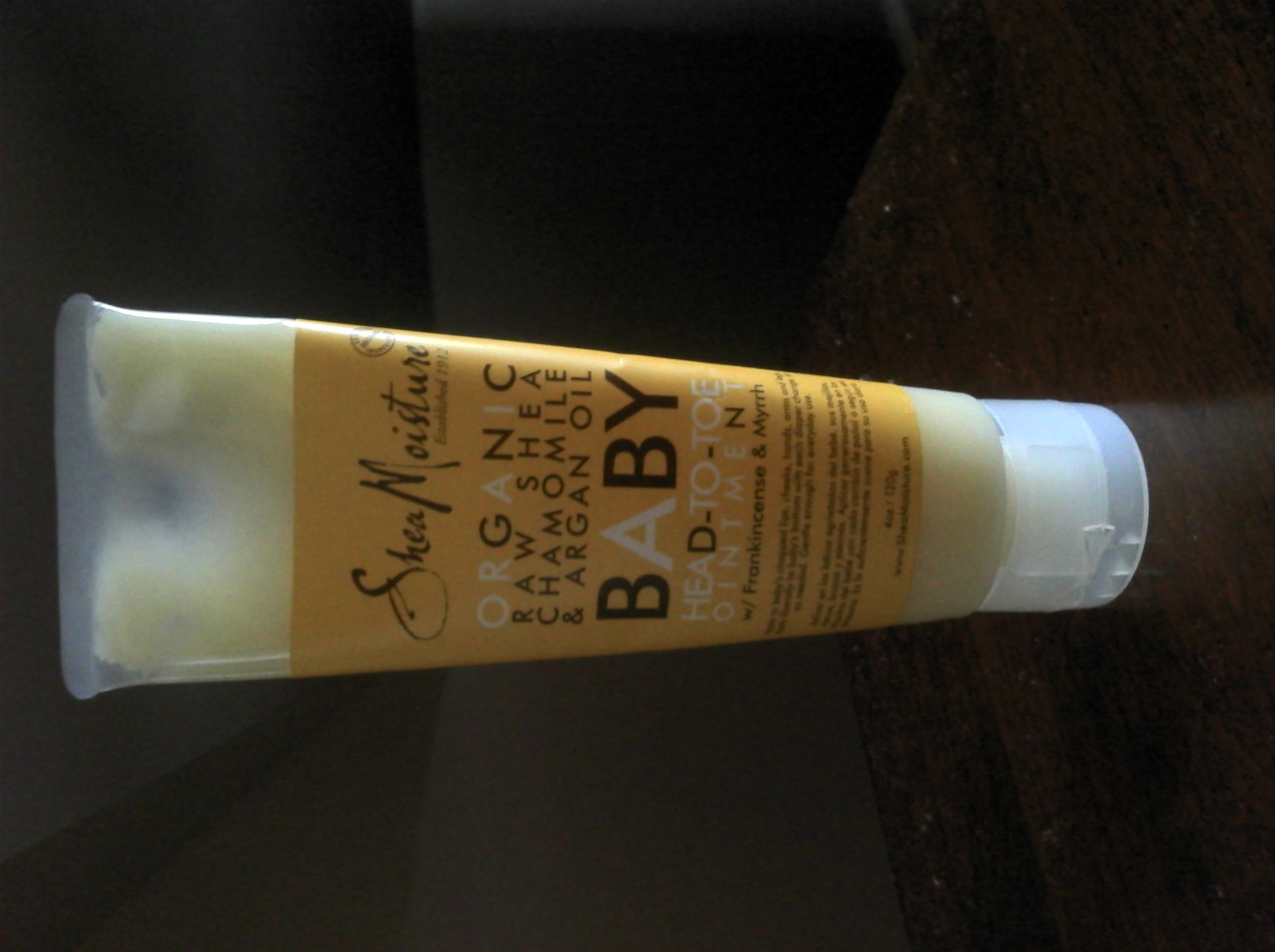
I like this cream for from Shea Moisture, the Baby Head-to-Toe Ointment. I found it while strolling the aisles at Target for Pull-Ups and other Baby supplies for you-know-who.  😉  The cream is very rich, and when you do work it into little elbows, knees, heels and wintry eczema trouble spots, it does keep dry, ashy and scaly skin at bay. Moisture is very important for all skin types in the winter, not just on biracial and African-American kids.

I don’t love it, though, because I think the scent is too strong. Although Baby is all of 37 inches tall, it took more than a small amount to get it into her trouble spots, by the time I was finished applying it, she scent was almost overwhelming. I almost washed some off of her. And believe me, I didn’t slather it on her, either. Just a golden dollar piece sized amount, at the most. Also, even if I wanted to use more, I would be hard pressed. The cream itself is very thick, which is what you would expect from shea butter, and I just managed to wring a modest amount out of the tube as Baby skipped here and tottered there, waiting for me.

I wrote to the company, complimenting them on the product, and asking about an unscented version, but I got no reply. That was at least three weeks ago. Well, I went on their Web site, searching for an unscented alternative, and came up empty.  I did notice, after exploring their Web site, that Shea Moisture loads up almost all of its products with very richly scented exotic ingredients, like myrrh and frankincense. I didn’t do a thorough analysis, but I bet it’s safe to say that each product has no less than three very aromatic, pricey herbal ingredients.

Well, I need to keep Baby’s routine simple, for all of our sakes. She is a busy-body, two-year-old child who can’t sit still (I love it!) I have a demanding full-time job and long commute, and Hubby … he doesn’t care very much about this stuff. If I need to work late and leave Baby’s hair-and-skin care routine to him for the night, it needs to be simple, or it won’t get done. For now, I dilute the Shea Moisture Baby Head-to-Toe Ointment with an unscented baby cream from Aveeno. That combination works well, along with skipping a day or two of the Shea Moisture.

There you have it. I like it. I might try other Shea Moisture products, especially if commit to a strategy for going natural again, or at least texturizing.

Felicia and Her Prince

Here's our royal couple.

As the entire world, it seems, awaits Prince William and Kate Middleton’s wedding day on April 29, Felicia Morris married her very own prince when she tied the knot with Christopher Principe in New York. Hubby, who is almost perfectly fluent in Italian, tells me that the name Principe translates to “prince”. Therefore, I wouldn’t doubt that these two had a beautiful, storied courtship. Felicia took Christopher’s name, which is the traditional thing to do, but I think it also says he’s been a gentleman of the highest order to her. Don’t take my word for it, though. You can watch their story here for yourself.

I do hope that Felicia and Christopher enjoy a lovely life, happily ever after!

A Bad, Bad Start to a Hair Day

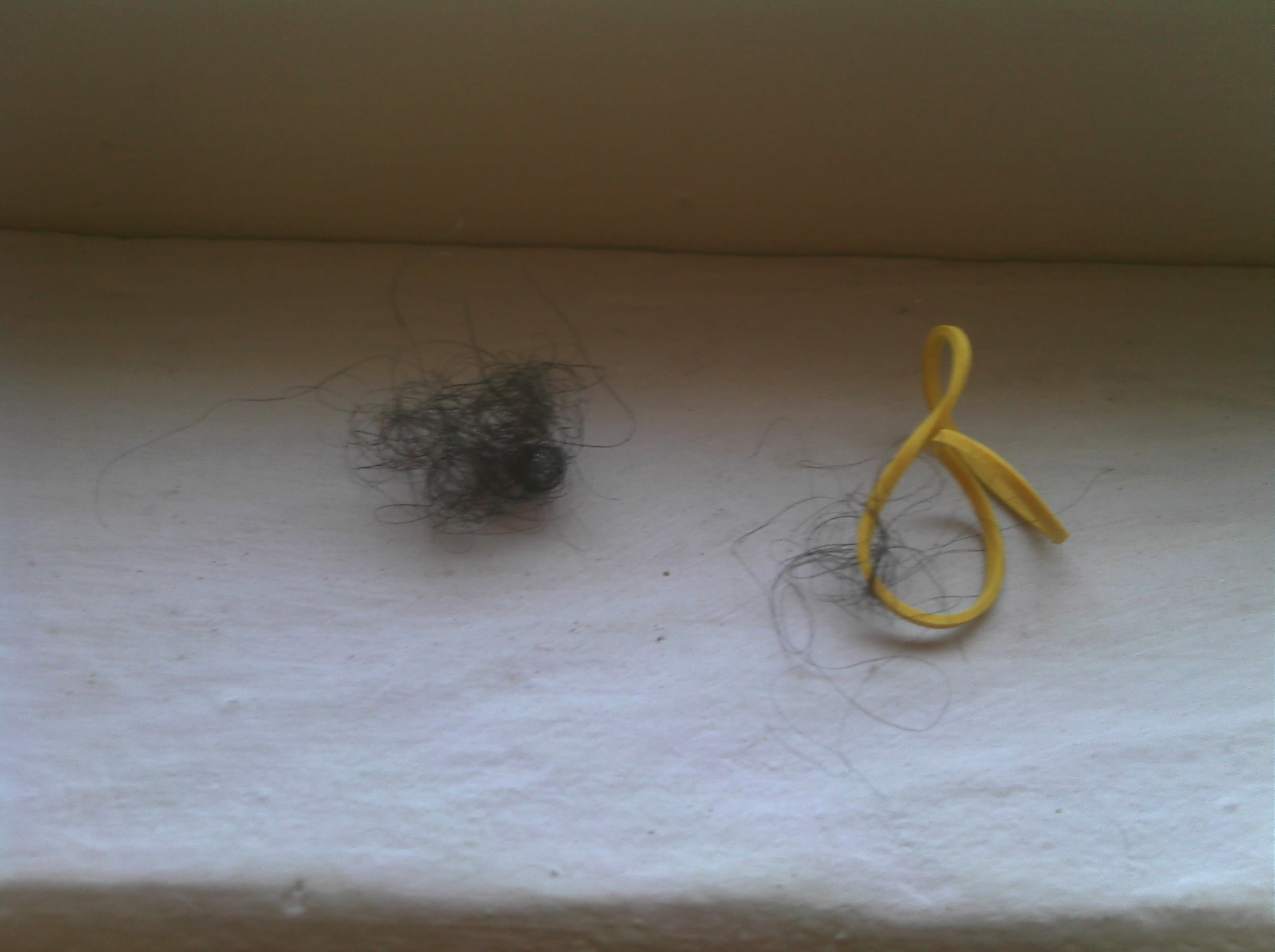
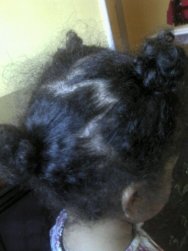
When I leave Baby at the local day care center, I do not expect them to style her hair. After what I saw the other day, I am going to insist that they never treat my daughter’s hair like that again. Just take a look at these photos, and you’ll see what I mean.
image

Which way is straight?

image

How do I undo this?!

The carnage.

I got home late from work the day that this was done, after Baby had already been settled into bed. When I leaned into her crib and ran my hand over her puffs, I asked Hubby who did her hair and why, considering that I sent her to school in a presentable, pretty curly afro. There was no need to do her hair. Hubby is hair clueless, so he just shrugged and figured it saved him the trouble of  having to brush and untangle that night. Say what?!?! The next morning I saw this horror show in the full morning sun. I was hopping mad! My child’s hair was sectioned off in these CRAZY parts and bound up in … rubber bands. And they sent her outside like that!

Who does that?!?  When caring for Black and bi-racial children’s hair, the three key words are moisture, moisture, moisture.  If you’re going to put in ponytail holders, use scrunchies from Goody’s or little mini ones that are soaked in coconut oil or olive oil first. Common, dry rubber bands from Staples or who knows where DO NOT belong in a black baby’s hair.

It took me a few long minutes of trying to get these office supplies out of my daughter’s hair. Finally, I had to cut them out, because the rubber bands and her hair were so entangled. She was getting upset, impatient and I had to really be firm with her to get her to sit still and let me finish the job.

After I signed Baby in at day care the next day (Hubby and I had a couple of of other priorities to discuss with the teacher, so this waited a day), I asked the teacher about it. She explained that Baby and her best pal, a little boy, were roughhousing and she was afraid that the hair pulling would get out of control and that Baby would get hurt. OK, so we identified the good intentions that paved this road to hell. (I’m exaggerating, of course. But look at this mess!!) I explained that the rubber bands were a problem, because they were very dry, made her strands brittle, and caused some breakage when I removed and finally had to cut them out. She immediately apologized and said she would try to avoid that. So then I felt bad for wanting to read the woman her rights. Melanie is a young woman, about 23, sweet as pie and always is so warm and nurturing to Baby. How could I be mean when she apologized over and over?

When I was young, my mother, aunts, friends of my mother and other guardian women types would always tell me not to let other people touch my hair. My mother wasn’t super rigid about that, and neither am I. If the teacher had “good hands” and could fashion pretty cornrows or other things, I might not mind. But this? And from a Latina, who should know something about curly styles?  Oh no. As a compromise, I said I would leave scrunchies in Baby’s cubby hole or her bag so that if the ever get possessed with the same idea (I didn’t use those words), at least the equipment will be gentle on her hair. Maybe I’ll leave a multi-purpose comb in there too, and a hint: could you at least part it straight? Sigh.

As for Hubby, I obviously have some more training to do to get him through the basics of brushing and untangling at night!

Better Late Than Never!

It is Black History Month, readers, or it was. This year all of my best intentions to express some form of racial pride and civic awareness flew out the window, do you hear me? Although this is the 28th, which means Black History Month is gasping its last breath, I still want to give my two cents and talk about a couple of high-achieving Blacks whom you might want to remember.

How do you spell s-u-c-c-e-s-s?

Jody-Anne Maxwell. This young lady is from Kingston, Jamaica, the island where both my parents were born. At 12 years old, in 1998, Miss Maxwell won the Scripps National Spelling Bee. She became the first—and only—Black competitor to win the honor. Thirteen years later, Maxwell is a practicing attorney in Jamaica, a national hero for her country and a living piece of Black history. I was a general assignment reporter at my city’s newspaper when Miss Maxwell won that competition, and I was on shift the morning that the winners were announced in the paper. Unfortunately, our newspaper decided to run a photo of the local competitor, a young Caucasian girl. One of the readers, who happened to be an old friend of my mother’s, was livid when she saw the paper. She called up, and who should answer but little old me? I knew she was right: the logic of running the losing competitor’s photo, and none at all of the winner, did not stick. In previous years, the winners had been pictured. I was so embarrassed that my editors have committed such an obvious slight. In the future, I hope they decided to run a normal size photo of the winner and a small one of the local competitor.

A little hyberbole anyone?

Roi Ottley. He was a foreign correspondent, journalist and best-selling author of “New World A-Coming: Inside Black America.” He had a seriously accomplished career. Ottley was the first African-American journalist to be employed as a working war correspondent for a nationally known magazine and a major white daily newspaper. He later became a reporter for the Chicago Tribune and broadcasted reports for both the Columbia Broadcasting System and the British Broadcasting System. In 1943, he served as publicity director for the National CIO War Relief Committee. Of course, I had to try to highlight a writer! Read more about Ottley at: http://www.answers.com/topic/roi-ottley#ixzz1FJbDZDYE

Update: A Dangerous Truth Concealed

If you’re a New Yorker, or just like talking current affairs in Black communities, you know that Live Always pulled down a massive billboard in New York City’s SoHo section. It offended hordes of pro-choice, progressive people who thought it was wrong to put Black women on blast like that.

Although I don’t think Black women should be publicly hammered, I think this whole controversy says more about our inability to have a much-needed talk about Black women’s reproductive health. We have far too many abortions, as I stated before. The reasons could stem from economics or social isolation. Whatever the reasons are, we need to show women how to effectively deal with them, instead of telling women that it’s OK to destroy the pregnancy.

Abortions could have lasting effects, like scar tissue on the uterine wall that hinders future fertilized eggs from attaching. A cervix that starts to dilate prematurely during a later pregnancy.
Isn’t it better for a woman to delay a pregnancy (abstinence or birth control is up to the woman), or considet adoption than undergo a procedure with so many awful consequences? I think so.

Most of all, New Yorkers really surprised me with their shrill reactionary response to this. Apparently, they’re not ready to talk about it, either. One of these broadcast stories interviewed a guy, of all people, about this. Considering that loads of women abort because their relationship to a boyfriend or husband is shaky, I thought his pro-choice stance was ultimately self-serving.

I support women’s rights in all forms, but when we are talking about such extreme measures for manageable issues, it makes me pause.

A Dangerous Truth

Confronting a squeamish truthLike most Black women everywhere across the country, this story had me engrossed in the morning newspaper. An advocacy group called Life Always hung a three-story billboard on the side of a building in SoHo, New York City. It screams: “The most dangerous place for an African-American is in the womb.”  Unfortunately for us, this billboard does the job and tells the truth. We can squabble about what the real leading causes of mortality are among African-Americans. But facts—incontrovertible facts—push an uncomfortable truth right into our faces. Black women in this country have some of the highest abortion rates compared with women from other racial and ethnic groups. Take a look at some of these numbers from the Guttmacher Institute.

Eighteen percent of U.S. women obtaining abortions are teenagers; those aged 15-17 obtain 6% of all abortions, teens aged 18-19 obtain 11%, and teens under age 15 obtain 0.4%.

Women in their twenties account for more than half of all abortions; women aged 20–24 obtain 33% of all abortions, and women aged 25-29 obtain 24%.

Thirty percent of abortions occur to non-Hispanic black women, 36% to non-Hispanic white women, 25% to Hispanic women and 9% to women of other races.

Thirty-seven percent of women obtaining abortions identify as Protestant and 28% as Catholic.

Women who have never married and are not cohabiting account for 45% of all abortions.

About 61% of abortions are obtained by women who have one or more children.

Forty-two percent of women obtaining abortions have incomes below 100% of the federal poverty level ($10,830 for a single woman with no children).

Twenty-seven percent of women obtaining abortions have incomes between 100-199% of the federal poverty level.*

The reasons women give for having an abortion underscore their understanding of the responsibilities of parenthood and family life. Three-fourths of women cite concern for or responsibility to other individuals; three-fourths say they cannot afford a child; three-fourths say that having a baby would interfere with work, school or the ability to care for dependents; and half say they do not want to be a single parent or are having problems with their husband or partner.

It says we are often unprepared for motherhood, or for an additional child, for one reason or another. If we took the time to get to the root cause of high abortion rates among Black women, then all of the peripheral comments that inevitably froth up at a time like this—about a woman’s choice, and how Christian groups should not force their opinions on others—will fall away. As they should. The real issue here is not whether a Christian group is crossing the line of decency and respect by publicly pointing out statistics. It should be: Why are so many Black women aborting their children? Where are the Black fathers and support systems to help her carry that responsibility? Are the support systems being strained beyond their capacity? Shouldn’t more Black women wait until they are educated and self-sufficient before getting pregnant?

I respect all sorts of family units. It is not my style to condemn anyone for not getting the ring, wedding, house and babies in that order with one man only until they die. Inevitably, well-meaning men and women on the street, bloggers, or whoever will say that no group should try to override a woman’s right to choose. My counter argument is this: Blacks are annihilating themselves with these rates of abortion.  If women want to be really empowered, wouldn’t it be better to try to make better choices about their lives leading up to the positive pregnancy test? Choose responsible, stand-up men as partners. Choose to avoid pregnancy for as long as it takes to get a degree, a comfortable apartment and money saved. After that, the way a woman chooses to structure her family unit is between her, the man and her Creator.

One last thing: African-Americans are not the first to have their abortion secrets aired publicly like that. India and China have had longstanding practices of discarding baby girls through infanticide and abortions, mainly due to cultural preferences for boys and population control. This has been discussed at length in documentaries, national newspapers, magazines and even dramatized on television. As societies, they had to talk about their ugly truths, and will be doing so for generations to come. Would it be so bad if Blacks shone a light on our own issues and cleaned house a bit?

You’ve probably seen the offending billboard by now. If not, here is a link: Metro – Uproar over abortion billboard.

Here We Go A-gain!

image

A snowy day for Jamaican pursuits.

I woke up this morning to see several inches of snow on the ground. And it is still coming down. Ugh! There is so much to do today, including driving to my aunt’s house and cooking curried chicken. I also want her to give me, if she consents, a sewing tutorial. She is an excellent seamstress, and I want to absorb a lot of what she knows. I wish I could sew proficiently. I think that if a set of curtains or a duvet needs to be altered, I should at least know how to do it myself, so that only the lack of time to do it myself would force me to bring those jobs to a dry cleaner/tailor. Years ago, I brought two sets of curtains, purchased from Target, to a local dry cleaner/tailor for altering. I thought he looked at me thinking: ‘Wow, this is really simple, but if you want to pay, I’ll do it.’ 🙂

Cooking and sewing are the two things that many well brought up Jamaican/Caribbean women can do, especially those who are in my aunt’s generation. In my 20s and 30s, I spent so much time trying to juggle expectations from family, church and editors that little time was left to slow down and really learn something like sewing. My life is still busy, but it doesn’t matter. Now that I also have a house and two growing girls, think it’s high time I advanced past stitching a crooked hem. LOL. We’ll see what happens.

Fertile Ground

She let me style it this morning.

Oh boy, dear readers. Look at this mane of hair! This morning I managed—just barely—to style Baby’s hair in a way that shows off her adorable face, and I did it without provoking an all-out battle. How does it look?

I can only show the top, because her dad is uneasy about her images being on the Internet. I think this shot shows just how lush and ample her new head of hair is, and how much work is ahead of me!

I tried and tried to get a 3/4 view shot from the back that would show off the twists (nicely done, if I might add), but which would conceal her face. I got one, but for whatever reason my computer keeps rotating the image. One would have to do neck contortions to see the photo, and I don’t think it’s worth it.

Although Baby has a beautiful head of hair, she wasn’t blessed with a mother who can pull off creative, intricate hair styles. Just enough to be presentable and neat. My strengths are reading children’s books in animated ways, coming up with cultural activities and devising art projects. Every now and then, though, the mood will hit and we’ll come up with something cute and neat. And I’ll share what I can without making her Dad irate with me!  😉

Bussing on Valentine’s Day

A buss is still a kiss ...

I remember being a brash youngster in the 1980s. Wherever my friends I gathered—be it in our parents’ living rooms or in the church’s fellowship hall—we would engage in raucous sessions when we took light-hearted jabs at each other. They were like roasts, and we called the whole thing “bussing.”  I think it’s spelled that way, but who’s really the authority on urban slang from the 1980s?

Decades later, my inner literary geek took a much larger role in my life, thankfully, and I’ve taken to checking the Web site http://www.dictionary.com frequently, for the word of the day. (I even have the app on my iPod touch.) Wouldn’t you know it, but Sunday’s word was “buss,” as in “to kiss.”

The word bridges cultures in an interesting way, I think. First the word “buss” develops somewhere along the line in the English language and then falls out of popular use. Then a bunch of Black kids from north Jersey resurrect it, only they use it to express the way they sometimes rag on each other.

When I explained the word to Hubby this morning, we had to share a smooch in honor of our favorite noun of the moment. (OK, so we are both word geeks. There are worse things to be in life!) It is also perfect for St. Valentine’s Day. For all of today, therefore, and maybe a while afterward, Hubby and I won’t kiss like almost everyone else. We’ll buss instead.