These Two Are Absolutely Adorable

Gentle readers, I normally get incensed whenever I hear about a man beating a woman’s face. This morning, though, I got bored/sleepy on the train ride into the city, so I ended up trolling YouTube until I came across this video.

They are very entertaining and too cute, don’t you think? He’s there, bungling the whole process and globbing the powders and coloring—colouring!!!—onto her face. She’s bearing with him, trying not to wriggle and giggle throughout the whole process. I had to laugh when he started brushing on the gold eye shadow and blew onto her face to get the excess off! Even if the final result was not desirable, you want to just reach out and squeeze them both in a big hug, don’t you?!

Posted from WordPress for Android

Are the Kids Alright?

Image from Amazon.com

Immigrant families from the Black Diaspora are familiar with this passage: moving to countries with thriving economies to make a better living, and leaving their children behind in the care of trusted relatives and friends. Of course, the separation is never permanent. Just long enough for the mom or dad to get working papers and authorization to bring his or her spouse and kids to where they are. The idea of making such a choice for economic reasons seems hard enough, but what if one’s humanity were in the balance?

What if it was the late 18402 and you were a young slave woman, say Mary Walker, visiting Philadelphia with your master? With three young children back on a plantation in North Carolina, you might not be tempted to succumb to the urgings of abolitionists to get away. But if you and that master argued so fiercely about something that he threatened to sell your kids away from the only home they’ve ever known, then what?

Mark Walker made a choice given those terms, and you can read about it in “To Free A Family,” by Sydney Nathans. The story is drawn from letters and lots of other documents to piece together Walker’s life and what it was like for her to live through those times. I’m not sure if I could bear to be separated from Baby, but if it were inevitable and I had to make a terrible bargain, I’d at least want to scrape up an ounce of my own humanity by booking passage on the Underground Railroad, instead of waiting around helplessly until someone tore her out of my arms.

Walker was a literate slave, and was articulate enough to impress northern whites, apparently. I prefer to read stories about slaves like her, honestly, because tales of brutality meted out on field workers always leave me emotionally zapped and near tears. Judging by this book review in The Wall Street Journal, Walker’s story had a more uplifting end.

A Heaven-Sent Voice Returns Home

Give me one moment in time, when I’m more than I thought I would be

When all of my dreams are a heartbeat away, and the answers are all up to me

About a year ago, I steered our family station wagon through the narrow hoary streets of East Orange, consulting a scrap of paper with directions to a health food store. I drove past a rambling red brick building marked with a monumental sign on the threadbare front lawn: the Whitney E. Houston Academy of Performing Arts. The building was set far back from the street, and the lawn was framed with what I thought was skimpy landscaping. I wondered about that place of learning: Was it a district, charter, magnet or private school? Was it well supported by its namesake and benefactors? If so, couldn’t the supporters have done more to spruce it up, especially since the namesake has such a polished public image?

An uncomfortable feeling followed the first thought: By 2011, Whitney Houston had fallen from grace. Years of drug use, to which she publicly admitted and a hard-to-break cigarette habit, seemed responsible for damaging her uniquely glorious voice. Her public struggles to leave a wacky marriage and overcome substance abuse had taken apart the persona of a charming, articulate, poised and intelligent young woman with the world at her feet.

Yet Whitney was not, at heart, the coarse-talking riff raff that mean-spirited detractors say she “really was.” Her real, actual history was of a mesmerizingly cute impish girl, in middle-class East Orange, NJ.  The music world has its nobility and peerage, and she hailed from the House of Drinkard-Houston, LOL. Look them up, including her mother, aunts and cousins, and it becomes easier to process how someone could be that gifted vocally. Whitney was the gift that kept on giving. She was also a ground-breaking and highly sought after teen fashion model, with a thriving career that was translating nicely into television roles. She appeared on Gimme A Break, SilverSpoons and was offered the part of Sandra Huxtable on The Cosby Show.  By the time her music career had taken off, she had already traveled the world with her mother and Dionne Warwick, met and worked with the likes of Chaka Khan and Luther Vandross, and developed a work ethic that made her very appealing to music and casting directors who needed reliable, talented people to complete projects. One way or another, Whitney was destined for stardom. So all this talk about her “fake” public image is pure nonsense from cruel, hardened cynics.

Yet there was no doubt that years of being hounded by an inhumane press, lashings from an ungrateful and vulgar public, all compounded by marital betrayal worsened a natural proclivity to abuse substances. Whitney seemed as lost emotionally as I was geographically at that moment. She was working on reclaiming her former glory, directions in hand, her destination in view. Looking at the school, I silently prayed that the woman would continue her comeback, finally conquer her problems and enjoy a natural, long life. As much as I was aware of her problems, I couldn’t bash her and write her off: Her voice, clear, strong beautifully honed as European leaded crystal, had brightened many of my dark and moody adolescent days. It ministered to me, and I couldn’t drag her like some of these other sickos were doing.

To say that last week’s word of Whitney’s death shocked me is an understatement. She had too much in common with me, my cousins and contemporaries for any of us to filter this news out as yet another troubled, brilliant singer who could not save herself from ruin. Like us, she was black, talented, grew up in church, nestled amidst a family of talented, resourceful and driven women. She came from hardscrabble inner city surroundings in northern New Jersey and achieved—here is where she was quite special—phenomenal and unrivaled success at her craft. Yet she maintained a presence in the state and always owned a home here. It is safe to say that all Jersey girls are loyal, and no amount of fame or success will make her pull up roots from the state completely. She always leaves a piece of her heart here, and comes back to visit every now and then.

I couldn’t have abandoned Whitney then, and cannot now. The public still does not know exactly what caused her death last week, although it has been widely reported that she was found underwater in the bathtub of her hotel room. Part of me is still hoping that it was all an accident, and that her vices did not play a part in her demise.  There is also a temptation to blame her tempestuous marriage for keeping her mired in drug use, even if that relationship wasn’t responsible for introducing her to cocaine or whatever else she might have used to self-medicate. Some might say that had she devoted that singular voice to gospel music, she would have avoided the risky behaviors that attends the popular and R&B music scenes so often, and she might still be alive and thriving. But gospel is a well-trod hunting ground for R&B talent, and with her connections and obvious talent, Whitney would have faced unrelenting pressure to change genres. No, she was destined for the musical career that she had. And there is no guarantee that had she overcome addictions, her personal relationships would have fared as well. She was known to be stubborn, and those personalities can be hard to live with. And yet, I am still in her corner as much as I can be, hoping that she finds eternal peace.

I remember watching a video of Whitney Houston belting out the Star-Spangled Banner months ago and thinking: Is such a phenomenon really gone forever? Other singers have a higher range, but few had the crystal purity, exquisite refinement, sweetness and fire, and of course resilient strength of Whitney’s vocals in its heyday. And her heyday was a very long period.  The signature song “I Look to You,” from her comeback album, went gold, even though her vocals had been clearly diminished. She displayed a level and quality of singing that is still out of reach for a lot of people. Had she found the inner strength to save herself, to preserve her gift, there is no doubt in anyone’s mind that her second career act would have been unassailably awesome.

I can accept that tragic untimely deaths happen all the time, and to much younger people. It is upsetting that Whitney did not seem to overcome her demons, worse that her voice seemed tarnished forever and that she might have had to live to see her glory fade, and regret it bitterly. Now all of that pining has to come to an end. Whitney’s funeral gets underway Saturday, and everyone will have to begin letting go of their hopes and dreams for her at that point. Yet it feels unnecessary and cruel that someone who had the support of mentors, protégés, family and fans, and who was pressing her way toward perfection again would be kept back from it. It just seems wrong that a singer whose voice embodied the American ethos of striving and moving forward should have slipped under the surface of the water for good.

A Deafening Silence

Black History Month is well underway, and with a paltry 29 days with which to revel in the achievements of Blacks here in America and throughout the African diaspora, we need to get moving!

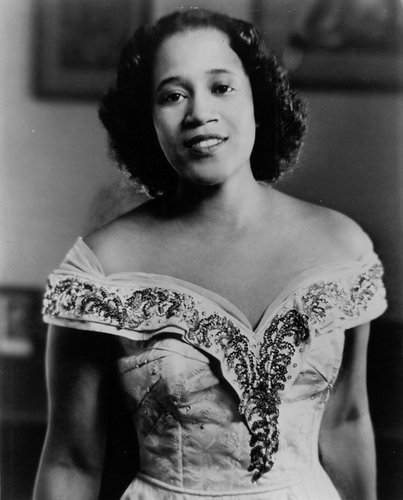
Camilla Williams is a great place to start. A lyric soprano, her debut in the lead role in Puccini’s “Madama Butterfly” with the New York City Opera on May 15, 1946, marked a triple threat. She had never performed in an opera before; the NYC Opera had never staged “Madama Butterfly”; and no African-American had landed a contract with a major opera company previously. Ms. Williams died just last week, at around 93 years old. Sadly, Ms. Williams passed away this week, as I read in an obit in The New York Times.

What a life Camilla Williams must have lead! She was the daughter of a chauffeur and a domestic worker, really humble beginning, like more Blacks who go on to earn a line in the history books. Williams started serious vocal training from a Welsh instructor who taught at a local white college. Jim Crow segregation laws, however, required that she take lessons at his home. She graduated college, became a teacher, and embarked on a series of vocal scholarships to hone her craft.

It is a tragedy, I think, that I heard about this American gem just as she left this world, especially because I genuinely admire lyricists. Enough of the contrived, digitally enhanced embroidery that peppers so much of popular much today! Let’s hear about life, love and loss from the masters.

The Times put it another way and more eloquently:

That Miss Williams’s historic role is scarcely remembered today is rooted in both the rarefied world of opera-house politics and the ubiquitous racial anxiety of midcentury America. And though she was far too well mannered to trumpet her rightful place in history, her relegation to its margins caused her great private anguish.

“The lack of recognition for my accomplishments used to bother me, but you cannot cry over those things,” Miss Williams said in a 1995 interview with the opera scholar Elizabeth Nash. “There is no place for bitterness in singing. It works on the cords and ruins the voice. In his own good time, God brings everything right.”

I’ve only been to see two operas: Carmen and La Traviata, but I immensely enjoyed both. It’s too bad that the hustle and bustle of everyday life prevents us from seeing more productions. The Met, the American Ballet Theater and the Alvin Ailey American Dance Theater are just a handful of the cultural institutions that I feel are sorely neglected today. I don’t understand why more people don’t see the beauty, so moving and perfectly executed, in the fine arts. Hubby and I took Little Sister to see the Alvin Ailey company when it came through Newark, hoping to instill an appreciation of a beautiful art form. She was languid and pouty through the whole thing, and not even the rousing, masterfully done “Revelations” could get her to stop slumping in her seat. It bothered me quite a bit, but I suppose that since the dancers were not bumpin’ and grindin’, or shaking her hands for their men to “put a ring on it.” their exertions were lost on one so young.

Please don’t get me wrong. I heartily congratulate Beyonce and her cohort on her well-earned success. It would be nice, is all, if somehow the public’s musical and artistic diet could be more balanced, and if they could embrace those shake our hearts, not their booties.

Something New: Awkward Black Girl Made Her Choice

Ever since I read an item about Issa Rae in Essence magazine, I’ve been following the ups and downs, victories and defeats of J, the central character on the hit Web series “Awkward Black Girl.” J is an appealing character, the type of woman who is intelligent, pretty, sensitive and operates with empathy for others. Despite her great qualities, she is still unsure of herself. The series follows her lie from her perspective.

SPOILERS AHEAD. If you would rather watch the episodes yourself to find out what happened, start here, and STOP reading!

J works at a call center for a company that markets a diet pill. While listening to her character narrate the goings-on of her daily life, I can’t help thinking that J is an intelligent, articulate woman who is sharing the ethos of her life and self with us. She should be doing a lot more with herself than selling diet pills. But the premiere season isn’t a story about how J lifts herself to a higher personal or professional plane. Goodness knows that awkwardness sometimes springs from, or perpetuates, a type of shyness and lack of social poise that can hold back people’s progress and future for years. For the moment, J figures out whether Fred, her Ideal Black Man whom she has had a crush on for a long time, or White J, a cute, sensitive counselor, is her match.

SERIOUSLY, SPOILER DEAD AHEAD

The White J character wins J’s heart at the end of the first season, and it all unfolds without too many embarrassing love scenes, which awkward people seem to avoid whenever possible. Actually, for a romantic comedy the series kind of fell flat in the area of chemistry. I was neither Team Fred nor White J, because I never saw sparks fly with either couple. Love stories are supposed to have a little more warmth than what I thought I saw, even ones embedded in a comedy series populated by lovable geeks and oddballs. That’s a shame too, because by the time I stopped laughing at those charming alternate reality sequences, which had part “Sliding Door” and “Russell Simmons Presents” to them, I realized I didn’t really care who J picked. Neither storyline excited me.

If I am fastidious about the chemistry thing, it’s because those pesky Sanaa Lathan and Simon Baker people made that endearing “Something New” a few years ago and nailed it. Had they only been a couple of script-reading cold fish I wouldn’t expect to be charmed every time other entertainers come along and purport to tell a love story. A few years ago I saw a ‘Something New’ type of film, but it starred two ill-matched actors who seemed lost and undisciplined in the piece, which disappointed me considering their obvious talents and accomplishments in other movies. And it was made in coastal France, for goodness’ sake! The perfect place to fall for someone.

Well, I’ll forgive J, White J and all the rest. There is a lot to like about Awkward Black Girl, a lot to root for as she embarks on other life journeys. It’s a yummy treat after a trying day, and I’ve seen every episode, some of them twice. I’m just not clicking through to find out if J and White J go the distance.

Posted from WordPress for Android

Continue reading

‘Something New’ + Natural Hair = Hilarious Video

It takes a lot of spunk to be a black woman who gets up on YouTube to talk about her hair journey. Some of us introverts would sooner DIE! But only a real man, who happens to be white and married to a black woman, can get up there to crack jokes about his “bald journey!” Take a few moments to enjoy this video, please. I watched it sometime last year, loved it, forgot to bookmark it and lost track of it. Then I found it again Thursday night. Good thing, too. It re-energized me after a long days’ work, and I’m now ready to refocus and write my work-related blog. Yes, at night, if you can believe that!

A Christmas Story

Baby was on Santa's "nice" list this year.

Most adults can maintain the Santa Claus mystique for young kids, and deftly, too. A couple years ago my cousin Melinda and her husband Jeff curbed their son Walter’s naughtiness by making him write a letter of apology to Santa Claus. Parents have staged phone calls from the North Pole workshop and jingled sleigh bells near rooftops to as evidence of the jolly old elf’s existence.

Well today I thoroughly disqualified myself from consideration in the ‘Santa Is Real’ Corps of Parents. We are spending Christmas at my inlaws’ house in Georgia. This morning we were opening gifts, when a box for Baby was pulled out from under the tree. It was labeled “from Santa”. Instead of going with it and admiring Santa’s thoughtfulness, I turned to Hubby and asked:

“From who?”
“Santa,” Hubby told me.

“Yeah, but who?”

“Santa Claus,” Hubby repeated.

“Who really gave her the present?”

San-ta. San-ta Claus,” Hubby told his wife, who had grown remarkably thick during the flight down south, apparently. This happened in front of my doe-eyed, rosy-cheeked three-year old daughter and her equally pure in heart five-year-old cousin. Neither of them had teetered into Santa Claus disbelief, so I was obviously treading on dangerous ground here.

Readers, I don’t know why I fell down on the job. I should certainly be among those to embrace and promote the Santa Claus Myth, mainly because I grew up without it. My mother and I lived in a modest but well-appointed one-bedroom apartment until I was nine years old.

There was no fireplace, no chimney by which to hang my stocking with care, for I knew St. Nicolas would not be there.

We  did not have a portal for Santa to appear in our home and deliver my presents. I also spied stashes of toys in the basement leading up to the big day one year.  Above all that, my mother and I attended a Pentecostal church, where the presbytery and members generally took a somber and cynical attitude toward modern Christmas celebrations. Each year they raised the same question: Why should we observe these pagan rituals?

In their eyes, the Santa Claus myth, the excessive spending, onslaught of food, and over-the-top light displays, were completely inappropriate ways to mark a sacred Christian holiday. My mother, with her razor-sharp tongue, deemed everything from wreaths on doorways to elves living in the North Pole region to be stupid solstice rituals which should never be used to help mark the birth of the Son of God.

I never had a Christmas tree, didn’t sing a lot of secular carols and ended up celebrating the holidays in simple, stripped-down ways sanctioned by our church. It was all right, though. I still had a good time drinking sorrel, eating black cake and listening to people’s stories about marking the Christmas season in Jamaica, notable high jinks at Grand Market Night or events surrounding Jonkanoo.  Also, a sprinkling of Christians like us found simple and discreet ways to adapt secular Christmas activities to our taste. My aunt Vera decorated a small Christmas tree in the teacher’s cottage where we lived, and some members of our church put sprinklings of lights in their windows. Some plastered their front doors with banners that read: “Jesus is the reason for the season,” and we all went on with our lives after that.

As for me, I bought a Christmas tree for our house the first year we moved in, and have had one nearly every year since. I live in a three-story Queen Anne style home, so I’ve tried to create decorating schemes with an updated Victorian feel. There have been a few comical missteps here and there, aside from this year’s Santa gaffe. A few years ago, for instance, Little Sister and I went shopping in a local Marshall’s for Christmas decor when I selected a Christmas tree skirt. Little Sister inspected it by holding it up to her waist, and asking me how she should fasten it. There are many reasons for that comical slip, including the fact that Christmas tree skirts were foreign objects in our home. Like mistletoe clusters, they were among the artifacts of a secular culture to which we had little exposure and were very indifferent.

So, I got a clue about “Santa Claus,” at long last and joined in on the fun. My guess is that as Baby explores Christmas traditions, we may look to Hubby—or Wikipedia—to point us in the right way.

Posted from WordPress for Android

The Black Friday Plan

The National Foundation for Credit Counseling Services doesn’t want to see Americans pile on more debt than they can or should reasonably handle during the holidays. So they distributed a list of tips to take buyer’s remorse out of the high holiday shopping season. If nothing else, I think black moms, and moms everywhere, ought to at least try to practice good money management. Take a look before you head out:

“It is important for consumers to shop with their head, not their heart,” said Gail Cunningham, spokesperson for the NFCC.  “Preparing in advance will help you stick to your budget, in spite of the decorations, carols and Santa himself beckoning you to spend.”

  • Beware of special credit card offers – Issuers are tempting consumers by offering incentives such as no interest balance transfers, extra perks by meeting certain spending levels, and increased cash back in specified categories.  However, no deal is a good deal if you can’t afford it.  Responsible shoppers will commit to spending no more than what they can repay in full when the bill arrives, regardless of how many bonuses are tacked on.
  • Know what you currently owe – Review all existing debt obligations, tallying what you’ve already spent and committed to repay.  This reality check may put a temporary damper on your holiday mood, but that’s better than digging the financial hole even deeper.
  • Create a plan – Knowing who you’re shopping for, what items you hope to find, and most importantly, how much you intend to spend is critical to a successful shopping day.  Commit in advance to stick to your plan, and enlist an accountability partner if necessary, as it is very easy to be caught up in the excitement of the moment and get off course.
  • Find the best deals at home – Shop from home before heading for the stores.  Compare prices online, as well as local circulars for sales in your area.  Be aware of time restrictions, as some prices may only apply during certain time periods throughout the day.  Once the actual shopping begins, going directly to the store which has your item at a good price will save you time, gas, money and frustration.
  • Remove all unnecessary cards from your wallet – Spreading purchases across multiple cards makes you feel as though you’re charging less and can trick you into overspending.  Designate one card for holiday spending, and remove all others from your wallet.  This will not only help you stay within your budget, but will also lessen the damage in case of loss or theft.


Occupy Small Businesses

image

Let’s call this food vendor “Chris,” because although I don’t know his real name, we can be sure that he is a real person, a regular Joe with concerns that we can all relate to. You can count him among the 99%, the workers and professionals who keep the country turning and whose noble interests are represented by the ‘Occupy Wall Street’ protesters.

I love the breakfast sandwiches that he and his assistant whip up in the mornings. The variations on bacon egg and cheese sustained me in the mornings my pregnancy with Baby and the first six months after.

But these days, it’s really hard to get to his food truck, because he’s located right on the edge of Zuccotti Park in Manhattan, and his business abuts the Occupy Wall Street encampment.

I can’t get to his truck on my morning commutes, and apparently I’m among the regular customers driven away by the noise, crowding and smell of the protesters within arm’s reach.

So his business is suffering, and he’s losing money because the very people who claim to have his best interests at heart. I want this guy to succeed and live a comfortable life, and I want the protesters to be heard. But surely they should be itching tents some place where their signs, chants and all that are likely to have more impact. How about occupying the Beltway?


Posted from WordPress for Android

Rowing Along

Hubby enrolled Baby in swim lessons recently, an activity that will build her confidence and competence in the water. Who knew that this development would also build my confidence and competence about braiding her hair in protective styles? Here are a few shots of the several cute and functional styles I did for her.

Baby’s swim class is in the morning, and because Hubby has more flexibility with his work schedule, he takes her. They needed to stand up to her playtime, shave time getting ready in the morning and be simple enough for Hubby, to deal with before dressing her and bringing her to nursery school.

image

image

image

As you know, Baby is biracial. Here are a few notes on keeping up her protective style:

• Before canerowing, I moisturized each section with shea butter, and dabbed it with a tiny amount of EcoStyler gel with olive oil for hold.

• each canerow is about as thick as my index finger, and no thinner than my pinky.

• braids can dry the scalp. Combined with swimming in a chlorine pool and winter’s tendency to leave hair  dry and brittle, and scalps become maddeningly itchy and flaky. I frequently moisturize, especially with an anti-itch scalp oil. I also keep Baby’s fingernails trimmed and filed smooth, so she can’t cause abrasions on her scalp if she scratches too hard.

• She won’t let me put a bonnet on her head at night, so she only sleeps on satin pillowcases.

• After four days max, I take down the braids and co-wash with a herbal formula.

For more pictures, check out the post, “Our First Business Trip”.


Posted from WordPress for Android