Summer Reading

My little sister finished her sophomore year at high school today. She brought home a report card that was in absolute terms, a letdown, but it was relatively satisfactory because she did no worse than she had in the third quarter. She also brought home remnants of a cleaned-out locker, the learning theme for next year, identity, and her summer reading list. I’m not sure what’s on that menu, but it got me to thinking about what literary delights I would digest this summer, and what I should recommend on this blog for others.

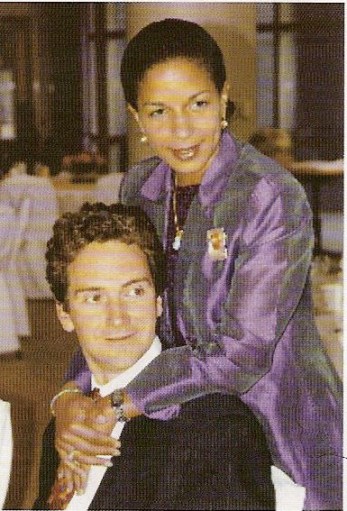
When you hit the bookstore, or when you pass the next newsstand, pick up a copy of this months’ Vogue. There is a profile about Susan Rice, the United States ambassador to the United Nations. I liked reading that Susan Rice takes a tough stance on human rights issues, has a soft emotional side, a serious approach to work and a spirit that embraces play time wholeheartedly!susan & ian

That’s a picture of Ms. Rice with her husband, Ian Cameron. What I liked especially about the article was what it didn’t say. Rice is a member of a black professional and social elite that has always existed in this country, but for some reason seemed invisible. Worse, the black elite seemed like an urban legend, or a mythical creature like Big Foot. Remember when The Cosby Show first went on the air?  I do. I think I was in the 7th grade. I couldn’t understand why black people insisted that a generally wholesome and intact family led by two educated, worldly black professionals could not exist. Thanks to the passage of time, Oprah and in no small part, I think, President Obama’s administration, we are being introduced to elite blacks in the very highest and most influential jobs on the planet. Also, Ms. Rice comes from a very impressive family. Her father, Emmett Rice, was on the board of governors for the Federal Reserve. No small feat for a black man born in North Carolina in 1920. But as you will see if you click the link, he already had a track record of breaking barriers by he time he was appointed to the Fed board of governors. Her mom is a guest scholar for the Brookings Institution.

On to books. You might remember my post about “Kinky Gazpacho,” by Lori L. Tharps. Gazpacho is a memoir of Tharps’ travels through Spain, Morocco, her childhood and young adulthood in the states. I love this book for its wit, warmth, honesty and insights into how Spaniards see blacks and vice versa, even if they are squirm inducing at times.

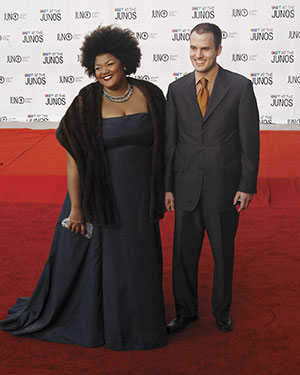
“On Beauty”, by Zadie Smith must be part of your permanent book collection. I am not a literary critic, so I don’t have the words to describe her immense talent. But what I like about Smith’s work is her crisp wit, and her full-bodied depictions of her characters.  Some writers, like Gabriel Garcia Marquez, have unearthly powers of expression. But with Smith, sure, I feel like she’s way way up there above all of us, telling riveting stories by creating interesting people and use perfect diction in amazing prose to describe it all. But I still feel connected to the experience. One of the lead characters in “On Beauty”, Howard Belsey, is a white Englishman married to an African-American woman, Kiki. They’ve been married 30 years, but he just cheated on her—the weak fool—and the story picks up shortly after that. Smith’s husband is Nick Laird, also a critically celebrated novelist, pictured here. His recently published novel, “Glover’s Mistake”, also makes my summer reading list. Laird, Zadie's Husband

My Fine Young Fashion Plate

I normally do not go out and buy, nor do I subscribe to Vogue magazine. I don’t have anything against the publication, but the pursuit of couture fashion, or items close to it, has never been my chief business in life. But after picking up the April issue of Vogue, I think I might change my mind. Beyonce is on the cover, and on the way to finding the article about her, I came across interesting write-ups about two other black women. The first was about Kenyan artist Wangechi Mutu, and the other was Zoe Kravitz.

Side note: Lisa Bonet looks more like her daughter’s older, cooler big sister trekking through Europe after college. She does not look like she is Zoe’s mother. Put that stuff in a jar and sell it!   

I’m also motivated by the fact that my new editor was an editor at Vogue and at Mademoiselle, which means I need to read up the publications to get a deeper understanding of her editorial approach.

Recently, I took the opportunity to get a picture of my daughter in her christening gown. I wanted to show her off just a little bit, so I took this overhead shot instead of a frontal one, otherwise her dad would have gone red in the face. And I used the April issue of Vogue to distract her from the camera and prevent her from looking up at me while I took her picture. This dress is a standout because it deviates from the typical baroque stylings of christening gowns. What baby would want to be overpowered by mounds of lace and embroidery and what mother could justify spending all that money, just to let it sit in a closet afterward? Truth be told, I did spend a nice piece of change on this dress, but as Aunt Mary pointed out—she was with me when I picked it—this one has more interesting detailing and craftsmanship. It’s restrained, yet bursting with creativity and prettiness. She’s right. You can’t see it, but the dress has a rounded collar with tiny embroidered flowers. It’s one of several very tasteful, pretty touches that does not go overboard. 

So, my little fashion plate was a hit during the ceremony, and during the luncheon at our house afterward. My in-laws came into town for the event, and we had a nice time. My mother showed up too, but that subject is better left alone.

Well, enjoy the closest look I can give you of the baby. And guess which article she just happens to be crumpling in her chubby fist? The one about Beyonce, of course!  

Fashion Plate

Out Sick

Few things are as irksome, to me, as a blank sheet of paper, an empty journal or a stagnant blog. But I promise you readers, I had good reason to be absent for so long.
I’ve been sick. It seems that I had run myself down and internalized a lot of stressful home situations, so my sickle cell flared up. I had an episode that resulted in a bout of pneumonia and a nine-day hospitalization. The absolute worst part of it all was that I was separated from Baby. It was quite abrupt. I nursed her as part of my regular morning routine, went in to work one morning, fell ill at my desk, then went home and to the hospital. It was awful, and I blame myself for allowing my vigor and stamina to be worn so thin.
Anyway, soon I will get back to the business of posting updates about things that are much more upbeat and interesting. In the meantime, wish me luck (and send suggestions my way) as I try to get back to my pre-crisis lactation volume. This was NOT the way I planned on weaning Baby!

No, Not That Rice

susanriceWhen I read about Dr. Susan Rice, President Barack Obama’s ambassador to the United Nations, I rested the newspaper on my lap and started to sort out my emotions. She is impressive. Her educational credentials are second to none, with an undergraduate degree from Stanford University and a graduate degree in international relations from Oxford University. Dr. Rice is also a Rhodes Scholar. And how coincidental is it, I thought at the time, that she shares a surname and Stanford alum status with Condoleeza Rice, another admirable and influential black woman?

Anyway, it’s much more important — for the purposes of this blog — that Dr. Rice has intermarried. Her husband is Ian Cameron, a Canadian and executive producer of ABC News’s “This Week with George Stephanopoulos”.

How exhausting it was to read about her many accomplishments! Especially when I’m over here working full time, nursing an infant, trying to put my bad relationship with my mother on the back burner and trying to be a wife and big sister to a teenage girl sometimes leave me feeling exhausted. And let’s not factor in expectations from my family and friends to produce a novel. (Yeah, I’ll just work on that instead of sleeping!)

Where in the world did she and does she get the energy to be so accomplished?! And then I decided that it doesn’t matter. We all do whatever we can. So long as we are productive members of society and are good to our families, I think we can be satisfied with ourselves.

susan-ian-maris Let us skip all the debate about whether there are any conflicts of interest here, that a senior administration official is married to a high-level media executive for one of the most popular political news shows currently on the air. And don’t even read the nasty Internet comments about how hard it is to tell whether the ‘Northeastern elites’ are intermarried, because so few of them (including yours truly, although I’m not one of the elites) change their surnames after marriage. I hope this beautiful family (I think she has a son, not pictured here) gets all the health, affection and happiness that they can manage to hold in their arms.

Guess Who’s Not Welcome at Dinner?

I was an avid moviegoer when I was single and childless. Having well-rounded interests in cinematic storytelling, my tastes put me somewhere between art house goon and chick flick junkie. Movies about cross-cultural romance, of course, make my list of must-sees — but only for sheer entertainment purposes. With the exception of “Guess Who’s Coming to Dinner,” I generally don’t like stories that deliberately try to convey some sort of noble message about cross-cultural romance. They come across as bland, preachy and pandering somehow. To me, all a director has to do to make a quality film about interracial romance is to focus on the strengths, weaknesses and complexities of each character, and make the story about something bigger, not just the couple. 

Two recent films “The Family that Preys” and “Lakeview Terrace” each embed the issue of interracial romance inside stories with bigger themes. I picked up and watched both last week, and here is what I think. 

Tyler Perry wrote and directed “The Family that Preys”, a glossy, big-budget soap opera that follows the business and personal sagas of two interconnected Atlanta families — one white and one black — over four years. The interracial ‘romance’ is actually, in this case, a tawdry extramarital hookup between Andrea (Sanaa Lathan), a sneering iceberg and William (Cole Hauser), the lecherous mercenary in line to inherit his mother’s commercial real estate development firm. The story doesn’t explain why Andrea and William are attracted to each other in the first place, or how their four-year affair happened, during which they supposedly have a son together. Or why, given the boy’s mixed parentage, her husband remained clueless about her betrayal. Or why Chris, the Ultimate Good Black Man, loves her. 

But here is my biggest problem with Tyler Perry’s movie: He chose to portray an interracial romance as a shady, slave-row romp by two despicable characters. He seems to visit extreme and harsh punishments on Andrea for being with a white man. If you’re familiar with Tyler Perry’s stage plays and feature films, you’ll notice that his plots are allegorical and he has a tendency toward preachy dialogue. His characters are either avatars of good or evil, stripped of the complexity or dynamism that comes from being human, making mistakes and still journeying on. Andrea is just another extreme character, at bat for The Baddies. Except for her beauty, there is nothing likeable about this woman. She sneers at her husband, mother and sister. She supposedly is Harvard educated but is naive enough to believe that good ol’ boy William is going to leave his blond trophy wife to marry her and set up a comfortable domestic life for her and their out-of-wedlock son. And she foolishly decides to conceal sugar daddy money from William in an account at the same bank where she keeps a joint account with her husband. Dumb, right? Is Perry trying to say that any black woman who allows a white man to romance her is nothing more than a sniping, delusional, trifling heifer, dumb as a box of rocks and who deserves to get back-slapped across a countertop and then reduced to living in a crappy apartment after her good black man dumps her?

Perhaps Perry was trying to convey a different message with this subplot. Maybe the Andrea-William story line was merely an allegory about the dangers of greed and reckless disregard for other people’s feelings. And true, not every interracial romance is carried on by good people with noble motives.  Still, there is something about that plot that rubs me the wrong way.  I saw “Preys” after watching “Madea’s Family Reunion”. That movie’s version of Cruella handed her young daughter over to her child rapist of a husband, and by the end of the movie, she got the makings of a touching reconciliation with the daughter that she allowed to be violated!! But a black woman in a consenting adult relationship with a white man? Smack down!!  

This is a great ensemble cast, each of whom does a respectable job, despite the preposterous script and dead-on-arrival dialogue. Watch it especially for the interactions between Alfre Woodard, who plays Andrea’s straight-laced mom, and Charlotte Cartwright, played with irresistible zest by Cathy Bates. Actually, Bates and Woodard are the best things about this movie, but other than that, wait until it comes out on HBO.

** Major coincidence among Lathan, Taraji P. Henson and Woodard. Not only is Woodard’s husband white, but they all starred together in a much more merciful movie involving interracial romance, the romantic comedy “Something New”. Woodard cracked me up during the dinner scene when she became hysterical with joy at the prospect of her daughter (played by Lathan) marrying Blair Underwood’s character. (Now c’mon. Who would object to that?)  

I’ll talk about “Lakeview Terrace” in my next post, because this one has run long enough.

Magnificent Measha

measha-markus2This is why I am loathe to throw away any old issue of Essence magazine. I pulled out the May 2008 edition hoping to show my hair stylist an example of a cut and style that I wanted, and while flipping past a feature of Laila Ali and an interesting makeover spread, came across a one-page feature on Canadian classical soprano Measha Brueggergosman.

If you like classical and operatic music, then you’ve probably heard of Measha. Perhaps you’ve even seen her in concert. Sorry to say this, but I had not heard of her before reading that article, despite the fact that I do like classical music and I did enjoy my one excursion to an opera, to see Carmen. After reading about her in Essence, I did a little searching and found out all kinds of things about her in various magazine profiles, like this one from Toronto Life. This black Canadian woman can trace her lineage all the way back to a runaway African slave from America. She is a global citizen, having lived in places like Germany. She is a committed Christian, something that I’ve always thought was irreconcilable with the pressures of international stardom, but whatever. But one of my favorite things about her is her appearance. She seems to be very tall and physically striking, as well as beautiful, and look at that lioness’ corona of a hairdo! 

Oh, and her husband is a Swiss dude named Markus, which is one reason that I’ve mentioned her here. It’s strange, but I found out all sorts of things about this woman, but had to do at least two Internet searches on this internationally famous singer before scrounging up one measly photo of her with her hubby.  One!

Anyway, they look like a cute couple.  As Measha soars to newer heights with her craft, I hope they enjoy a long and happy life together. And maybe a couple of kids??

The Supermoms

garcelle-jaid-jax1I consider myself, because of my slightly advanced age, a mature mom. How can I help but see it that way, when kids that I used to help with their homework have had their kids before I had Baby?  In speaking about her own experience as a mature mother, Garcelle said she feels more grounded and sweats the small stuff a lot less. That might be the case, but I can’t imagine anything ‘small’ about carrying twins in two arms like that. Just the sight of this picture makes me break out into a mild sweat and reach for a tall glass of cool water. Do you suppose she has hydraulic lift systems in her biceps or something? 

My other major question is: does Garcelle breast feed her sons? If so, then maybe she could pass on some advice to women like me on how to work full time and nourish your child without feeling completely zapped. Let me explain something about breast feeding, people: it unites women like nothing else. Women from all walks of life are bound to be either prolific producers, or have to work a bit harder (like me) in order to keep up with their little ones.  We pass along advice and encouragements across all lines of race, nationality and creed. 

In my case, I fear that I might have gotten off on the wrong foot with Baby, and that I’m paying the price for it now. You see , my milk did not come in until the fifth day after her birth, so I began supplementing with bottle-fed formula. Hey, I didn’t want to starve my poor child on account of some heroic attempt to get her through the first six months without a drop of man-made stuff!  Well, in week two, she got nipple confusion, and a half day’s worth of drama ensued, as I worked to re-establish a steady nursing routine. It was tough, but I dropped bottles and formula completely for at least two months — until I had to get back to work. 

Folks, that is when the real workout began. I sling a hefty Medela electric pump onto my shoulders and commute back and forth between downtown Manhattan five days a week. I try to pump at least twice a day at the office, but that task is long and arduous, because — the girls don’t respond to breast pumps that well. I don’t know what it is, and believe me, I’ve prowled the La Leche League Web site for answers. The pump will allow me to express the first 2 or 3 ounces without a problem, maybe even 4 ounces. But then, I have to unscrew the pump from the bottle and hand express the rest, usually a bottle full, in order to really empty out and ensure adequate supply for the next day’s meals. 

I tell you, folks. Breast feeding while working full time is hard. I used to shake my head at women who quit working to stay home after having their children, thinking: you’re not a bad or absent or detached mother for working. Go ahead and get that paycheck and benefits package!  Well, those intrepid thoughts are nowhere to be found when I find myself in a windowless room hunched over a plastic bottle and basically wringing myself out. 

It’s madness, people, absolute madness. So everytime I think: &^%$#! Time to unhook from the pump and start squeezing, I take heart that if Garcelle can pump two armloads of cutie iron, then I can hang in there for Baby’s sake.

A Different Way to Worship

Church life can be tough for Christians like me — the serial joiner types. We see an area of ministry that doesn’t have enough volunteer staff, feel bad that others have to pull double duty to keep things running smoothly and we lend a hand. Next thing you know, we’ve signed up for four ministries and spend enough time at church and church-related events to constitute part-time work hours. It can be exhausting. 

That’s why when my church, a nondenominational megachurch in North Jersey, announced plans to spin off a ‘daughter’ church in Newark, N.J., I breathed a sigh of … trepidation. I couldn’t help but feel anxious about what would be expected of me if I decided to become a founding member of that church. I’ve done that before. About 18 years ago, Mary’s husband left his main church to launch a daughter church, which began with services in downtown Newark, coincidentally. I hesitated to leave the main church when they left, joining months later, because the first few years of a church’s existence are transient and potentially exhausting. You have to set up a worship sanctuary, complete with rows of folding chairs and kneeling pillows for prayer, before each service and pull down the whole thing afterward — all within a rigid time slot. The church leaders are constantly trying to find a permanent home, and because many cities are loathe to relinquish prime real estate and potential property tax revenue to a charitable organization like a church, the certificate of occupancy and permitting process can be long, discouraging and rancorous. Much is demanded of the congregants, too, not the least of which is money. Many times, people put off buying houses, taking trips or financing other big plans to donate the money to a building fund drive. And by the way, those building fund drives never really end. 

Yet on Saturday morning, I peeled myself away from my adorable newborn daughter, got dressed and drove to my church for an informational breakfast meeting about the church planting. What I heard  was somewhat comforting. The church launch process takes two years, during which time the spinoff organization shares the main church’s 501(c)(3) designation while it’s application for its own designation is processed. The church leaders get extensive training, as to the founding members, so the initial separation is less jarring for the fledgling church. The members are also allowed, and encouraged to continue to participate in the main church’s marquee events, like conferences, concerts and trips.

Yet I couldn’t shake memories of the first church planting that I had been through, or the insular church community in which I grew up. Don’t get me wrong: I think I was brought up well, but I noticed that, at least in my case, family life always took a back seat to church life. Birthdays often were upstaged by church conventions. My mother didn’t make a lot of time in her life for trips abroad, unless they were piggybacked onto a church bus trip. Every spare financial resource was earmarked for the church. Weekends were harried, because after a day of domestic chores on Saturdays, we sometimes went to services at other sister churches in South Jersey, Delaware or New York state. We did this for at least two Saturdays out of the month, only to get home late and get up early on Sunday morning to make dinner preparations. During my early to mid-twenties, this routine wore me out along with the demands of my job at a daily newspaper. It also didn’t help that most of my fellow church members worked such jobs as accountants, nurses, teachers or computer techies.  No one else worked as a full-time journalist, so they couldn’t relate to my long, unpredictable hours or the need, an increasingly pressing need in my case, to be less insular and be keenly aware of relevant and interesting things going on around me, to spend after-work hours networking, so that I could generate good stories and move up on my publications. Eventually, feeling like a fish out of water, I left the church.

Yet because I am a committed Christian, I had to find another place that would nurture me and not tax my strength, physically.  Sometimes I tell Hubby: Italian immigrants come here and open restaurants. Jamaican immigrants come here and open churches’. Instead of laughing like he’s supposed to, Hubby points out, in his peck sniff intellectual way, that it must have been Italian Roman Catholic immigrants who built all those lovely cathedrals in urban places like Newark. My point is that church life is often indispensible for Caribbean immigrants. The only trouble with that was my church community was very, very insular. Young people, especially girls, were often discouraged from going away to college. I am one of only a handful of people from my childhood church who went away to college. Many others commuted to Rutgers in Newark. Yet even when we attended colleges within driving distance, The very idea of attaining college and post-graduate degrees was looked upon with wariness, out of our parents’ and church elders’ fears that we would turn our backs on them and their values. Of course, you had many rebels who drifted far away from the regimented lifestyle that the church demanded, but for the most part, a lot of people maintained very close ties with the church. 

I often see differences in the way Hubby and I approach faith and church life. If his family does belong to a denomination, it is lapsed Baptist, with the exception of his mother. Hubby has got a hearty skepticism about organized religion, and I tease him because he’s just now getting around to blessing the food in a decent way. Whenever I bring him to a service at my childhood church, he looks on in subtle amazement at the jubilant worship style, and he will later express true white boy appreciation for our music: upbeat ska delivered by an organ, rythm guitar, bass and drums. 

 I don’t think I’ll repeat my mother’s or my elder’s choices for myself and my family. I want to cherish time with my daughter (and other kids, if I’m so lucky) during her infant, toddler and childhood years, which everyone tells me are very fleeting. My goal is to be there for as many breast feedings, walks, games, recitals, trips and parties as possible. As much as it will pain me to see her go one day, Baby has got to spread her wings and venture out into the world. That’s the only way she’ll blossom into a self-assured, solid woman, and if I do my job well, she’ll enjoy coming around to see me and tell me about her eventful life. 

I wish my fellow Christians well, because I believe their motives are sincere. The homeless, destitute, forgotten and abused of Newark are about to get another strong champion for their cause. But in those early years of establishing the church, while the congregants are bustin’ Newark sod, I’d rather watch my daughter take her first steps, speak her first words and throw her first fistful of spaghetti across the kitchen.

A Jealous-ly Guarded Future

This week’s edition of The Economist features a must-read about the challenges ahead for the new president of the National Association for the Advancement of Colored People (NAACP), Benjamin Jealous, and I agree with their assessment: A generational divide is causing friction between the advocacy group and their younger constituents, making the organization seem ineffective. Personally, I think that if the NAACP cannot make room for new ideas, along with time-tested methods of taking up our cause, then it renders them incapable of bringing radical change to black society.

I highlighted Mr. Jealous in today’s post because of his parentage and a few other interesting reasons. His mother is black, apparently, and his father is white. Besides, he’s a kindred spirit, sort of, having been a reporter. He was also a Rhodes scholar. I also think it is important for biracial children to have a robust list of heroes to emulate, aside from entertainers and athletes.

Back to Jealous’ work. One has to admit to a fracture in the black community. You have the list of grievances that says institutional racism drives a lot of the inequalities that eventually diminish the quality of our lives. They have to be confronted and rooted out, and any corrective measures that were put in place when racist practices deprived blacks of social, educational, labor and professional advancement, should be vigilantly protected. On the other hand, you have blacks who believe so ardently in self-determination and self-reliance that they’ll argue vehemently against any whiff of governmental intervention to set wrongs right.

I fall somewhere in the middle. I will never agree that we should abandon, say, affirmative action programs, because they correct generations of horrendous wrongs inflicted on blacks, and anyone else guilty of association with us. But one would have to be willfully blind not to see that blacks were deliberately singled out, and told, as James Baldwin put it “with brutal clarity”, that we were worthless human beings. Being barred from labor unions, universities and certain jobs ensured unemployment or humiliating underemployment for a whole generation of blacks. Call it reverse affirmative action. Call it racism. Call it whatever you like. It’s wrong. I recently saw a press picture in a newspaper of a wall in Spain, scrawled with the words: ‘Unemployment is humiliation’. Well, imagine the oppressive humiliation that a generation of black men had to suffer when they were deprived of education and work that was worthy of their abilities. When, in some cases, they couldn’t provide for their families. Just because of their race.

Giving one race preferential treatment for attainment of any kind is shaky policy, and the sheer presumption that blacks always need an extended hand from a guardian government to achieve in life is pandering. But at the end of the day, I say that human nature is in a constant struggle between good and evil. For all our enlightenment, we would repeat depravities like the Middle Passage in a heartbeat. When people are purged of vicious racist tendencies, then we can declare the patient cured, remove the affirmative action crutch and move on with our lives. 

424px-bentoddjealousfamily1In the meantime, I like to enjoy simple pleasures in life. Just look at his endearing photo of his beautiful family. His wife is a professor of constitutional law at Santa Clara University, and their daughter Morgan is an absolute beauty! (If I may say so, Morgan and my daughter share a few resemblances. The voluminous curly hair, the almond eyes and the dimples. Like Morgan, Baby gets her dimples from her mother.) Look at how loving they all are. It is the ideal picture of an African-American family.  

Let’s hope that Mr. Jealous has a successful administration. Listen to his vision. Support him fully where we agree and be respectful where we disagree.

OK, You Can Have a Peek

happy-feetNormally, I wouldn’t consider putting a photo of Baby on this blog. It’s too soon to put her on display so publicly. And Hubby would get upset. But a picture of nondescript little feet during sponge bath time might be OK, I think. 

I was fortunate to get this picture. Early on, Baby detested diaper changes and bath times, and protested vehemently. She howled. Her arms flailed and pin-wheeled. She arched her back and thrashed around to escape. It seemed like all she wanted to do was sleep and eat. Actually, in her first four weeks, that probably is all that she ever wanted to do. 

Nowadays, Baby loves diaper time. And gym time on her activity mat. And time in her swing, and everything that she does at the baby sitter’s place. As for bath times, she is getting used to it more and more. Why just last week, I believe she gave me a half smile while I washed her tummy!

When people see her from time to time, they remark about how ‘big’ she is, and I am usually taken aback. Big? But she can still fit on my lap and in my arms.

circle-bassinet3And then a week and a half ago, when some of her teeny adorable outfits no longer fit comfortably, I began to understand what they meant. I took a second look at my daughter (my daughter!!!) and noticed that she was plumper and longer. Her body had more heft. I had to adjust her Bjorn carrier, and her feet began to protrude from the edge of her car seat. She has almost outgrown her bassinet, which means she’ll have to sleep in her comfy crib in her nursery overnight — away from us! This morning she drank an ounce of pear juice, and the doctor says I can start her on rice cereal tomorrow. Little Baby is growing. Next thing you know, I wailed to a co-worker via email, she’ll scramble out of my arms, into a car and off to college.  I get so sentimental at these thoughts that I almost cry. It’s silly I know. But the thought of her growing up and going away one day just chokes me up. 

Oh well. Those events are years and years away. In the meantime, there are solid foods, scrapes and cuts to be washed, torn clothes to be mended, school plays, homework drama, the Dark Years of tween and teen drama and finally high school graduation. 

My daughter is growing. But for now, she still can’t roll over, so I get to enjoy her little laughs and massive smiles and she gets her daily dose of one hundred kisses.