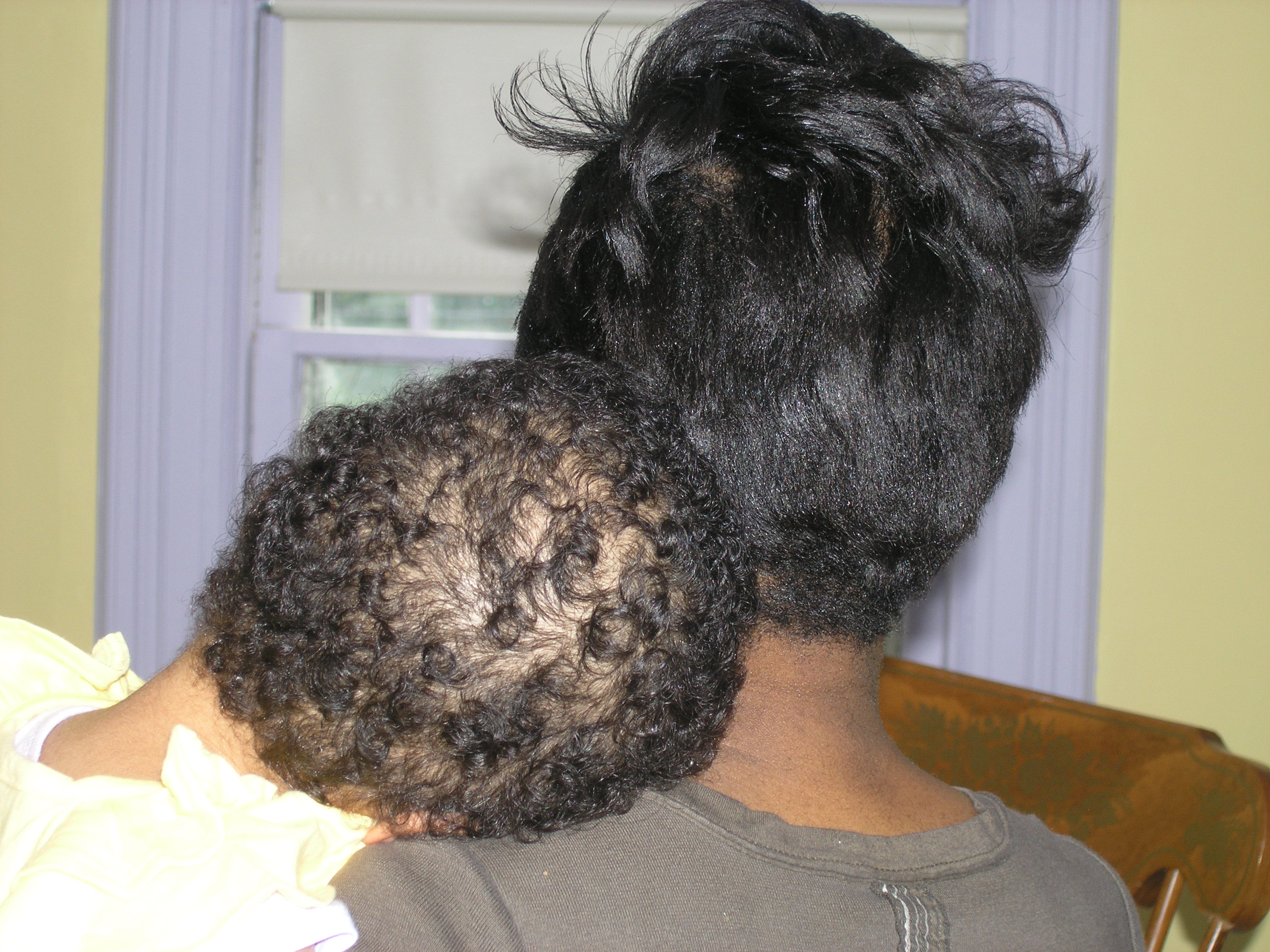
The Dinner Party

In about 24 hours, a lot of you will be gathering at the homes of family and friends for well-deserved long weekends, and an onslaught of richly prepared foods. If you are like my family, you’ll launch into a rollicking good time, loud enough for the neighbors to consider filing a noise complaint with the local authorities.

Perhaps someone should have called the Emily Post enforcement division many years ago after an early spring dinner party that Hubby and I attended when we were still dating. Hubby’s friends, Hannah and Anwar, invited four couples to their charming duplex in an old Brooklyn brownstone to eat and mingle. The place was splendid, with its fireplaces, beautifully maintained woodwork, original pocket doors, and very high ceilings.

They were gracious hosts, but some of their guests were … they were … oddballs. Aside from us, three other couples showed up: Athena and her French husband Etienne.  There was also Lois, a NUT, with her mellow Dutch husband Peter. Hannah and Anwar served a yummy mix of Moroccan and American food (Anwar is from Morocco). I think about that dinner party occasionally, but not always fondly. The fact that this was a very diverse group of people, with every couple being mixed across cultural, racial or religious lines was a big plus. It meant we might be able to talk about our common experiences and just have a good time being around others like us. Except for Hannah’s marriage, every other couple was an interracial one involving a European or white American man and a black woman. I was the only “fully” black woman, as Athena and Lois were both biracial. I think that in Athena’s case, her mother was Haitian and her father Greek.

Oddball behavior overshadowed the obvious opportunity for us to “swap notes,” on our experiences.
As we all know, strange behavior afflicts individuals of all creeds, races and cultures. 
Let’s talk about Lois.  I forgot her real name, and it’s probably for the best, because she is one of those irksome women who turn motherhood into a blood sport. At one point I said that I saw the movie “Boys Don’t Cry,” and that I liked it. To which she replied: “Well, obviously you don’t have any kids.” That was true. I had no kids at the time, but that’s because I chose not to be a single mother. If someone can please show me the connection between having a child and enjoying a movie for grown-ups, I’ll take back every dirty look I shot that woman and every insult I muttered about her that evening.  I repent of the fantasies about keying her car and her longsuffering husband dragging her out the door by her hair. Poor man.

Aside from Hannah, Athena saved the party.  She seemed very down to earth, did not carry on and on about the glories and agonies of parenthood that only someone who has been pregnant could possibly understand.  She just made witty conversation. Her husband also seemed nice, not puffed up or standoffish in any way. In fact, of all the couples there, I wish we could have carved out Hannah and Anwar and Athena and Etienne and ditched the others.

Sorry ladies. Life is long, and interracial and cross-cultural marriages sometimes come fraught with complications. My thinking is that unless you make the journey a more comfortable one for me, you’ve got to go.

I hope everyone out there has a great time this Thanksgiving, and that my story amused you. Make the best of the families you have, choose your friends very carefully and enjoy the rest.

Cheers!

Stop the Presses!

This just in: Samantha and Colin got married on Saturday in a beautiful garden in the Bronx. You should have been there. It was so romantic, the joining of two media-savvy New Yorkers. I wasn’t there either, but can’t you imagine the hardy pansies, mums pruned trees and other flora decorating their ceremony? If they wish it, perhaps there will be follow-up news on this breaking development. The kind with ten fingers and ten toes that makes pitter-patter on their hardwood floors. Have a happy life, folks!

The Other M-Word

Traveling about the North Jersey/New York polyglot is not for the faint of heart, whether one is driving or using mass transit. I consider myself pretty thick-skinned about human foibles that unfold during rush hour, but something I heard on the train the other day impacted me like a slap in the face. A couple of friends were catching up after apparently not seeing each other in a while. Both seemed like well-educated professionals. The man was white and married, but his wife was not on the train with him. Judging by his comments about his wife, there is a good chance she was of Caribbean descent. Thanks to my marriage, I’ve almost developed a canine ear for giveaway phrases, like the ones he was using: “patois” and “dialect” and “sometimes can’t understand her aunts” and “all her cousins.” Come on, now! I think it is a safe bet that his in-laws are from one island or another.

The woman was clearly of Indian descent, with shoulder-length jet-back hair, a bejeweled bindi dot and a kameez top over jeans, instead of the more traditional salwar-kameez combination. Her mannerisms almost came across like a performance, with affected patrician inflections and the bawdy laughter at flat, nerdy jokes. I suppose that’s why their conversation pulled my attention away from my reading that morning.

The two were catching up about their children, and it became clear that the husband had a baby daughter. The woman asked: “Is she at daycare, or do you have a nanny for her—some warm kindly island mama?”

Did she really just say that? What was that supposed to mean? Obviously, it was no big deal to her, because she made a smooth transition into the next comment. She even threw in a remark about his daughter being his “little Barack Obama.” Apparently, her friendship and familiarity with the man bred contempt for his wife’s cultural background. Her remark trivialized the experiences and hardships, of an entire class of domestic workers. That educated-sounding woman overlooked the obvious: The family hiring the nanny might project some cozy gauzy image of a “mama” onto her, because she is caring for young children in a home setting. But don’t forget that these Caribbean nannies often have their own kids. The house is a job site, and the family is an employer. This is a business arrangement in a dog-eat-dog world, where she is trying to support herself and probably sent remittances back to her own children in her native country—on tiny wages. Some of these nannies work for women who spend more money decorating their childrens’ rooms than they do on their annual salaries. For generations, black Caribbean and American women have toiled away, rearing the children of upper middle class women, some who worked and others who did not. They are not rotund cartoons from an antebellum picture book whose greatest calling in life is to run after other people’s broods for less money per year than one of the family cars. I doubt any of these workers would go along with a woman in a more privileged position making verbal sport of her situation. Painting her like some mammy. EcoSoul, a guest blogger at The Intersection|Madness & Reality, wonderfully articulated these sentiments, and more,  in this post last year.

Let’s assume that the male passenger and his wife actually preferred to hire a Caribbean nanny, as a way for the wife to anchor her child in her heritage. Certainly there is nothing wrong with them doing that. Nor would there be any particular shame for the nanny to work under those conditions, assuming they pay and treat her well. But I don’t get why women like the one on the train can’t find less pugnacious ways of expressing themselves. Certainly I don’t talk about any domestic workers that way, especially because my mother and aunts held those types of jobs. Their experiences are not ancient history or playthings for the upper middle class. The feelings and the memories are still fresh. It doesn’t matter if they happened years ago. Does that silly woman know just how far into American culture her friend’s wife is steeped? What if she speaks patois among family and friends after work? Cooks the food and still vacations on her native island sometimes? To others, it might seem like a joke, a light slip of the tongue, but I wonder if this woman would be just as candid were she at a dinner party at the wife’s house, and the aunts and cousins were present.

I made my way out of the station and onto Broadway, into the sunshine of another clear and mild fall day. Downtown Manhattan, with its historic churches, cobblestone streets and the New York Stock Exchange, looks majestic on days like that. Lots of Caribbean nannies were well into their workdays already, pushing their charges along in high-end strollers that glided along the sidewalks and park paths. Those women are majestic, too. When they do their jobs well, it gives their employers the peace of mind to function well as bankers, attorneys, real estate developers or whatever kind of Manhattan titan they happen to be.

It struck me that the Indian woman never asked her friend about his wife, and when he volunteered information about his wife, she deftly ignored it and changed the subject. To take such an interest in a child while overlooking the mother is weird to me. I don’t think it means she is racist. At the very least, she is careless, silly and out of touch with people who walk a different path in life her. I’m sure that makes dinner parties at the wife’s house interesting places to be, for all of them.

Vanessa and Jason

If you are a guy and you stumbled across this blog—and by that I mean you tripped, crashed into the pavement and rolled over a half-dozen times before skidding to a stop, mercifully—you might wonder what it is like to marry and live with a woman like Vanessa Williams. Just ask Jason Stevenson. He married his sweetie not too long ago, on November 6, according to the announcement in the Style section of last week’s New York Times. I think that if any high drama breaks out during the building of their marriage, they can engineer a solution. I love it!  Have a happily ever after, you all!

A Coronation/Diefication Gone Wrong

People who faithfully watch the Real Housewives of Atlanta are probably still shaking their heads over the recent spectacle known as Phaedra Parks’ baby shower. The woman came under heavy criticism for an event that some say was far too extravagant and tacky. I disagree. When a woman is named Phaedra and is married to man named Apollo, she owes it to the lowly masses, the mortals, to put on a show. In my humble and belated opinion, Phaedra did not go far enough. Here is the BravoTV take on the situation: The Real Housewives of Atlanta – Videos – Bonus Clips – Planning the Baby Shower | Bravo TV Official Site.

Here are my impressions of the splashy, showy baby shower that almost everyone who expressed an opinion seemed to hate. Baby Shower or Tasteless Free for All?

Crimson Hearts

It’s been a while since I’ve posted wedding announcements, which I can only chalk up to too much time spent updating old high school and neighborhood friends on Facebook. I might as well reestablish the practice by talking about Audrey and Trevor. I don’t know much about these people, except for what I’ve read in today’s Style section of The New York Times. They seem to be very lucky to have found each other. She’s pretty and brainy, while he’s inventive and not bad on the eyes either. They both love the arts. It all works! It’s not surprising that these two made a love connection at Harvard. As many of you have pointed out, interracial romances often happen among people who are educated, a bit more worldly and open-minded, and are therefore much less likely to agonize about following their hearts outside of their own cultures. I might have one tiny objection to this union, though. Aside from good looks, intellect and the inside track for admission to Harvard, their children will have killer dimples. Those are three insurmountable advantages over other kids! Oh well, what’s done is beautifully done. In any case, I hope Audrey and Trevor have many happy decades together. Cheers, guys!

I’m Her Mommy, She’s My Mami

Baby has been at daycare ever since she was a mere 2 1/2 months old. It really bothered me to leave her in daycare so soon, but since Hubby and I do need my extra paycheck and benefits from my full-time job, off she went. She has always been in the warm environs of family daycare. Just a handful of kids ate, napped and played together all the time. We live in a predominantly Latino neighborhood, which means she has always had Latina caregivers, and Spanish is a growing part of her expanding vocabulary.

First there was Sula, a warm, efficient and bustling woman who always kept the kids content and her house super tidy. When Baby was tiny enough for the car seat and we rested her on Sula’s kitchen counter, Baby would greet her by arching her back and poking out her belly, a gesture for Sula to lift her up. Sula always chirped something like “mamita” to the girls (actually, Baby was the only girl in her set) or “papito” to the boys. If the children ever cried or fussed, she soothed them saying “mi amor.” Her second family care provider was Nina, a Puerto Rican woman. The situation was similar, but Nina spoke more English than Sula.

All of this happened as Baby learned to talk. When she said what sounded like “mommy,” I thought she was calling for me. But Hubby pointed out that Baby could be repeating the Spanish “mami,”repeating the term her Spanish-speaking caregivers use for her. It’s funny how that term has so many meanings. I’ve heard it used in a provocative way to describe voluptuous girls, and something much more harmless and even charming—when done properly, of course!

I like the fact that Baby can express herself in two languages. (Soon to be a third, as I am determined to share some French with her.) When she can’t pronounce ‘bread,’ she might asked for ‘pan-ney’. When she first learned to talk, the letter w gave her trouble, so she said ‘ag-aaa’ in what we thought was baby Spanish while reaching for her bottle or training cup.

Baby is in nursery school now, and the same Spanish-speaking caregiver scene is unfolding. The teacher is a kind young Latina, and there are two assistants to give all the kids lots of personal attention. Baby has taken a particular liking to one assistant, Miss Carmen. Baby greets her with a hug in the mornings, follows her around the large, cheerfully decorated classroom, and nestles in Miss Carmen’s arms as she is rocked to sleep before nap time. Despite the fact that I can’t be home with her more often, we’ve been lucky to have Baby situated with great people.

On a recent Saturday, in fact, I was trying to get Baby to count her toes with me. She was fiddling with one of her infant burp clothes, which had three flowers stitched in. I didn’t realize until after I played back the recording, but I think she was attempting to count the three flowers in Spanish! Take a listen and see: Three Flowers

Nowadays, whenever Baby says “mommy,” I know she is calling for me and not using Spanish slang. We went through a call and response phase when she would repeat “maa-aa-mee” and I answered “yes, Sweet Pea,” for minutes and minutes on end. It didn’t annoy me at all. I even look forward to the day when she can understand the difference between the English “mommy” and the Spanish one, and enjoys calling me by both. When used properly, of course!

An Unwanted Treasure: Part 2

So here is the second part of the entry that I posted on Sept. 24, 2010.

Little Sister has lived with us for almost five years. I could write chapters on how difficult it is to deal with an emotionally complex teenager. But I won’t do that on this blog. My mother’s ability to compartmentalize is amazing. While the whole conflict was unfolding, she swore off all of us in the most verbally abusive, brawling, caustic way you can imagine. Every now and then something sets Mommy off, and she sends me a spiteful email or letter, in which she gleefully conveys vicious, scathing gossip about me and attributes it to others, rather transparently. She never identifies these cattier-than-thou women outright, but she usually stirs the pot by claiming that it is someone close to me, who is pretending to be my friend, but really thinks I’m the worst daughter ever to walk the earth. If she’s trying to bait me into checking out who these “traitors” might be, she’ll be disappointed. I don’t believe much of what she attributes to other people, because I know that she’s just trying to wear me down until I cave in and let her walk out on her responsibilities to the child she adopted. I certainly don’t devote much time wondering why a woman who claims to be a Christian makes a hobby of maligning her own daughter, all for very self-serving purposes.

When I was pregnant with Baby, I didn’t tell Mommy about it until my eighth month, because I knew she would start to lay a lot of emotional claims on Baby. I knew she would find a way to make herself the focus of the pregnancy. Sure enough, now that Baby is here and growing up nicely, she is trying to take credit for the baby’s good looks, sweet nature and anything else she can think of. She’s trying to move in on my daughter’s life, while pushing everyone—including me—off to the side. It amazes me that she thinks it’s acceptable to deride Little Sister and me, mock and badmouth us both to whoever will listen, and then expect me to allow her to form a bond with my child. It is beyond presumptuous and damned near diagnosable. Does she think I was brought into this world specifically to be her patsy, then navigate all the complexities of a high-risk pregnancy, all for her greater glory? Moving on.

Mommy is contemptuous toward Little Sister and the more callous family members who worship Mommy and have taken sides with her are just as cold. Little Sister gets ignored on major occasions like birthdays and holidays. She rarely gets cards, and never receives gifts or phone calls. Meanwhile, Mommy will go out of her way to send money and little packages for Baby. Also, Mommy only checks in to get Little Sister’s grades. Mind you, she doesn’t ask whether she is involved in sports or clubs. She just wants the grades. I am suspicious about this, because she seems to be fishing for fodder to berate Little Sister with, and argue that we shouldn’t be sending her to a private school.

That is daily life for us now. We live out a cycle of seeing her lash out in some way, admonishing her to be civil, receiving backlash for our admonishment, and getting the iceberg treatment for several months. Sometimes I wonder what Hubby must be thinking, with several clusters of his wife’s Jamaican family taking sides on the issue, from the island throughout the diaspora. Aside from the ones here in New Jersey and maybe outside of London, who are not as harsh and strident as their more insular kin, my family’s response has been disgraceful. They expected me to turn a blind eye to everything that was going on, and to pardon Mommy’s destructive actions.

Heaven help me if my family ever gets wind of this blog, and its contents. Because here is the other expectation from my clan and culture: Never publicize your family woes. Even if your parents and family elders are being deliberately cruel and oppressive, take the passive, submissive role and suck it up. The unwritten doctrine of parental infallibility says that as long as they put up with you long enough to clothe, feed and shelter you, they can say and do whatever they like.  The son or daughter’s role is to be meek and pray that God will supply a wellspring peace to withstand everything that is thrown his or her way. But THAT is the part of my upbringing that I utterly reject, because I’ve learned that my mother had developed a recent habit of blatantly throwing people away. She got away with a lot of it because of her beauty, talent and general longstanding popularity.

I personally have very little hope that Mommy will restore her relationships with me, or with Little Sister, even if she grudgingly grumbles that she “went too far” by dumping Little Sister abroad. Mommy is a very unforgiving person, who believes that Little Sister compromised her health and finances, and deserves whatever suffering comes her way. She tells herself—and several others from our tight-knit community—that the only reason I helped Little Sister was to get revenge on her for what she says was some totally innocuous and completely unavoidable slight on her part. Even others have been swept up in this ridiculous mania and written to me, begging, “for God’s sake” to come clean about  whatever so-called grudge I supposedly have against my mother, wipe the slate clean and quit persecuting her. Sometimes I wonder if a mass dose of mood stabilizers is not in order for this crowd.

I hope that woman in Tennessee feels contrite about what she’s done and finds a way to make up for her actions. And I wish the same for Mommy. Both women still have a couple of choices before them. They can either redeem themselves, or use up the rest of their lives in denial about the cruelty and recklessness of their actions. I think my mother should drop her hopes for unconditional sympathy and rebuild her family life as best as she can. Judging by the backlash to that Tennessee woman’s decision, the general public has no sympathy for someone who says they’ve adopted a child, but when they decide that it’s not what they want, just tosses that person away like an old piece of luggage.

If my guess is correct, there are more people in our family who actually crave the old fellowship that we all had in the 1970s and 1980s, and would readily embrace Mommy again if she abandoned her belligerent and hurtful ways. Her future well being, then, is really up to her.

An Unwanted Treasure: Part 1

I originally wrote this post in April, but didn’t feel like revising and re-posting it until Friday, Sept. 24, 2010. It’s a rare look into my untidy, emotional family melodrama. Some blogs work best when the writer is concise and snappy, I’m told. Well, this is not a concise, snappy situation, as you’ll see, which is why I split this post two parts.

•••••••

When I read the story about a Tennessee woman who sent her adopted Russian son back to his native country on a plane, all alone, I didn’t feel the same sense of outrage as the rest of the country. My family has been living in the wake of a similar situation that unfolded four years ago, after Mommy did something similar to Little Sister.  I looked at this from the perspective of someone who had already passed  through several phases of a crisis and had become reconciled to how seriously troubled some people, even mothers, can be.

The long and short of it is that my mother adopted Little Sister, then mismanaged her, which probably caused Little Sister to rebel. Her behavior got so out of hand that Mommy eventually got fed up, flew Little Sister back to her native country and left her unexpectedly with her birth mother. Then Mommy walked away and never looked back. She never checked in on Little Sister, never made arrangements for her schooling and financial support, and months later she said she didn’t want anything to do with the girl anymore. Little Sister was almost 13 years old when that happened.

Can you imagine how rejection by two mothers would devastate someone emotionally? Even in the best of times, 13-year-old girls are full of angst and self-consciousness, but to be basically thrown away, and by two mothers?

While all of this was happening, Hubby and I had been married less than two years, and we were settling into a new house. Despite everything that was going on with me personally, I could not pursue my own interests in working, traveling, writing, decorating the house while Little Sister lived a life of deprivation and possible abuse overseas. We were getting unsettling information about her living situation. Little Sister’s biological mother did not want to keep her, and strenuously reminded me of that several times. “This is not my child,” she would say sometimes. “I gave her up for adoption, and this is not my child.” So I, along with Hubby, had to doggedly pursue Mommy to give us the child’s passport and other critical documents, so that we could pull her out of that situation and bring her to live with us.

The process of getting Little Sister to live with us was horrendous, because my mother was firmly set against it. She wanted to wash her hands of Little Sister, leave her in Jamaica and never look back. For four months, she was belligerent, dishonest, uncooperative, and she subjected Hubby and me to a series of ferocious tirades. It was exhausting.

We eventually took in Little Sister, filed for custody and eventually made Mommy contribute financially to Little Sister’s upkeep. That last part, about  financial support, sent Mommy over the edge of civility and elevated the conflict to the point where it opened up a chasm in the family. Some people allied themselves squarely with Mommy, and strenuously tried to impress on me just how fundamentally messed up they thought Little Sister. They either defended Mommy’s decision to desert her or came up with weak rationalizations for her actions. (“So what if she overreacted?” on aunt wrote in an obnoxious letter, which I’ve since shredded.) The names and analogies that some of my cousins thoughtlessly used to describe Little Sister should not be repeated. From what I can gather, the people who think ill of me believe I should have left Little Sister to rot in that third-world country where my mother returned her. But what would we say to people who would ask, who must ask: “What happened to the little girl that your mother adopted?”

While we were preparing to take in Little Sister, Mommy quietly moved from Florida to South Carolina. She left us no forwarding information at all. She didn’t even program her phone to inform callers that the number had been disconnected. There I was, calling the house in Florida over and over, not realizing I had been brushed off—again. (I should have suspected, after a long period of being on the receiving end of those sorts of tactics.) When I became suspicious about the phone line, I asked my aunt if she knew what was going on. She said, “Your mother moved to South Carolina, about two weeks ago.” It became very clear, after several months, that Mommy wanted to wash her hands of me, Little Sister and anyone else who stood up to her for making potentially destructive choices with her life. Mommy might have wanted to forget she ever had two daughters and start fresh, but as she—and I—quickly realized, clean breaks are hard to accomplish when little concerns like morals and ethics get involved.