Cover Girls

The May edition of Ebony and the premiere issue of Jones hit the newsstands recently, and both offer plenty of fodder for Latte Cafe this month. Paula Patton offers probably the best pregnancy magazine cover I’ve seen since a very pregnant Halle Berry was on the cover of InStyle (I think that’s the name). Patton looks like a goddess, draped in that dreamy fabric, with her hair tumbling down her shoulders and holding the bouquet to her chest. In the article, Paula talks about managing her movie career and motherhood. Her husband Robin Thicke, the R&B singer/songwriter and son of actor Alan Thicke, contributes a sidebar, where he extols his wife. Among other things, he says: “As long as I keep my patience and take care of her, then we’re fine. She deserves to have a very calm and happy pregnancy.”

Patton is the child of a Black man and a White mother, but don’t dare call her ‘biracial’ or ‘mixed-race’. She declared that she is Black, full stop. When she and her brother was young, their parents gave them a very solid grounding in their racial identity. Patton said:

“I don’t like it when people go too far with the mixed-race thing. My mom is one of the strongest, smartest women I know. And she said: ‘Listen, the world sees you as Black and that’s what you are. There is no mixed-race this or that.’ The fact of the matter is, White people are not accepting me [as] one of their own. I am Black, and that’s how I was raised. Period. My father felt the same way,” she says.

Patton’s absolute clarity about her racial identity didn’t mean that she shoved her mother’s heritage off the table. In fact:

“It didn’t mean that I didn’t love my mother, that she wasn’t 50 percent of me. But the community that was going to embrace me was my people: Black people.”

Still, as a fair-skinned Black woman, and one who attended a racially mixed high school, Patton felt challenged to prove her racial allegiance. For her, that came in the form of being vice president of the Black Student Group, a public affirmation of pride and comfort in her Blackness. “I know there’s a new way of thinking of ‘mixed race,’ but I don’t personally like that. I actually think that is a way to separate yourself from Black people, and there’s a long history of feeling superior because [of] light skin or straight hair,” she says. “I don’t go for that one bit.”

Kudos to Patton’s mother for grounding her kids in their identity, and telling them the honest truth about how the world with see them and embrace them. It must have taken a lot for a White woman to practically place her kids, so to speak, in a racial-social group outside her own. I can see why Patton describes her mother in such glowing terms.

The very last article in May’s Ebony is a he said/she said essay from Stephen and Patricia Blessman, a Latte Cafe type of couple. It’s about how they met, married and started a family. Their story is touching, and guess where the connection happened? Her hairdresser—his friend—introduced them. I’m declaring it now: any guy who wants to meet an eligible black woman needs to walk into a salon or beauty supply store. This is the second interracial marriage for Stephen Blessman, whose first wife was also Black.


If you’ve never heard of Jones magazine, you will soon. It just made its national launch after a five-year run as Houston’s premier fashion, beauty, travel and lifestyle guide for affluent African-American women. I had walked out of my office building after a long day at my magazine, and was about to book it up the block to my train when I spotted the magazine locked behind the display case of a newsstand. Which was closed! I tried two other newsstands until I finally came across one that hadn’t closed down yet. I asked that vendor to open his display case, so he could sell it to me.

It was worth the effort. Jones scored big points for putting Veronica Webb on the cover, and getting magazine luminary Amy Dubois Barnett to write the feature story. I remember Veronica Webb from my high school days, and always remembered her as a woman of substance, a beauty who could also think, reason and write. I refuse to believe that this stunning woman with two daughters is 45 years old, though. Must be a misprint. I think Veronica Webb’s ex-husband, George E. Robb, Jr., is white, but I’m not going to stay up for long hours researching that.

I remember when British actress Thandie Newton appeared on the cover of Town & Country, sitting in what seemed like a garden, smiling that curly-Q smile of hers and I think she was holding an apple. Commentators noted the fact that she was the first black woman to appear on the cover of Town & Country, hinting that this was some sign of social progress among the apex of America’s social elite. Ha! As much as I respect and admire Thandie Newton, she’s biracial, which in my mind is a cop out on the part of a magazine’s leadership that couldn’t commit to someone equally worthy, more representative of most black women, and who have an undisputed regal bearing, like Phylicia Rashad or San Francisco’s ubersocialite Pamela Joyner. Newton and all the other women are completely blameless in this, of course. But the July 2004 cover of T&C underscores the way that mainstream white culture decides to include other cultures.

First the light-skinned ones …

How redundant. So tiresome.

At any rate, Tracey Ferguson, the editor in chief of Jones, has really hit on something special. Other magazines like Essence continue to appeal to our ambitions, always pushing black women toward affluence.  Jones markets itself to black women, not necessarily celebrities, who have already arrived. Since Thandie Newton’s appearance in Town & Country, I don’t remember seeing any other black woman featured on its cover. Maybe I missed them, but it doesn’t matter. That title never could get my attention at the newsstands. Too stuffy to inspire even my aspirational, curious eye for decorating and shopping. Maybe now it won’t matter. Instead of waiting around for establishment blue blood publications to pay heed to accomplished and refined black women, I can just look to Jones‘ commentary on elevated black culture. I just hope it doesn’t bore me to death with a parade of celebrities on the cover. But who knows? It seems to be a foregone conclusion among magazine publishers that only actresses, singers and models can sell a magazine cover on a newsstand.

Ms. Ferguson is really keeping herself busy. She runs the magazine, and leads the cast of a reality TV show on Centric TV, called “Keeping Up with the Joneses.” It’s about her life as a mother, friend and businesswoman, and her bid to take the publication national. You can view episodes of  the show if you visit the Centric TV web site. I tried to embed a couple of videos, but couldn’t do it, so you’ll have to take the trip over there.  In episode 2, Ms. Ferguson, also widow of Gary Ferguson, who was white, talks about the pain of losing her husband. It sounded like they had a solid relationship, one where he encouraged her to shine and make her dreams happen. I hope she is on her way to healing.

I will definitely be a faithful follower of the developments over at Jones magazine. Despite the drastic loss in ad revenue that glossy magazines have suffered during the Great Recession, I think the magazine medium will always last. And as a writer I always hope that magazines thrive so I’ll continue to have professional options!

Important note: Tracey Ferguson herself looks like she could be a cover model—way too young to be a mother of two teenagers. They say black don’t crack, but between Tracey and Veronica this is ridiculous!

Real Entertaining

I admit it, I like reality TV. For one hour at a time, I like to watch the antics, anguish and outlandish craziness of bachelors and bachelorettes, people getting wiped out and, more recently, Bravo TV’s “Real Housewives” series. It’s my mental junk food, after a tough day or week when I don’t want to stay up late losing sleep over extra work I’ve taken home or just to wind down. My absolute favorites are the two seasons set in Atlanta, and for the purpose of this blog, my favorite housewife is Lisa Wu Hartwell, pictured here with her father on her wedding day.

A bi-racial woman whose mom is black and dad is Chinese, I think she brings a great perspective to the group. She’s a regular bundle of energy, so it’s often interesting to see what business venture she’s got cooking next. I just hope for her sake that she can slow down and focus on one passion. It’s great to juggle a couple or even three business projects in related fields, but she seems to have so many one-off projects in vastly different areas, that it’s hard to tell where her true passion lies. I hope her passion is jewelry. Her first collection had some beautiful pieces, and I hope she has stuck with it for a second go-around. I am all for trying different things, but there is something to be said for honing a craft and having that feeling that you’ve outdone yourself. But other than that, it’s great to have different interests and hobbies. It shows that she has an open, active mind, and who could resent that? She also seems like a genuinely warm-hearted person, a great mom, wife, sister, friend and with her connections, a blast to hang out with.

Among the other houswives, the series offers plenty of wit, glamour and cheesy implausible melodrama to keep me watching—and downloading. When Sheree is onscreen, I make detailed notes of what she’s wearing and how her house is decked out. And I wish I were the first one to say: “Who gon’ check me, boo?” Kandi, with her open heart, maturity, subtleness and quiet (seeming) ways is the most admirable one of the bunch, in my mind. Nene is an absolute blast. There are times when I’m goofing around with Baby and project a southern woman’s persona. While watching her carry on, I realized to my utter shock that I’m projecting someone very much like Nene. How did that happen? I’m from the Northeast, and my family is Caribbean. It’s a mystery that I’m still trying to sort out. DaShawn is a great woman. With her foundation, she seems kind, generous and very ladylike. If more of the women were like her, the show would be less trashy, but equally entertaining for their glamourous lives and the goodness that they try to bring to others. She was not on Season 2, but I hope she, her husband and family are still thriving. I hope Kim has stopped being an adulteress and kept woman. That is so degrading.

If you’re wondering why I’m just getting around to talking about the Atlanta edition of “Real Housewives,” it’s because I don’t have cable. In some roundabout way, I heard about the series and since I have a Mac, realized I could purchase and watch whichever episodes I want. I wasted my money on the boring New Jersey edition. Aside from the way those awful gossips all (except for that nice girl from Las Vegas) dragged Danielle’s name through the mud in their town, the season was a waste of time.

I don’t read other blogs that have mentioned the Atlanta series. I like to take the show at face value and trust that these women, all of whom are mothers, are a lot more multi-dimensional and solid than the show makes them out to be. Let’s be honest: Neither Bravo TV nor any other network with a reality TV show is looking out for the best interest of the people who participate. They don’t care if the public assails them on cheap, mean-spirited blogs. And anyway, this ain’t that kinda party!  We’re a family establishment, and we don’t call women certain names. Their children could read this one day!

Lisa Wu Hartwell’s parents are still together, which is fantastic for a couple of reasons. They’ve built an enduring marriage and what looks like a solid family, and they’ve weathered what must have been tests and trials from back when they were young and trying to make it. Sometimes I look around and wonder how some of my aunts and parents of my friends did it: stayed married for 30, 40 years. Hubby sometimes makes me so mad!  But I guess I go back to that article I read years ago about the couple who were married for 75 years. Seventy-five years! They said it helps when you take the time to be considerate of your spouse’s feelings. To know that way back in the day a Chinese man loved a black woman enough to (presumably) show her that he cares for all those decades is heartwarming. To cross that cultural divide and devote yourself to someone and raise a family with them is just plain beautiful. More black women deserve that kind of love, whether it comes from within the culture and, if they are open, from outside of it.

A Class Act

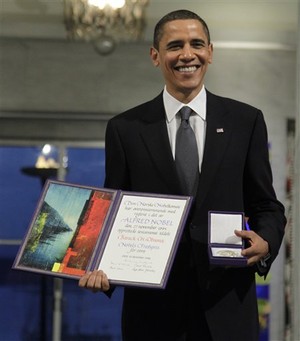
The latter part of this video, in which President Barack Obama toasted his mother during the Nobel banquet almost moved me to tears. It’s really wonderful to have a president that I can be proud of, again, after such a drought of inspiration at the turn of this century. Honestly, I cringed a little when the Nobel committee decided to award Obama the prize, because I felt like it was too soon and he would come under a barrage of criticism. Many Americans believe that he does not deserve the honor, so one can imagine all the cynical remarks that would be shot his way. I just can’t it gracefully or with maturity when people criticize him. And haven’t a few Peace Prize laureates soon after been, you know, sent to meet their makers? Why accelerate this man’s life when we just got him?! But I find his reaction and his humility in accepting the prize to be signs of real class, and a testament to his depth of character. I know he’ll endeavor to shape his life in the mold of what the Nobel Peace Prize represents, and he will live up to it. I just don’t want anyone beat, jail or martyr him ever, okay?

Also, I don’t want to take away from the fact that the evening was about him, but First Lady Michelle Obama was stunning!  I liked her gown on the spot, and that’s not usually the case with her fashion choices for functions on the world stage. Everything was perfect: the color, fabric and fit. I loved the sparkly shoulder straps, would love to have arms like that, and her hair and jewelry harmonized with everything perfectly.  If I haven’t said this ad nauseum, I’ll say it again: Between the brains, the accomplishments, her daughters and her beauty, she’s a role model for us all.

The Golden First Lady

First Lady Michelle Obama has a well-established reputation of supporting lesser-known but talented designers, and she upheld that practice with her choice for the state dinner for Indian Prime Minister Manmohan Singh. It was a strapless, cream and gold number with a wrap, and was designed by Indian-born designer Naeem Khan. Personally, I’m lukewarm on the dress, because I haven’t seen it up close. Overall I think Ms. Obama looks fantastic. Normally, I admire the masters. It’s not to say that lesser-known designers are not talented, but to me, fashion is not democratic. Although my closets are not littered with designer labels, I don’t express my views about inclusion and support of the little guy through my fashion choices. Top artisans get my dollar, and if you presented a zipped up garment bag and told me that there was a Valentino in there, I might ditch the up-and-comer and go with the mystery dress. I would love, love, love to see our first lady in Gucci or Versace.

Ms. Obama, however, is the type of person with deeply held beliefs, one of which is to identify and support the potential in people. When it comes to her wardrobe for very formal events, it means going with the lesser known designer. Perhaps it’s just as well that she stays away from the heavy hitters. If she walked into an event adorned in something from a top designer, then President Obama might lose the power of speech and the other ladies would look plain.

Sisters’ Hair Roundtable

I know that I was just criticizing Essence magazine for being too staid and celebrity focused, and for several reasons I still feel that way. But the magazine is still an institution, and will probably always be the premier lifestyle magazine for black U.S. women. When you consider our collective buying power and the fact that Essence gets our attention, that’s a big deal and you cannot ignore them. Anyway, I have to point out that the November issue had an interesting ’roundtable’ of black women talking about their quest to achieve beautiful manageable hair and the impact that the pursuit of beauty has had on their lives.

There is a Lattecafe moment—and a hilarious one—when Solange Knowles talks about an argument that erupted between her and a French boyfriend over her hair!  I won’t give away all the details, but basically they were on his father’s yacht (jealous over here) swimming in the ocean or wherever they were and having a good time. At the end of all that, he told everyone that dinner would be ready in 30 minutes. The problem was that Solange was wearing tracks at the time, and she needed more than a measly 30 minutes to prepare before dinner. I won’t give everything away, but the story is funny. If you can still sprint to newsstands and find a copy of the November issue before the whisk it away to make room for December, then please do.

The gathering was the November cover story, but it wasn’t promoted on the cover as a bunch of sisters getting together to dish about hair dramas. Essence decided to feature just Nia Long, an actress well liked at the Lattecafe, who was unnecessarily airbrushed to an inch of her life. It also mentioned the Chris Rock documentary “Good Hair”. The old Essence might have featured several of the women on the cover, of different complexions and hair styles. Who knows? Maybe they did a couple of different cover versions, but I never saw a different one.

Man, this is too bad: Essence has lost some of its verve. Now, picking up Essence is almost like being presented with a ‘black’ Barbie. It seems like a doll made just for me, but on closer inspection it’s really just a white one dipped in brown paint.

I don’t have a copy of the article here, but I found a trailer for “Good Hair,” which does feature Nia Long. Go check out this funny movie.

The Little Black Dress

KorsDressSunday mornings are not an appropriate time to read hard news stories, so it is no surprise that I was perusing the Style section of the Sunday Times several days ago. I was happy to spot Paula Patton in the Pulse column. She looks lovely and glamorous in that little black Michael Kors dress, and she has a few things to say about the merits of looking feminine and beautiful. But I wish they hadn’t cropped out so much of the footwear. What little I saw of those Zanotti boots looked quite promising.
Separately, reports are going around on the Internet that Paula and husband Robin Thicke are expecting their first child. Well, I guess Paula can relax and enjoy the good news now, unlike last year, when some reporters began speculating about a pregnancy after observing the way a certain dress fit on her. I wish them well, and hope that they cherish every happy moment.

She’s Pretty … For a Black Girl

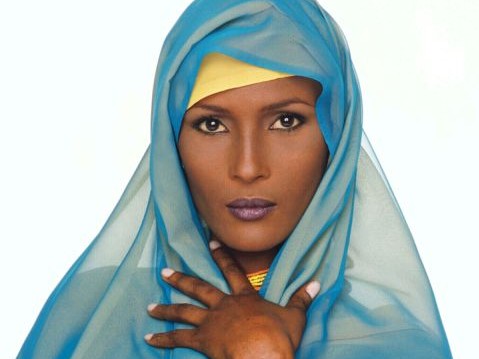
It was like a modern-day version of the famous Clark doll test from the 1940s. Back in the early 1990s, several of my cousins, a friend Melinda and I were hanging out in my aunt’s kitchen looking at a Victoria’s Secret catalog. That’s what women sometimes do: we page through catalogs of beautifully nipped, tucked, underfed and airbrushed women, and then we judge ourselves harshly by an impossible beauty standard. Or we decide we’re being silly and share a pint of ice cream. That afternoon, though, the conversation took a heated and serious turn.We stopped at a picture of a woman wearing a dark suit (with a low-cut neck line of course, because it was a Victoria’s Secret suit). She had a dark olive complexion, hazel eyes and highlights in her brown hair. The overall effect was that she looked like she was from North African descent, or her parents were from Somalia or Ethiopia, or at least she was of mixed heritage. While we checked out the rest of the picture and read the product information, Melinda blurted out: “She’s pretty, for a black girl.”

Of course, the whole room erupted into chaos. Pretty for a black girl? Ugh! There were so many things wrong with that statement, we didn’t know how to begin upbraiding her. But we did our best!

“So, black women are not normally pretty?”

“That’s the reason black women feel bad about themselves!”

“Whitey did a good job on you!”

Poor Melinda. I’m sure that in her mind, she only meant to pay that model a compliment, but it was clear that there was something in her thinking, and by extension our generation’s thinking, that needed to change. The Clark test said as much about our parents’ generation. In a study that shored up the case for outlawing segregation in American public schools, psychologists Kenneth Bancroft Clark and his wife, Mamie Phipps Clark used identical black and white dolls to gather compelling evidence that “prejudice, discrimination and segregation” (Library of Congress) caused black children to develop a sense of inferiority and self-hate.

One would think that black people had ditched those attitudes back in the 1940s. Yet here we were, supposedly modern black women, facing similar issues. How did Melinda learn to measure attractiveness in dark-skinned women, and why was the possession of light skin a prerequisite of their beauty? That model wasn’t even dark-skinned, but in Melinda’s mind, she wasn’t light enough to be considered pretty outright. Sadly, the prevailing attitude in a lot of cultures around the world, such as India, Latin America and the Caribbean, is that pretty women must have light skin, and if at all possible, narrow noses and straight hair. Sometimes that line of thinking takes a dangerous turn, as people from those cultures treat give darker skinned folks a hard time while revering the light-skin standard. I don’t know if Melinda changed her attitudes in the intervening years after that tumultuous afternoon catalog flipping, because we fell out of touch as we took different paths in life. If I saw her today and introduced her to Hubby, born in Wisconsin to parent of Scottish and German backgrounds, would she venture to remark about the ‘pretty’ children we would have one day — that is, pretty as far as black and biracial goes? Who knows? Maybe she has grown past all that by now.

At this point in my life, I am sure of one thing. I’ll do everyone a favor and steer my future sons, and especially my daughters, away from people who harbor those kinds of attitudes.