That’s IT! I’m Going (Back to) Natural

In early Spring, my friend down the street hosted an Easter Egg Hunt for the neighborhood kids at her house. One of the mothers caught my eye because her hair was shorter, curlier and more vibrant looking than I had ever seen it previously.

“Kyle,” I said looking at her neat, glossy twists. “You’re going natural?”

“Oh yes,” she said, he left arm akimbo. “And it’s the best thing I’ve ever done.”

We got into an animated conversation, with me telling her how great her hair looked, and her telling me how freeing it was to be on this new journey. I think the word “journey” pulled another mom into the discussion. In just a few short minutes, us three grown women were standing around in our friend’s kitchen, extolling the virtues and beauty of natural hair. Natural curls were widely under-appreciated, we said, especially by Black women, whose hair is naturally curly. Kyle talked about how great her hair feels to the touch, without being fried and slicked down by straightening chemicals. Ann has a little boy, but she was still interested in talking about her own routine. And there I was, outwardly talking and complementing both of them, inwardly wondering whether I should make that leap once again into wearing natural hair.

Maybe that conversation was a one-off thing, you say. After all, I wore texturized hair for years before going “bone straight” as my stylist called it.

Well, the natural hair trend is not going away for now, and we’re not talking about a bunch of left-leaning, vegan 20-somethings with their hair blogs and YouTube channels, either. During a block party in July, I ran into another neighborhood mom who also sported a natural style. She dons a suit everyday for her job at a Big Four accounting firm. She doesn’t do any kind of chemical or heat straightening on her two beautiful daughters, who are actively involved in sports, and are also naturalistas. What about Melinda and Sharon, my cousins, who also hold professional jobs and rock the curls everyday? Let’s not forget my friends at work, who at turns inspire and infuriate me with how their thick, black, rich hair of different lengths and textures get longer and seemingly healthier everyday. Loads of people are ditching perms and letting their natural hair grow out.

I’m running out of lame excuses, especially at home, and especially now that Hubby is more educated about Black hair. About two months ago, he stopped by the Dominican salon I frequent, just as the stylist was nearing the end of my session. He happened to listen in on a lengthy discussion between me, the stylist, and the owner about the damage that a chemical burn did to my scalp. Then he became Mr. Let’s Look It Up. A few evenings afterward, he researched the harsh chemicals that go into hair straightening creams. He grimaced in abject horror as he described a demonstration of what perming chemicals did to raw meat. He reads the labels on the products I order for Baby. He sometimes watches me as I style her hair and groans when it’s his turn to practice pony-tailing. (Hey, I’m going to have to travel for work again, eventually. He needs to know how.) He once asked me why God gave Black women hair that requires so much work, and talks about how relieved he is that I haven’t permed my hair in a while and have switched to products with natural ingredients.

I was thinking of perming my hair again, just once to cover up all the uneven lengths, tame my new growth and try to correct the drastic shedding and breakage that has been happening for months. But I think it might be a lost cause. There has been a massive profusion of products, styles and management techniques on caring for natural hair in the last three years alone. Not to mention natural hair care shows and exhibits. So I’m going back to natural. Just as soon as I can book an appointment with a stylist who can help me through that first year of growing it out.

In the meantime, I’m passing along word about the World Natural Hair Health & Beauty Show. It’s happening in Atlanta in September. Doubtless, attendees will find enough products, styles and tips to help them stick to their natural care routines. I won’t be able to make it to this one. But who knows: maybe I’ll make it to the next show, whenever that is!
A Princess of Her Own

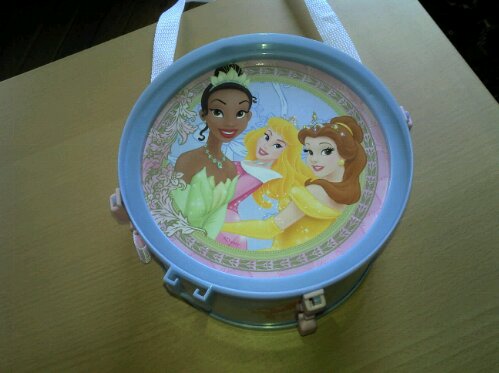
“Which one of these do you like, Baby?” I held my breath and as my daughter scanned the three characters on this toy drum, or “grum” as she puts it. My daughter pointed at Tiana, the Disney character on the left and said, “That one.”

image

Drum in a new member of Disney's Princess Club

Of course I was relieved that my daughter preferred the princess Tiana. My daughter is growing up in a world where Blacks are represented in every corner of society, including government, where Barack Obama is chief executive in the White House; the business sector, where Ursula Burns presides over the boardroom at HP; the Miss America pageants, where Vanessa Williams still reigns as the first Black woman to hold that title, please, despite our ambivalence about tagging pretty women and putting them on display. And who can understate the importance of Oprah Winfrey, Colin Powell and Condoleeza Rice, love them or not? Having a Disney princess that looks somewhat like her is a welcome treat, like a pretty little desert after a rich meal.

Readers, lest any of you suspect that I influenced Baby, maybe maneuvered the drum under her chubby finger, or bribed her with a sugary treat to pick the New Orleans native as her favorite, I did not. Tiana was her first pick, not a choice that I elicited from her after several tries. She made her choice genuinely and without hesitation. The question was not big deal to her. But while Baby moved on to more important matters, like finding her plush stegosaurus, I started analyzing it.

The Disney princesses have made their way into my daughter’s lineup of toys.  It won’t be long before the characters on the front also tunnel into her psyche one way or another. After she outgrows the characters and stories, she will either develop a soft, feminine fashion sense and hope for guys to treat her with a fair measure of kindness and deference, compartmentalize the Disney princesses as kindly childhood companions that ushered her to her tween years before fading away, or totally reject them as silly holdovers from a time when women were rendered passive and restrained by useless cultural norms.

And yet Disney’s “The Princess and the Frog” gave me pause. I have never seen this movie, but I did buy Baby a story book based on the movie, and read that to her. It kept the leading lady, Tiana, embodied as a frog for most of the story. It had her reprise a traditional role for Black women—a nice, plucky, hardworking girl who puts the material and emotional needs of others ahead of her own. She even sacrificed her happiness in the name of loyalty to her best childhood friend, a rich white woman drawn as authentic and sweet. I have no problems with sweet, rich white folks, of course, but the whole idea of the self-sacrificing Black woman is beyond trite!!

OK, OK. Things work out in the end for our princess and her amphibian love interest. But it would have been nice to see the character in a human body and enjoying the experience like a real Black woman for most of it. At least. And what sort of “princess” heads into happily ever after by first donning an apron and the cares of running a restaurant, instead of retiring her cooking utensils and transitioning to a life of wealth and philanthropy? Even Hubby frowned when I explained to him that the prince turned out to be a layabout who was disinherited by his parents, and then lives off the woman he marries. Disney, come on!

Who really knows what influence this and other Disney toys and products will have on Baby? This “grum” is more form than function. The companion drumsticks are flimsy plastic rods that elicit a puny shallow sound from the drum when she uses them. For now the princesses all make very appealing and pretty playthings for my daughter, and it is nice to for her to see one of “her own” represented on team Disney. But if I do my job well, it will be my message, not the drumbeat of Disney’s corporate marketing and merchandising, that will reverberate through her life.

Posted from WordPress for Android

All Are Welcome: Churches and Interracial Marriages

John Piper

Pastor John Piper, leader of the desiringGod ministry, says that he used to harbor some racist attitudes about interracial marriage and coexistence. During a sermon linked here, Piper says he used to think God created the races to live separately. Thankfully, he experienced an awakening, changed his mind, and eventually wrote and delivered a Biblically supported sermon extolling marriages like mine and promoting racial harmony.

I stumbled across this sermon recently, so that’s why it’s gone up years after its first delivery.

David IrelandDr. David Ireland, the founder and senior pastor of Christ Church in Montclair and Rockaway, New Jersey, had a different experience. He grew up in New York. (There is no more room for segregation, for pity’s sake!) His family integrated his neighborhood and came under some intense harassment from unwelcoming neighbors. One Sunday he explained why he cares so deeply that people of all races, nations and cultures worship together in the same congregation. Here it is: He was in a grocery store one evening and had stopped in one of the aisles to pick up an item and looked up at the people around him. He was spiritually moved and entranced by the mixture of cultures, races and nationalities represented by the other shoppes. Then, clear as a bell, he heard a voice ask: ‘David, why can’t it be like this in my house?’ He was moved to tears and has worked ever since then to support a congregation that welcomes everyone.

Why do I care what John Piper thinks about my marriage, or whether Pastor Ireland wants a culturally and racially diverse congregation? Well, I’m a Christian, for one. Why would I follow the teachings of certain collared nut jobs on this issue? Also, a lot of people have some very weird and misinformed ideas about where God, Christianity and the Holy Bible stand on interracial marriage. Even educated columnists at major newspapers have wrongly perpetuated the idea that an Old Testament command against interfaith/intercultural marrying is a ban on racial mixing. We know that religion is a subset of a culture and that the two are completely different from race, but somehow this columnist missed that. This is a surprising mistake from a writer at an elite newspaper. Many people of that ilk love great literature and can read the archaic English syntax in Shakespearean works without getting lost, presumably. The King James version of the Bible has remarkably similar language. (In fact, reading the Bible as a youngster helped me penetrate Shakespearean writing in high school literature classes.) I’m not sure why the columnist ended up veering off course so drastically. The irony is that the columnist is quite left leaning and is sympathetic to interracial marriages by all accounts.

Atheists might feel awkward about this discussion, because it involved religion, to be a distasteful and squeamish waste of time, but I think it’s worth having. The more vocal nut jobs who spread misinformation and lies about supposed biblical support for a racial hierarchy are the minority in Christian ministry. Either way, ministers hold sway over people. When one of them delivers a sermon like John Piper’s or that of my pastor, David Ireland, it goes a long way to getting people to think more humanely about the issue. I don’t remember sermons like theirs in the church where I grew up, and you want to know why?Everyone was either a first- or second-generation Jamaican, with a handful of exceptions. They were all Black, and the pillars of the church, plus a few core families, came from the same two or three parishes in Jamaica, where  they all knew each other. None of the young people, that I knew of anyway, brought white, Hispanic or Asian outsiders into the fold, married them at the altar where we were all baptized as youngsters or raised their kids in the church. Preaching sermons about interracial marriage would have been impractical. (Where we needed help was in curbing the gossipy cliquishness that could sometimes take a hurtful turn.)

I loved the richness in which I grew up, where women who were ordinary and working class showed up at church looking luminous and regal in their fine Sunday clothes and ornate broad-brimmed hats.  Although it could have been more racially and ethnically diverse, considering where we lived, one can understand how a church like that solidified around a black Jamaican core. We were relying on each other for survival in America, particularly in the competitive and cutthroat Northeast. With our insular ways and tribal politics, we might have been strikingly similar to the Liberians, Nigerians, Filipinos, Iraqis, Sikhs, Hindus  and other ethnic groups, but as we jostled with them for whatever slice of the American dream the white majority left laying around, we mistakenly thought we had clashing natures and opposing agendas.

Pastor David sometimes quotes Rev. Martin Luther King, jr., who, loosely transated, said that 11 o’clock is the most racist hour in Christian America, because that is when worshipers of all ethnicities go their separate ways to their different churches. When I sit in services at the church I’ve attended for more than eight years, I’m enveloped with a sense of peace. I have a pastor and presbytery who devote much of the ministry to ensuring that everyone from everywhere feels connected to God and with each other.

New Poll: The Looks of Strangers

“You have a beautiful family,” the young girl told me quietly as we watched Hubby wrangle Baby in his arms. We were visiting the Pleasant Valley Lavender farm in New Jersey, when our visit had crossed over into her naptime. Hubby and Baby had been running—him chasing her, mostly—through the farm’s lush and sprawling front yard as she succumbed to the frenzy that precedes delicious sleep in kids her age. I thanked my hostess/lavender farmer, hoping that my heretofore playful toddler wouldn’t collapse into insanity and shatter the image of that dimpled, charming cherub that we had arrived with.

Reader, you have probably guessed correctly that the young lady was Caucasian. We didn’t have the kind of friendly history or time to start talking about modern family life in New Jersey. She just gave me a compliment about my family, and I took it, gratefully. When I say gratefully, I am consciously laying aside that fiercely independent Jersey attitude that doesn’t care who approves or disapproves of my personal choices. It is nice to be able do that, honestly. I don’t like to dwell on the angst of being different. Of being a Black woman whose schoolmates scorned her for ‘acting white,’ whatever that means. Blogs that wring their hands over the complexities of identity and belonging—and pick through the minutiae over matters like having servants—make my eyes glaze over with the same disenchantment that some bring to learning about mutual funds. I understand and respect why a blog that thoroughly explores such feelings might appeal to a certain market, but I do not always have the time or patience for such musings.

Just an hour before that young lady spoke to me, the women who ran the operation made Baby and I feel completely comfortable as Hubby went scouting for lunch further into town. They let us into their house to use their bathroom. They freely offered to let Baby play on the swing set in the back yard, and Baby got acquainted with the koi fish (I believe) that glubbed and glided through the  pond out back. When Hubby got back, we felt completely free to sit at the table on the far end of their yard and eat our food—all before we even bought anything. There must be many other great people, white people, in the world who hold nothing but benevolent curiosity about mixed families. It could stem from anything: a great-grandfather who worked as a missionary or in an oil field in Africa; an interest in family genealogy; an interfaith marriage that carries the same emotional stakes as an interracial one. It was a truly relaxing afternoon and was a credit to the open, friendly ways that you can still find amidst the sharp-elbowed striving so acquainted with living in the Northeast.

New Jersey, and the Northern part of the state, particularly, is a colorful jumble of cultures, languages, cuisines, fashions and creeds from many parts of the world. Differences ought to be celebrated, especially when they don’t cross over into dysfunctional. These days, when onlookers rest their eyes on Hubby, Baby and me for longer than a few seconds, I don’t reflexively feel uneasy about it. One day we will come across some oddball jerk who wants to make us feel strange and “unusual.” And when that day comes, believe me, I will spread on that special Jersey sauce. Thick.

Right now we’re moving through life like a kayak on a glass-smooth lake. No one bothers us, and if anyone glares at us as we make our way, I rarely notice.

Happy International Kissing Day


image

This morning, Hubby drove me to the light rail station near our house. I gathered up my handbag and tote bag, then pecked him on the mouth before pulling the car door open. Then I made my way to the back of the car, where Baby sat strapped in her car seat, kicking her chubby legs excitedly as I opened the door. I kissed her on teh forehead and she craned her neck forward to pack me on the cheek. Then I headed off to my train, waving and blowing kisses.

This is a normal morning ritual for us, made sweeter because today, July 6, is International Kissing Day. ALso known as World Kiss Day, it originated in the U.K. Now smoochers from all over the world have caught on.  This is a well-timed St. Valentine’s Day refresher and warm up for mistletoe action in December. How lovely, for families all over the world to give a nod to sweethearts, close families and friends who express their mutual affection for each other. Kisses affirm romantic feelings, have magical powers to heal babies’ scrapes and cuts, little kids send their mothers off with them to slay dragons all day at work, and adolescents get them with the blessings of their elders as they head off to leave their mark on the world.

Whatever your reasons for puckering up, cafe visitors, enjoy International Kissing Day. Grab your honey, your toddler, your squirmy teenage daughter’s forehead—whoever it is—some fruit flavored lip gloss and get to it. Happy canoodling!

Posted from WordPress for Android

Now the Law Professors Say ‘Marry Out’

This blog will never proselytize Black women to marry interacially. It is purely for entrainment purposes, and I Have no interest in getting into overly political discussions about who people should marry. It would be bad enough for me to come across like I defaulted to men outside my race because there weren’t enough Black guys to go around, however true or untrue that may be. Other patterns I’ve seen out there almost arrange guys into some kind of hierarchy where white guys are big hunting game.

Some bloggers, though, are all about it. Right now, they are probably feeling quite vindicated and gleefully tapping away about news of an upcoming book by Stanford Law School professor Ralph Richard Banks, which ultimately suggests that black women should shift the relationship power balance by considering interracial marriage. It’s titled: “Is Marriage for White People?: How the African American Marriage Decline Affects Everyone.” Banks’ book comes out in September, so I haven’t read a copy. (The Latte Cafe is not an official, accredited news/opinion outlet with a book review staff. Sorry.) The Root is a big enough organization for that, and you can find the review here.

This is an important development, whatever your views are about interracial relationships. It’s one thing for a clumsily worded blog to evangelize Black women to the ranks of interracial couples. But when a Stanford Law School professor puts his seal of approval on the idea? Well, now the concept has more credibility, a chance to go mainstream. Maybe Black women might finally listen. All the same, I’ll keep away from telling Black women to consider  marrying interracially like I have. As we all know, there are lots of examples of successful intra-racial marriages and long-term relationships. And if hordes of Black women would rather remain single than intermarry, what it is to me or anyone else?

Of course, Banks’ book has already stirred up a catfight on comment boards. But that’s probably only going to work in his favor and rack up hearty pre-order sales on Amazon. Good for him, I say. His ideas pose no real harm to anyone, and some people might even expand their minds. Plus, the older I get the more I love the idea of generating income independent of full-time job slavery.

Aside from the usual scenario playing out here—Black racial purists and Black men who feel slighted (for some odd reason) will complain about the book—I can’t envision any major social or cultural shift stemming from it. Most Black women want to marry Black men and that’s that. I’m sure Banks’ book is well-researched and well-written, but our general dating preferences will ensure that most of us stay single.


Class in America (and the Lack Thereof)

Readers, you might not think Internet reports of a Metro-North commuter gone berserk after she was reprimanded for loudly using profanity during a cell phone call has anything to do with this blog. That she went into full-metal brat mode and declared that she was too educated to use foul language might not have any bearing on The Latte Cafe, you might say.

But you would be wrong!

The humiliating accounts of her overbearing conduct have gone viral, cost her a position at an international bank, and have spun off discussions about race and class in America.

At first, I was going to refrain from posting any identifying information about Hermon Kaur Raju. But just when she ought to have gone into hiding, she created a YouTube page where she reposted the video in a misguided attempt to vindicate herself. She also claimed to be a victim of racial profiling, so she injected race into this. I was willing to write it off as a case of stressed-out yuppie gone frantic. But Ms. Raju has done herself in by keeping the video alive and mounting her defense on some very shaky logic.

Ms. Raju is of Indian origin and the conductor who tried to get her to curb her terrible behavior is a Black American. Both are women. I’ll be generous here and ignore her provocative comments about “that black woman” whom she incorrectly accused of being loud and profane, and of “those people” whom she’ll never share a train with again. I’ll focus on class, which a few other readers and commenters have wisely done. The thinking, according to some conversation threads, is that the woman might have behaved that way because she came from a culture that still operates within a tangible, if not officially rigid, social order. From the Brahmins down to the untouchables, the thinking goes, Indians have a centuries-old social system that could explain why someone who obtained a degree from NYU would believe herself to good to be civil and cooperative in a public space, much less a confined public space like a train. Raju never expressed contempt for non-caste Black women in general, just that particular one. 🙂  Raju clearly thinks that she has no obligation to behave in a palatable manner in public, and that she is too good to let a mere ticket collector tell her what to do. Does she think that a train conductor must be an Ivy League reject, or a failed professional who is not worthy of common ladylike decency? Apparently so.

Were it not for the contemptible way that she treated the train conductor, I might feel sorry for Raju, enough to ignore it on this blog. But there is that darned YouTube page that she maintains. I  sense that class—Americans prefer the term “socioeconomic” class— will exert a stronger and stronger hold on American society. The reasons are plenty: the middle class is being pressured to carry heavier financial obligations for their health care and retirement. College educations are increasingly expensive, potentially putting it—and upward mobility—further out of reach for the population that needs it most.

These sorts of incidents happen every day in America—educated and affluent people, some of whom are full of themselves, virtually spitting on service workers. It goes beyond elitism and speaks to an unacknowledged and growing contempt for people who don’t earn livings as service professionals. An incident unfold before my eyes a few years ago while on a weekend jaunt to Washington, D.C. If you’ve spent any time in The District, or The D, you’ll know that loads of educated, ambitious, entitled, self-important and obnoxious (except for the Obamas) yuppies flock there. I had ducked into a drug store to buy a bottle of water, and queued up behind a white man in his 30s to pay. For some reason, the cashier, a black man in his late teens or early 20s, had messed up the order. That’s annoying, of course, but it did not warrant the vicious upbraiding that the white man laid down while the clerk fumbled through solving the problem. The white yuppie belittled the clerk’s intelligence, threw out remarks like “it’s basic math,” and essentially treated him like a nothing, a nobody for him to kick around. It was pathetic and disgraceful, which is why I called the white guy a nasty name. He threw me a scowl.

And years ago, I mean almost two decades, I was riding a city bus back home. The bus was within a mile of my stop, when a passenger, a petite and effeminate white man, got all worked up and began shrieking at the driver, a Black woman. “You’re driving a bus because you’re too stupid to do anything else!” He repeated that several times before storming, rather clumsily, off the bus.

Just last month or so, I was on a story assignment in midtown, and had carried my laptop to the event. There was no reliable wi-fi in the building, so I hauled my machine over to the New York Public Library, a majestic and stunningly beautiful building that you must see if you are ever in the area. Anyway, I was rushing to the reading room to try to find a spot to write and send my story, and got on the elevator. When my floor came up, I peaked at the sliding elevator doors to check for the right floor number, a habit from riding the elevator in my building at work. It wasn’t there, so I was looking all around for the right floor. Some man in his mid- to late-50s sneered: “You have to look at the sign over the door. This is a reading building, can you read that?”  I didn’t have time to tell that fat, flatulent pig to drop dead. I could only just roll my eyes and make for the reading room so I could get my story out.

In all the cases I’ve mentioned, people who were educated, presumably successful and upwardly mobile had made the lowest presumptions about a Black person’s intelligence, and proceeded to behave despicably. As I said, I don’t want to assume that racism alone drove the disgusting behavior that I saw years ago, and that the whole world witnessed last week. The victims were Black because we’re in the Northeast, a racially and ethnically diverse part of the country. I’m sure that white bus drivers, train conductors and other service workers elsewhere in the U.S. come under similar tongue lashings from well-to-do, bilious tyrants.

When it comes to interracial dating, people’s misconceptions about folks from other cultures are driven by a volatile mix of racial heritage, immigrant nationalism, and their respective places in our social structure. A working-class Black woman might experience a public slight at the hands of a white woman, then conclude the mix up stemmed from some malevolent, racist feelings on the part of the latter. Meanwhile, that same white woman might be socially awkward, have more money and education and be used to dealing with a different crowd, using different language to express herself. She might not know how to explain herself when confronted with the robust ways in which Black women express themselves sometimes. Voila. A misunderstanding ensues, the Black woman goes home in a martyr’s huff, and the white woman might move on to something else. Do you think that Black woman might ever consider dating that white woman’s brother, son or friend? Probably not.  Before people date interracially, chances are that they’ve lived on much broader horizons than those who have not. They draw from experiences in travels, education and work places to understand the subtleties of odd behavior in others, and don’t always put it down to racial prejudice. Then, of course, you might have people from lower middle and working classes who cross color  lines and pair up. Whatever the case, common causes, common classes, bring people together. Reader, look around you at all the married people you know. Most of them, it is safe to say, grew up within miles of each other, or worked long hours in the same circle of professionals.

We will be shocked at Ms. Raju’s antics on the Metro-North for only a few more minutes. After the snickering, forwarding, Facebook liking and finger pointing stops, I hope the incident will force Americans to confront our complex class structure in the making. In Ms. Raju’s case, her one hope is that she is young enough to change her ways, overcome that irksome personality of hers, and develop habits that make her much more likable in public.

Posted from WordPress for Android

Interracial PDA: Take Our Poll

Warm weather has finally settled onto the New York City area, which means it’s time to break out the strollers and get some exercise with your little ones!  Or, if you are in a couple with no young kids, its time to be outdoors for some quality hand holding.

Don't worry. I sprang into action and shook that twig out of her hand.

Last year, a day after this photo was taken—around early Spring—Hubby, Little Sister, Baby and I went to Liberty State Park in Jersey City to enjoy a relaxing afternoon before dinner. We tossed a frisbee, snacked on nachos and took in the sights on the harbor promenade.

We also saw at least a couple of other Latte Cafe types of couples, which is not unusual. We’ve got loads of nationalities and ethnic groups represented here, so it wasn’t surprising to see more couples like mine and Hubby’s. I was on a business lunch less than a year earlier in one of the hotels in downtown Jersey City, and spied a Latte Cafe type family having breakfast, probably before heading into Manhattan to soak up the atmosphere and take in the sights for the day.

This year, I expect to see lots of mixed families like ours, because well, I work in Manhattan and live in the New York area. The hordes of European visitors never really ebbs, with their generous vacation benefits that make me green with envy! And I’d safely say that I see about the same the percentages of European mixed couples as American ones I think that says Europeans are far less hung up on interracial dating than their American peers, but it also says that I do lot of people watching, doesn’t it. 🙂 Don’t worry I don’t stalk them!

But Spring weather does get me to wondering: How many mixed couples and families and I going to share a sidewalk with this year?  Will there be more than last year, as Americans keep warming up to this idea of looking past racial and ethnic difference to form relationships? Am I going to hear more mixed couples talk to each other with Southern and Midwestern accents? Are people from other parts of the country becoming as comfortable with interracial dating as the folks in the coastal cities already seem to be?

I’ve decided to really pull readers into that discussion with a quick poll. I’d love to hear stories from other American cities, especially ones that are not as foreign tourist-attractive as New York? It’s a first for The Latte Cafe, so share it with your friends. Enjoy!

Big Play for Naturalistas

I grew up in a Jamaican Pentecostal church, as I’ve mentioned before. After one particular service, a female minister accosted me, demanding to know why I was wearing extensions and braids. My childhood church was—is, actually— very conservative, and I remember perennial debates over how women should wear their hair. To the female minister, I answered frankly that I braided my hair to manage it more easily, in return she flashed: “Comb whe’ God gi’ you fi’ comb!” An overly simplistic and nonsensical response, to be sure. We didn’t have much to say to each other after that, and the controversy fizzled out.

Well, a lot of Black women are wearing their hair natural these days. Most want to break away from corrosive chemical treatments, and damaging weaves. The discussion about wearing natural hair and styling “what God gave you,” is no longer exclusively church terrain, or that of our ultra-progressive, dread lock wearing, left-leaning sistren. Those of you who are on a hair journey, or contemplating one, might want to check out this article in The New York Times. It’s about African-American bloggers and video bloggers dishing out advice on caring for natural hair. It ran in the newspaper last week. Looks like there might be a few more additions to the blog roll!

Before CurlyNikki, MopTopMaven, Naptural85 or any other hair bloggers came on the scene, the women in my church were passing around this book by Lonnice Brittenum Bonner. You might recall “Good Hair” yourself, or maybe you’ve read Brittenum Bonner’s other books.  She had been a reporter for the Oakland Tribune, but I think being a “hair memoirist” and forerunner to a hip new wave of hair bloggers makes her even more interesting.

As for me, I wear my hair chemically straightened. And I attend a different church, where no one really gives my head a second glance. I still keep in touch with a lot of my friends from my old church, and occasionally visit. But I try to blend quietly into the background and not draw any attention to myself. (Yeah. Good luck with that, with the mixed family and all.) And besides. Considering that the Bible offers no compelling clues or absolute doctrine on this issue—it preferred to admonish adherents to love their wives and parents not to provoke their children to anger—I never jumped on the natural hair movements that occasionally bubbled up at our church. Besides, I really wanted to spend my time writing stories, reading the classics, plotting my route away from home. That sort of thing. So whenever a minister rapped the back of my hand for cutting my hair into a super short boyish style, I politely explain that I chose the cut because it suited my perfectly shaped head. One woman minister glared at me and my braids—judgmentally, I presumed—from the rostrum during a service. I directed my gaze right back at her until she wilted. She’s probably off somewhere with the woman minister I mentioned earlier, the one who tried to jack me up in the pew after a service. Maybe they are praying for me right now.

Keeping Up With the Past

image

image

image

image

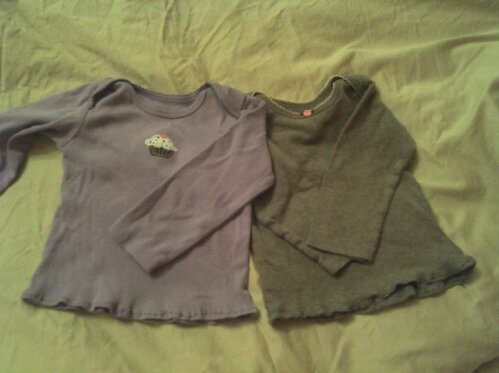
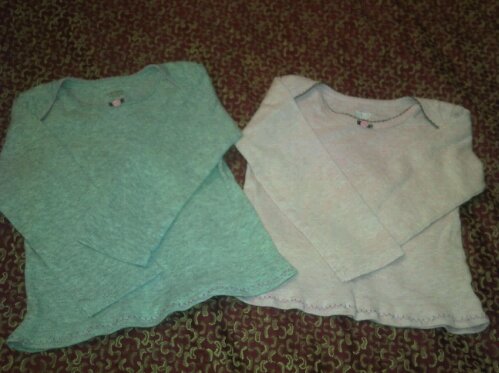
Baby has outgrown her onesies, not because they are tight on her, but because she is in full potty training mode. The snaps on the inseams get in her way as she prepares to go. And since we inhabitants of the Northeast are putting up with a frigid, wet spring, where we haven’t had a single three-day stretch of clear and warm weather, I thought those two inducememts were enough to convert her onesies into long- and short-sleeved T-shirts.

The thing is, until I took on this project I had not sewn much beyond basic hems and re-attaching buttons. I had never even owned a fully functioning sewing machine until I picked up the Singer Esteem II model at Target last winter. See the serious-looking Singer in the photo, the one with the foot pedal that comes inside the cabinet? I picked that up from an Italian woman who was clearing out her parents’ house to move them to smaller place. I mean to have it refurbished and get it up and running again, because I admire the workmanship that goes into these machines. I can’t see the sense in having a beautiful piece of work like that simply lay fallow and rust in my house.

I also like having it around because it makes me feel connected to my Caribbean past, and to a generation of women whose practical knowledge I envy and admire at turns. I know at least 10 very talented seamstresses. Aunt Mary is one of them, and she has a serious professional model. When Baby, Little Sister and I drove down for a visit on one of our (many) snowy days last winter, Aunt Mary let me take a few practice passes on it to hem up Baby’s “new” T-shirts. Readers, I was very rusty. But I was also determined to make these hands do something useful. Something that gave me something in common with some of the most creative and self-sufficient people I know. It is one thing for a family to assimilate into a culture, and send its second generation, myself included, into the professional workforce. Journalists like me tap out words for a living. (And a mean living it is, too. Generally speaking, journalists are among the most underpaid professionals you’ll find. Makes me mad.) For me, that’s not enough. I need something to do to take my mind off of work. Work, money, careers and getting ahead. It can’t be about that ALL THE TIME.

My late aunt Lena, my mother’s sister had a Singer similar to my vintage model. She kept it near one of my cousins’ bedrooms in the teacher’s cottage where we lived in rural Clarendon parish. I remember being a small child, about four or five years old, and sitting on the floor of that room while she sewed. The sultry air outside pulsed and teemed with noisy birds, monger out on the road hawked coconut water from homemade carts. Tiny lizards skittered along the verandah. Aunt Lena pumped the broad iron foot pedal and sent the machine whirring, joining these country noises, as she fashioned dresses, hemmed clothes, shortened or made drapes, or worked on whatever else was needed around the house. Aunt Lena’s son is married to a dynamo, Patrice, who is just as inventive as Martha Stewart, B. Smith and any other domestic taste maker out there. She just doesn’t have a syndicated media powerhouse to ply her wares, is all.   🙂  In any case, Patrice is a fantastic seamstress, who makes beautiful drapes, furniture covers and all sorts of other things. My mother is also proficient, and she made herself a few outfits during one of her particularly lean years in the early 1980s. I remember going into fabric stores with my mother. Colorful fabrics jutted out from everywhere, and the quiet was only broken up by one of the shopkeepers flipping the bolts of cloth around on a table to measure out the yardage, or the scrape of heavy tailor’s shears along the table as they sliced off what she wanted. I remember listening to her rev her Singer as she sewed her clothes. My mother looks great in pretty much whatever she wears—always turning heads—but I don’t remember any of her clothes (except for what she wore to my wedding) as much as I do her handmade outfits. Not to outdone by the women, my uncle Rowan worked as a tailor in London, where he lived for many years.

These women and uncle Rowan are all out of my league when it comes to sewing. We’re not even on the same planet, or galaxy, for goodness’ sake. There are times, like when I purchased drapes for Little Sister’s room and the kitchen, then brought them to a local dry cleaner to have the tailor shorten them, when I feel stupidly helpless.  With all this knowledge around me, why couldn’t I make simple, sturdy and attractive drapes for my house? Or just buy them and make them over myself? I regret taking such a late interest in developing this skill, which is just as relaxing as it is practical. For the few hours that I put into changing Baby’s onesies, sewing actually made me feel good, once I practiced. I got to feel a little more like a self-sufficient, can-do Jamaican than someone who has to run out to a store and swipe a card for every little necessity.