Rich Black Women: An Unapologetic New Period Film

Black writers have always poked around in different corners of history, telling our stories from past eras. You might not know that, though, judging by how invisible we are in popular films and TV shows set in 19th century and earlier eras. Well, writers are giving it another shot with ‘The House that Will Not Stand,’ a film adaptation of a historical play by Marcus Gardley. It involves the lives of free Black women living in 1800s New Orleans. A project featuring my favorite American city, New Orleans with Black women anchoring the cast telling a story dressed in silks, and petticoats. If you know me, you can hear me squealing! (And possibly humming the ‘Game of Thrones’ theme.) Yes, yes, it’s out of context and far more brutal. But anyway!
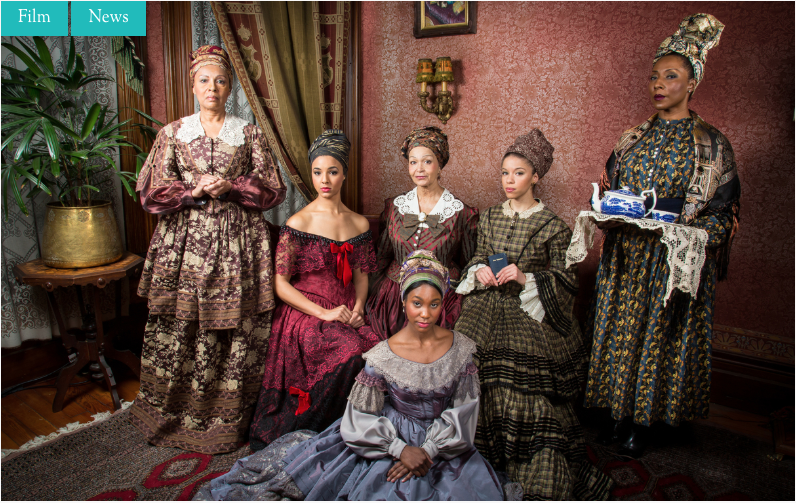
According to entertainment news Website Shadow and Act,

The main characters are free Black Creole women who fought against racism and became millionaires through plaçage, or the practice of common-law marriages between white men and Black women, biracial women of color, or Native American women). The play, which premiered at the New York Theatre Workshop this year.

I know what some haters are going to say; these women earned their riches by laying down with white men. And? So did generations of white women. It was called marriage, and I’m sure the husbands, children and household benefited from a lady with her head who kept things stable and orderly. That’s how we came into the archetype of the ‘rich white woman,’ who inspired so many hours of play over plastic tea sets — porcelain if your parents had a fancy office job and could afford it.

Truth be told, I’ve always had mixed feelings about watching period films. Those works testify to uncomfortable eras or Black people. While I loved these sharp-witted ladies in the parlor settings, and the court intrigue of superior men, my skin folk was often rendered as second-class citizens at best — property at worst. You can understand why Black audiences prefer more modern stories.

I could never give myself over completely to the ‘rich white woman’ fantasy, even for playtime. Our mothers often didn’t sit down with us at tea, because they were working, running the home, or volunteering at church. And even if I could occupy that identity and pretend to order a servant to bring the petit fours and gossip over what Lady Shirl wore to the racing outing, in the corner of consciousness would be a familiar figure, looming. My mother and aunts were that domestic worker, and at any time they might have been lorded over by someone I was pretending to be — or pestered a handsy husband. All so that I could have the essentials, and then stacks of books, dolls, toys and the leisure of playtime. Wouldn’t that be a betrayal in some way? 

I loved Grace Abigail Mills’ heroics in modern-day Sleepy Hollow, and her rapport with her fellow witness, the man out of time, Ichabod Crane. But when Abbie was thrown back to the 1700s, in a plot parallel to what brought her partner to the modern era, I was a little terrified for her. Reader, I knew — we all knew — the trauma that awaited women like Abbie in Colonial America. 

Lately, I’ve had to turn to streaming services and pick over leftovers from past movies or defunct TV shows to get my period piece fixes. We saw a pickup in period projects where Black women bustled around in their stays and petticoats — WGN gave us “Underground,” PBS offered “Mercy Street,” and Starz had “Black Sails,” but all of these shows were canceled in under five seasons.  Oh! I forgot “Still Star-Crossed,” from ABC, set in one of storytellers favorite periods, Renaissance Europe. I haven’t forgiven Shondaland for imbuing Prince Escalus with a sharpness and cruelty that made it hard to like him as a husband for Rosaline Capulet.

That, in a nutshell, is the Black experience in period films. Even when we do get to dress up in one of those confections and float around a staggering English estate, like “Belle,” we are never the fair lady at court, and rarely unmolested. What a huge tradeoff. At least this time, the rich woman sitting down to tea will be Black, and reader, she is a playtime role model whose time is overdue. 

Would Racism Have Beat Us?

From the comfort of my home outside of New York City, with legal protections (for now) like various Civil Rights and Family Leave, it can be easy to forget how tough life was for people from different races and cultures who wanted to settle down together and marry.

When I saw this old “PBS News Hour” segment about a new book from journalist Alexis Clark, “Enemies in Love,” I had to wonder how I would react to my interracial marriage without the comforts and legal protections of modern life. Were Hubby and I to have met just after WWII, I wonder if I would be so busy surviving that I would even have the time to muse about marriages like hours. Or even if I would have the nerve to go through with it at all.

When the 15% Becomes the 17%

A few statistics around interracial marriage are the same now as they were several years ago. Asian’s tend to ‘marry out’ at much higher rates than other racial or ethnic groups. African-American men marry out at twice the rate their female counterparts do.

One thing is different for sure, which is that 17% of all married couples today are interracial. The rate of interracial marriage ticked up by two percentage points from 15% about four years ago, according to a recent analysis of think tank and government information by CreditDonkey, the (weirdly named) consumer Website.

A couple of other interesting nuggets:

  • Today the most common interracial pairing is one Hispanic spouse and one white spouse. This combination makes up 42% of interracial marriages today. (This statistic is interesting because I always understood ‘Hispanic’ to mean various ethnic groups and nationalities that are Spanish-speaking. But not Spanish. And I thought we had ditched the term ‘Hispanic’ for the Millennial-friendly ‘Latinx?’)

  • Hawaii has the largest number of interracial newlyweds today. 42% of newlyweds in Honolulu are mixed race. The next city with the largest number of interracial marriages is Las Vegas, with 31% of married couples being interracial.

  • Approximately 41% of mixed race couples end up in divorce within the first 10 years of marriage.

  • Approximately 31% of same-race couples end up in divorce after 10 years.

So people can howl and crow all they want to about interracial pairings. The trend is growing and doesn’t seem to be doing any harm in any measurable way. On the last two statistics, I’ll drop a piece of advice I picked up from a church sermon. “Choose wisely. Treat kindly.” Of the marriages I know of that have lasted through decades and decades, the two partners always treated each other with kindness — more so the men.


African Royals? Eh, Not So Much

Well, look who decided, after all the fanfare surrounding the wedding of “Suits” actress Rachel Meghan Markle and Prince Harry of Wales, to finally acknowledge African royalty?

Holier-than-thou, pro-Black, anti-swirling vloggers, that’s who. You might have encountered some of them, the purists who create videos fervently preaching against, among other things, the sin of identifying anyone mixed or biracial as Black. They make long-winded screeds denouncing interracial couple vlog channels. They lecture at length about the proper way to promote dark-skinned Black women. (Hint: It changes, depending on what set them off.)

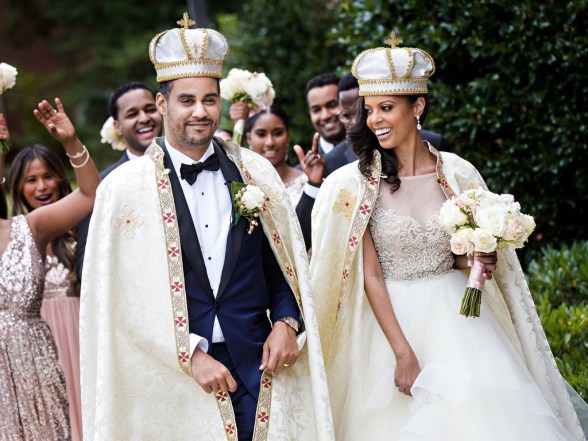
Ariana Austin Married Joel Makonnen aka Prince Yoel, the great-grandson of Haile Selassie on September 9, 2017. Haile Selassie was the last emperor of Ethiopia.
Sources: The New York Times, via Instagram

Almost as soon as news of Meghan Markle and Prince Harry of Wales’ engagement broke, women’s mainstream e-zines ran silly stories proclaiming that Meghan Markle’s engagement gave Black women hope. I’m sure that it did for some Black women, especially for those yoga loving, globe-trotting, racially ambiguous types whose crisp white shirts, smooth voices, messy buns, and caligraphy skills endeared her to a crowd that would introduce her to an heir to an old European dynasty. But for those Black women who do not live in the outer reaches of what it means to be Black, for those who have medium-deep to deep-dark complexions, this was a pleasant distraction at best. (OK, for me it was more like an excuse to get up early, camp out on the couch in the TV room and watch Serena and Oprah show everyone how to wear hats and fascinators to a church wedding.)

The fawning over Meghan’s engagement had about as much intellectual nutrition substance as a box of Cheez-Its, but we liked munching anyway. In no way did the women in my circles actually believe that Meghan Markle’s experience and triumph of love was an indication that the tide of public opinion was turning in our favor. That the world was ready to see us as softer, more vulnerable, and more receptive to the care and attention of a rich, influential and handsome man. I wasn’t teaching my daughter that, and none of my friends were indulging in that fantasy for their girls, either. What we can learn from this, and previous royal weddings involving Black American women (and American women in general), is that foreigners are drawn to the openness, vibrancy and juvenescence that underpins American culture. The Black women marrying these foreign royals are accomplished professionals and have strong followings in philanthropic and social circles. They deserved more shine than the “not Meghan Markle again” treatment. 

When this spate of videos started cropping up, as a counter-balance to the so-called “we have a Black princess, y’all!” narrative, I thought: Well, great. Were they truly interested in normalizing feminine portrayals of Black women, how about giving their readers whatever scraps of updates they could find about their social engagements? Surely Princess Keisha, other African royals and even Ariana Austin have speaking engagements, attend brunches and do other things that reflect the more feminine image that these vloggers are promoting? They are, after all, Black princesses!

I think a few Web sites, who don’t know Black women very well, spun the angle of Meghan Markle winning for Black women as a way to get mileage out of the wedding. Sounds like our social critics who want to “promote dark-skinned Black women properly” were after the same thing.


Happy Valentine’s Day??

Few circumstances can mar Valentines Day festivities, at least for the man, like overpriced prix fixed menus and bouquets of flowers bought after midnight on February 12, when “last-minute husband” prices apply.

Well, late, expensive flowers and hastily assembled dinner reservations are nothing compared to the stream of expletives and one racial epithet that Robin Cross, a television investigative news producer for Florida’s WSVN-Ch. 7, hurled at a young interracial couple recently. Over a parking dispute!

Here is the rundown of the foul Valentine’s Day arrangement, from the Sun-Sentinel‘s Web page:

On the evening of February 6 Robert Fenton, an attorney and resident on Isle of Venice Drive in Fort Lauderdale, had asked Cross not to block his driveway with her car, according to his son Avery Fenton, whose girlfriend is Black.

“You don’t [F-ng] own the road,” Cross can be heard telling Fenton in a cell phone video.

“Yes, I used the word [F-ng] if you haven’t heard it before. Except for your [F-ng] son who’s dating a [F-ng] [N-word],” Cross continued.

“Finally, I said it out loud,” Cross says as she walked away.

It’s unclear why Cross invoked Avery Fenton and his girlfriend.

The staff at the Sun-Sentinel might be blind and naive, but it is obvious to any savvy adult why Cross invoked Avery Fenton and his girlfriend. From her own lips, ‘Finally, I said it out loud,’ she admitted that she had been simmering with rage about something, and that something was the idea that no white girls were attractive enough to keep the son of her neighbor, a successful attorney, from dating a Black woman.

Cross certainly didn’t expect to see any n-ggers mar her field of vision when she moved to that very upscale neighborhood, where homes like this 4,000-square-foot beauty list for $1.2 million:

69 Isle De Venice.jpg

Other homes in the area, dotted with marinas, list for $4.9 million. This woman has so much going for her; she is a well-educated, accomplished professional and shouldn’t really have anything to fear from anyone. And she didn’t think that she would have to deal with “certain people” when she moved to that beautiful area, where residents are about that yacht life.

Can anyone be surprised at Cross’ behavior? Certainly, none of Robin Cross’ close family and friends are surprised, because if they are honest with themselves they have heard her talk like that before despite “working with Black people” and maybe even lunching with one or two Black women in her whole life. This shouldn’t shock any of the participants in the private Facebook and online discussion groups where the backward bigots seek refuge from the real world and fume about how unfair life is that Black people “don’t know their place.”

The incident ended with the son, Avery, writing a letter to Cross’ employer at the station, detailing what happened, and asking that she be duly disciplined for her behavior. She was fired.

So much for #feminism! It serves as yet another cautionary tale that some white women, and other non-Black women, are basically bigots and really feel threatened and confused when they see real-life examples of love that challenge their assumptions about race, heterosexual attraction and Black women’s presumed place at the bottom of the dating and marriage hierarchy.  I still think that white women are generally the most sought after companions for eligible men, and they always will be. As Black women find themselves objects of white men’s genuine admiration, affection and devotion, not their unhealthy fixations, more bigoted white women will have to face the reality that they don’t enjoy the absolute dominance that they always thought they had in the dating field.

Black women can find a cautionary tale here, too. As they free themselves from blind devotion to all Black men, they should be prepared to face similar hostilities. Nothing enrages an adherent to #feminism like seeing her cherished assumptions about her desirability debunked!